
5 Things to Consider Before Integrating an OEM Peristaltic Pump
The OEM peristaltic pump, with its precise delivery and no medium contamination advantages, is widely applicable to various fluid transportation equipment. It is often integrated into laboratory analyzers, medical devices, beverage distribution equipment, water treatment systems, and industrial measurement devices, mostly as an internal component of the equipment rather than an independent product for sale.
However, selecting a high-quality pump body is only one part of the equipment design process. If during the research and development stage, details such as installation space, pipeline compatibility, and control compatibility are ignored, even if the pump has excellent theoretical performance, the actual usage effect will be greatly reduced.
Whether it is new product development or existing equipment upgrade, making detailed planning during the integration of OEM peristaltic pumps can effectively improve the equipment operation performance, simplify later maintenance, and avoid additional costs of redesign and reconfiguration. The following are the five core factors that equipment manufacturers must focus on evaluating before integrating OEM peristaltic pumps.

Choose the Right Pump for Your Equipment
When selecting a peristaltic pump, the actual operating conditions of the equipment should be the primary consideration, rather than immediately settling on an existing pump model. Clearly defining the fluid transportation conditions can quickly eliminate inappropriate models and prevent high renovation costs in the later stages of the project.
Define Your Flow Rate and Dosing Accuracy
Flow rate is the primary determining parameter. In addition to the basic output flow rate, it is necessary to distinguish between different conditions: whether it is continuous delivery or timed and precisely divided liquid distribution.
In scenarios such as chemical dosing, laboratory testing, and reagent addition, extremely high repeatability is required for the delivery process; for beverage machines and cleaning equipment, stability of flow is more important, and ultra-high precision is not necessary. To ensure a proper match, it is essential to clearly understand the requirements and select the appropriate pump size, motor, and hose.
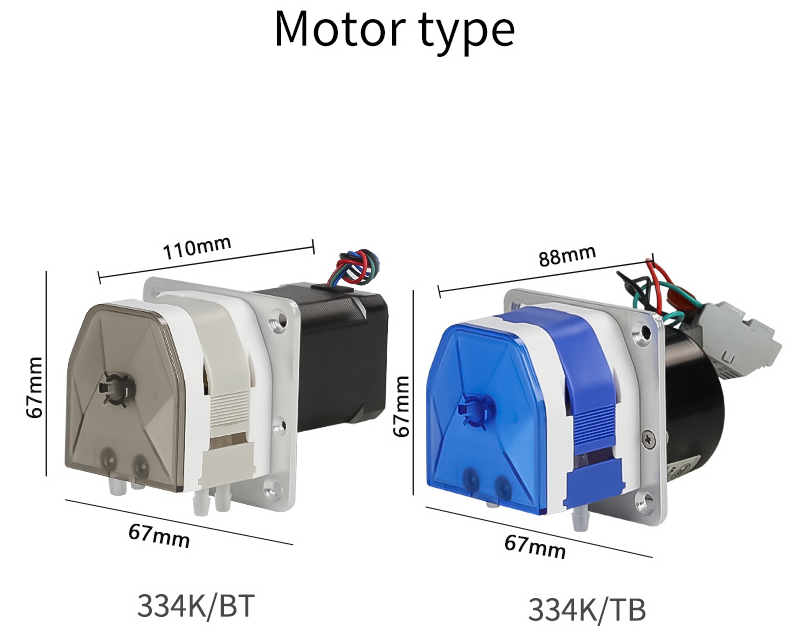
At the same time, it is necessary to reserve expansion space and predict the subsequent usage conditions. If the equipment needs to adjust the flow rate in the future or the software is required to control the flow velocity, it is advisable to choose pumps with a wider speed adjustment range, so as to leave sufficient adjustment room for the overall design.
Evaluate the Fluid Characteristics
The medium being transported directly determines the type of peristaltic pump to be selected.
Engineers need to comprehensively evaluate factors such as the viscosity of the liquid, the requirement for chemical resistance, the working temperature, and whether the medium contains solid particles. The pump configurations suitable for different liquids vary greatly. For example, clean water, concentrated cleaning agents, nutrient solutions, and experimental reagents all require different pump configurations.
The core advantage of peristaltic pumps lies in the fact that only the flexible hose comes into contact with the medium. This not only avoids cross-contamination but also simplifies the design for medium compatibility. However, for the equipment to operate stably for a long time, matching the correct material for the hose is still a crucial step.
Consider the Required Duty Cycle
The daily operating duration of equipment is an easily overlooked selection criterion.
Some equipment only starts the pump for a short period during a single process, while others require continuous transportation for 24 hours. Intermittent metering pumps are not suitable for scenarios requiring long-term continuous operation.
By clearly defining the equipment’s working cycle in advance, engineers can determine the appropriate motor and cooling solution before mass production, and plan a reasonable maintenance schedule at the same time.
Plan Enough Space for Installation and Maintenance
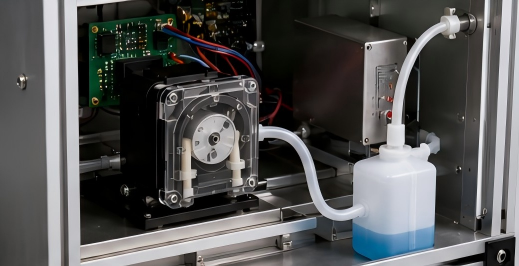
A small size of the volume does not mean a low level of integration difficulty.
When designing the entire machine, in addition to the installation position of the pump body, space must also be reserved for pipeline routing, heat dissipation and ventilation, as well as space for later maintenance. The hose should be laid as smoothly as possible, and a too large bending angle will accelerate the aging of the hose and also affect the stability of the flow rate.
The hose is a consumable part and needs to be replaced regularly. During the design stage, it is necessary to ensure that the pump head can be disassembled without large-scale disassembly of the shell and surrounding accessories, and the convenient maintenance structure can significantly reduce the maintenance time of the entire machine throughout its cycle.
In addition, the pump body should not be arranged around high-temperature heat sources or components with continuous vibration. A stable and suitable installation environment can ensure the conveying accuracy and extend the service life of the entire machine’s accessories.
Make Sure the Pump Works with Your Control System
Mechanical integration is only one part of the project. The pump must also communicate effectively with the equipment’s control system.
Verify Power and Control Compatibility
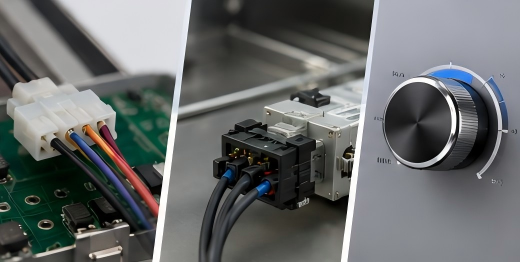
Before finalizing the design, confirm that the pump’s electrical specifications match the system architecture.
This includes verifying the operating voltage, current requirements, and the intended control method. Depending on the application, the controller may simply start and stop the pump, or it may need to adjust speed, reverse rotation, or synchronize fluid delivery with other system components.
Clarifying these requirements during the design phase helps avoid unnecessary hardware modifications later.
Consider Future Expansion
Even if the first version of a product has relatively simple control requirements, future models may require additional automation features.
For example, manufacturers may later introduce touchscreen interfaces, programmable dispensing modes, remote monitoring, or communication with other electronic modules. Choosing a pump that can accommodate future system upgrades may reduce redesign work as the product evolves.
Planning ahead also provides greater flexibility when adapting equipment for different customers or application scenarios.
Select the Right Pump Tubing
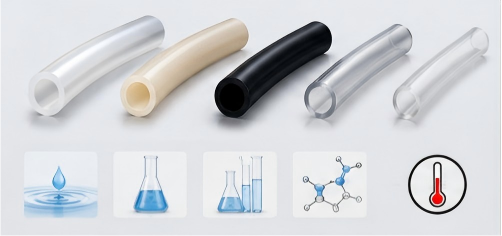
The hose is the only component in direct contact with the medium, and it directly determines the overall performance of the OEM peristaltic pump.
When selecting materials, it is not enough to only consider cost. The core factor should match the chemical properties of the medium and the on-site working conditions. The flexibility, wear resistance, temperature resistance and service life of different hose materials vary significantly. Choosing the wrong material can easily lead to aging and damage, pipe diameter deformation, and corrosion by the medium.
The specification of the hose is also crucial: the inner diameter determines the conveying flow rate, the wall thickness affects the durability of compression and the pumping efficiency, and matching the specification can ensure a stable flow rate and precise measurement.
The hose is a consumable that needs to be replaced regularly. The equipment structure design should be convenient for quick disassembly and replacement, and it should avoid interfering with other core components during the disassembly and assembly process.
Design for Long-Term Reliability
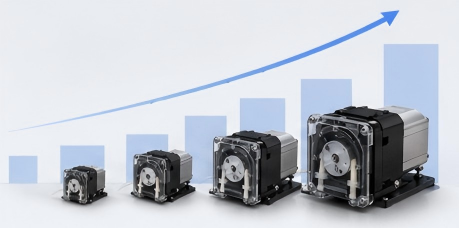
The quality of pump body integration cannot be judged solely based on the initial test results of the prototype; rather, its long-term stable operation capability should also be taken into consideration.
A reliable overall design will take into account maintenance requirements in advance: parts that are prone to wear and need regular inspection should be easy to disassemble and repair, and the overall layout of the machine should be designed to minimize the downtime for maintenance. At the same time, it is necessary to consider the temperature and humidity, dust, vibration and other environmental factors on site, select appropriate materials and take protective measures to extend the service life of the pump body.
Before mass production, it is essential to complete the on-site durability tests of the prototype. Short-term laboratory tests are insufficient to reveal potential problems such as hose wear, flow deviation, and installation structure defects that will only arise during long-term operation.
The equipment manufacturer needs to comprehensively consider the working conditions, structure, electrical control, hoses and durability requirements in the early stage of developing new products. Only in this way can the peristaltic pump be smoothly integrated, reducing the renovation cost, simplifying maintenance and improving the overall performance and service life of the machine.