
Peristaltic Pump For Mouse Perfusion: A Technical Overview
If you want clean, undamaged tissue sections under a microscope, you have to preserve organs at the cellular level. That is exactly what mouse perfusion does. Early labs used manual methods, but modern labs are shifting toward automated fluid control. Getting familiar with the mechanics of a peristaltic pump for mouse perfusion makes a real difference. It helps you achieve consistent and repeatable results, without the usual variability.
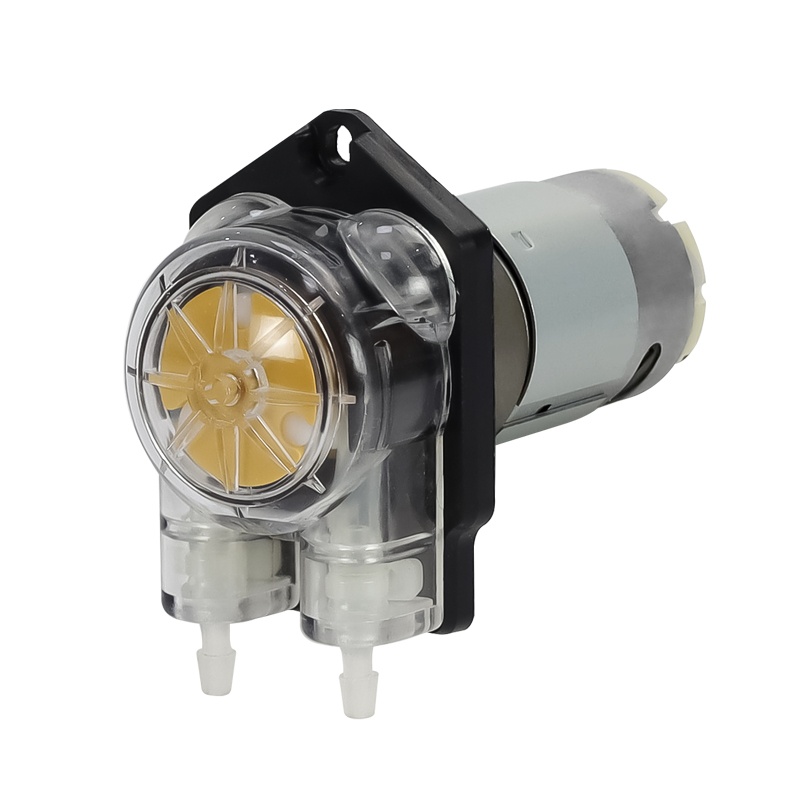
What is Mouse Perfusion?
Mouse perfusion is a standard lab procedure. You use it to replace the blood in the circulatory system with specific fluids, and this fixes the tissues right after euthanasia. The goal is to preserve organs perfectly, right down to the finest structure.
Think of it like flushing a car’s cooling system. You would not leave old, degraded coolant sitting in the engine. Instead, you run clean water through every hose, and then you add antifreeze to stop rust and decay. Perfusion works the same way. So here is what actually happens during the procedure.
You insert a needle right into the left ventricle of the mouse heart, the main pumping chamber. Then the pump pushes your fluids through the entire vascular network. That does two things in one go. It flushes out all the blood. And at the same time, it essentially “freezes” the tissue architecture, locking it in a state that is as close as you can get to the living condition. This step really matters for everything you do downstream, like immunohistochemistry. And that technique, just so you know, uses antibodies to tag specific proteins inside the cells. You can think of it as sticking a fluorescent beacon right onto your target.
Why Use a Peristaltic Pump for Mouse Perfusion?
Researchers used to rely on gravity-fed systems or manual syringes. A gravity setup is basically a bottle hung up high, and the height difference pushes the liquid down. But it has a major flaw. As the bottle empties, the liquid level drops, and so does the hydrostatic pressure. The flow weakens halfway through. A syringe pump gives you control, but you have to stop and reload it constantly. Modern labs now prefer automated laboratory perfusion pumps for three solid engineering reasons.
Eliminating Pressure Fluctuation. Gravity systems are inconsistent. The pressure falls as the liquid level goes down. A peristaltic pump works differently. Its rollers squeeze the tubing evenly. This creates a perfectly flat pressure curve. You get the same push from the very first drop to the very last.
Maintaining Constant Flow Rate. Mouse microvessels are really, really fragile. So if you’re pushing with a hand syringe, the force changes with every single push. And that is exactly how you end up bursting those tiny capillaries. A decent pump, on the other hand, gives you a gentle flow that stays under control. It prevents pressure damage and ensures the fixative spreads evenly into every cell.
Scalability and Efficiency. Let’s compare peristaltic pump vs syringe pump. A syringe pump has a limited volume. Once the syringe is empty, you have to pause and refill. That is not ideal if you have several mice lined up. A peristaltic pump draws liquid directly from a large external reservoir. It runs nonstop. Think of it as a continuous assembly line. You do not have to stop in the middle, and that boosts your lab’s overall throughput by a lot.
Recommended Flow Rate for Mouse Perfusion
Flow rate can make or break your experiment. Push it too fast, and the tissues swell up, because the cells just soak up too much water. Go too slow, and you end up with partial fixation. The fixative never reaches every area before the tissue starts breaking down.
That is why the standard protocol splits things into two clear phases, and each one has its own flow target.
| Perfusion Phase | Target Flow Rate | Technical Purpose |
| Wash Phase (PBS / Saline) | 2 to 5 ml/min | You want to get all the red blood cells out, fast. |
| Fixation Phase (4% PFA) | 1 to 2 ml/min | You slow it down so the cross-linking happens gradually. That way the tissue hardens and keeps its shape. |
How to Perform Mouse Perfusion Using a Peristaltic Pump
To run a flawless perfusion, you need to follow a clear sequence. Here is the breakdown.
| Step 1 | Buffer Preparation. First, get your ice-cold sterile PBS ready. That is your wash buffer, and it basically mimics the body’s fluid environment, keeping pH stable. While you are at it, prepare fresh 4% paraformaldehyde, or PFA. This stuff is a strong fixative. It locks protein structures and instantly stabilizes the cells. |
| Step 2 | Tubing System Setup. Next, install biocompatible tubing into the pump head. This type of tubing won’t react with your chemicals, and it won’t leach any toxins into your samples. On the inlet side, use a three-way valve to connect two reservoirs. One for PBS, one for PFA. Then attach the perfusion needle to the outlet side. |
| Step 3 | Priming the System. Turn on the pump and run PBS through the whole line. Now here is the critical part. You absolutely have to make sure there are no air bubbles left in the tubing. Just one tiny air embolism can block the microvessels in the mouse brain, and that is bad news. Think of it like an air lock in your home plumbing. Once it happens, the fixative cannot get past that blockage, and that part of the brain tissue is ruined. |
| Step 4 | Setting the Flow. Insert the needle accurately into the left ventricle, and cut the right atrium to create an outflow vent. Start the pump at a flow rate of 2 to 3 ml/min with PBS. Watch the fluid coming out of the right atrium. When it runs completely clear with no trace of blood, switch the three-way valve over to PFA. At the same time, reduce the flow down to 1 to 2 ml/min. |
| Step 5 | Monitoring. Keep a close eye on the animal’s physical response. As the blood is pushed out, the liver and lungs will turn noticeably pale. You’ll see the body stiffen in just a few minutes. That stiffness tells you the cross-linking is working. The muscle tissue turns firm, almost rubbery. And once you feel that, you know the perfusion went well. |
How to Choose the Right Peristaltic Pump for Mouse Perfusion
When you are shopping for a microfluidic peristaltic pump for high-precision tissue work, do not just look at the motor speed. Lab managers and procurement officers should focus on four practical engineering aspects.
Low Pulsation Design. Every time a roller releases the tubing, the physical rebound creates a tiny drop in flow. That is pulsation. To stop this pulsing from stressing fragile mouse capillaries, you need a pump head with more rollers. If you pick a head with four or six rollers, the flow gets noticeably smoother. Or, if you want another option, you can put a pulsation dampener in the line. That little device works with an internal air cushion or a flexible membrane. It soaks up those shock waves, and the flow goes from choppy to steady in no time.
Precision Control. The pump driver must support fine step control. Look for adjustment increments of 0.1 ml/min, or even smaller. This gives you the flexibility to switch from adult rats down to newborn mouse pups. You can dial in the exact flow rate you need without any trouble.
Tubing Material Compatibility. PFA is chemically aggressive and toxic. Standard industrial PVC tubing will harden and crack after just a few uses. For perfusion work, you need high-performance fluoropolymer tubing or medical-grade elastomers. PharMed® BPT tubing is a great choice. Platinum-cured silicone works well too. These materials hold up against the corrosion from cross-linking agents without degrading.
Compact Footprint. Space is always tight inside a lab fume hood or on a surgery bench. A miniature pump with a small footprint is a big plus. Some models even allow stacking or panel mounting. Panel mount means the pump head and driver are built right into the surface of the workbench or the instrument itself. It saves a lot of room, and researchers really appreciate that.
JIHPump Solutions for Peristaltic Pumps in Mouse Perfusion
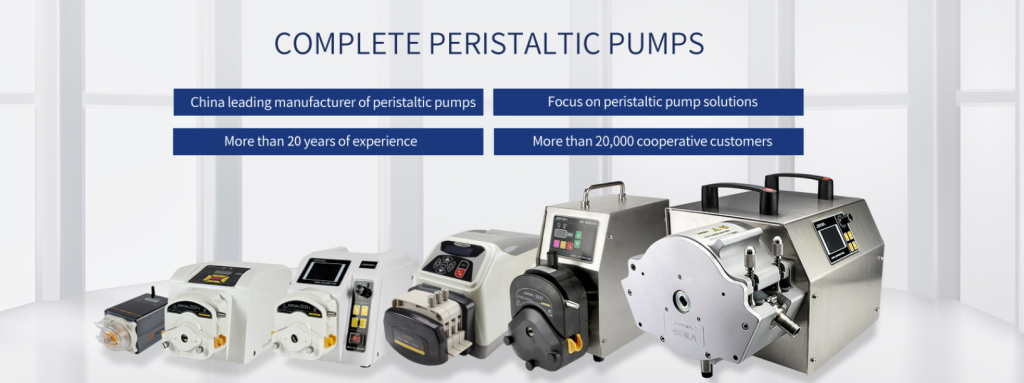
Getting stable fluid delivery is the first step toward perfect tissue sections. JIHPump (Jieheng Peristaltic Pumps) offers a straightforward and reliable solution for high-precision lab applications.
100% Contamination-Free Transfer. The fluid only moves through the tubing. It never touches the pump head or any mechanical parts. That keeps everything clean.
Low Pulsation with Multi-Roller Design. JIHPump increases the roller count inside the pump head. More rollers mean less pulsation, and that flattens out the flow fluctuations significantly.
Precision Motor Control. These pumps come with high-precision stepper motors. They support fine adjustments even at very low flow rates.
Perfect Compatibility with PharMed® BPT Tubing. JIHPump heads are tested to work seamlessly with wear-resistant and corrosion-resistant tubing. You get a secure fit and reliable performance run after run.