
Peristaltic Pump vs Syringe Pump: What’s Key Difference?
In the world of fluid transfer, the peristaltic pump and the syringe pump are like two martial arts masters, each with their own unique skills. One excels with a gentle “massaging” technique, while the other dominates with precise “push-and-pull” movements. They reign over different domains, but which one is truly superior? Let’s compare peristaltic pump vs syringe pump and find out!
Part 1. What is Peristaltic Pump?
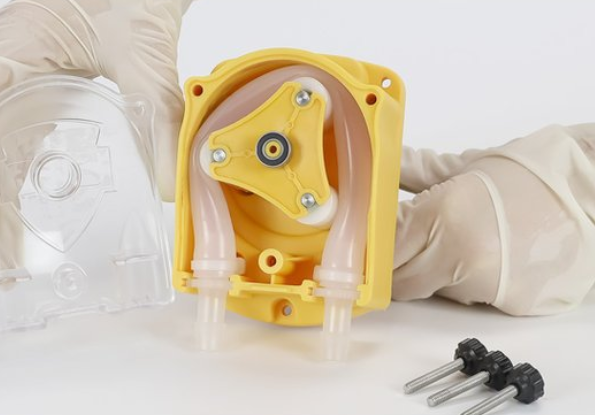
Peristaltic pump is a type of positive displacement pump that uses rollers or shoes to compress a flexible tube or hose, moving fluid through it. As the rollers rotate around the pump head, they pinch the hose and push the fluid forward in a controlled manner. Once the roller passes, the tube returns to its original shape, drawing in more fluid for the next cycle.
This pumping action means that the liquid inside the hose only comes into contact with the tube, rather than the moving components of the pump, ensuring a clean, contamination-free flow path.
As a result, peristaltic pumps are especially suitable for handling fluids that are corrosive, viscous, or contain solid particles, as well as those requiring sterile handling. They are widely used in applications such as chemical dosing, wastewater treatment, and medical devices like IV pumps, as well as in food and beverage processing.
Key Features of Peristaltic Pumps:
- Self-Priming: Can draw fluids from a source without needing to be primed.
- Gentle Flow: Suitable for delicate fluids as the pump’s action does not shear or damage the fluid.
- Fluid Containment: No contamination from moving parts since the fluid only contacts the tube.
- Versatile: Can handle a wide range of fluid viscosities, including thick or gritty substances.

Part 2. What is Syringe Pump?
Syringe pump is a precision fluid delivery device that uses a motorized plunger to push or withdraw fluid from a syringe. It is designed for applications where high accuracy and small, controlled volumes of liquid are required. The syringe is mounted in the pump, and a stepper motor drives the plunger to move the fluid at a very precise and consistent rate.
Syringe pumps are commonly used in laboratory, medical, and research settings. They are ideal for tasks that require precise volume control, such as drug delivery, chemical analysis, or fluid handling in controlled environments.
These pumps are particularly beneficial when a consistent, small volume of fluid needs to be dispensed over a long period, making them essential for experiments where timing and precision are critical.
Key Features of Syringe Pumps:
- High Accuracy: Syringe pumps offer precise control over flow rates, typically in the microliter to milliliter range.
- Continuous Flow: Can deliver a constant, uninterrupted flow of fluid at adjustable rates.
- Versatility in Applications: Used in medical, research, and laboratory settings for applications like infusion, dialysis, and fluid sampling.
- Compact Design: Syringe pumps are usually compact and can be easily integrated into smaller spaces, making them ideal for labs with limited room.

Part 3. Key Differences Between Peristaltic Pump vs Syringe Pump
Fluid Contact:
Peristaltic Pump: The fluid only comes into contact with the flexible hose or tube, ensuring that the pump components are never exposed to the fluid. This reduces contamination risk, making it ideal for sterile or sensitive applications.
Syringe Pump: The fluid passes through the syringe, directly contacting the syringe components, which can cause contamination if the syringe is not properly maintained. However, this also makes it suitable for precise fluid control in applications like drug delivery.
Flow Range:
Peristaltic Pump: These pumps are designed to handle higher flow rates, from medium to large amounts, making them ideal for industries like food processing, chemical dosing, and water treatment where bulk fluid transfer is necessary.
Syringe Pump: Syringe pumps excel at delivering very small, controlled volumes of fluid, typically used in research, pharmaceuticals, and medical treatments that require precise dispensing of small quantities.
Precision:
Peristaltic Pump: While reliable for larger volumes, peristaltic pumps may not offer the same level of precision as syringe pumps, particularly at higher flow rates where there may be some fluctuations in fluid flow.
Syringe Pump: Syringe pumps provide high precision, with minimal fluctuation in flow rate. This makes them the go-to choice for applications requiring exact measurements, such as in laboratory experiments or controlled medical infusions.
Suitable Liquids:
Peristaltic Pump: These pumps are ideal for handling thicker, more abrasive, or chemically reactive fluids as the fluid is only in contact with the hose, reducing the risk of damage to pump parts. They can easily handle liquids with particles, slurries, or corrosive chemicals.
Syringe Pump: Best suited for clear, non-particulate liquids, as the fluid directly interacts with the syringe. This makes syringe pumps more suitable for applications involving pharmaceuticals, laboratory reagents, or biological fluids where particulate contamination must be avoided.
Maintenance Costs:
Peristaltic Pump: Maintenance is relatively simple and cost-effective, as the hose or tube can be easily replaced without the need for intricate repairs. This makes peristaltic pumps a more economical choice for long-term use in many industries.
Syringe Pump: Maintenance for syringe pumps is more complex and expensive, as the syringe needs to be regularly replaced, and more intricate calibration and cleaning may be required. This can add to operational costs, especially in research or medical environments where precision is critical.
Applications:
Peristaltic Pump: Commonly found in industrial, pharmaceutical, and food processing industries, peristaltic pumps are versatile and capable of handling large volumes of diverse fluids. They are especially useful for applications that require consistent fluid transfer, such as in chemical mixing, fluid dosing, and water treatment plants.
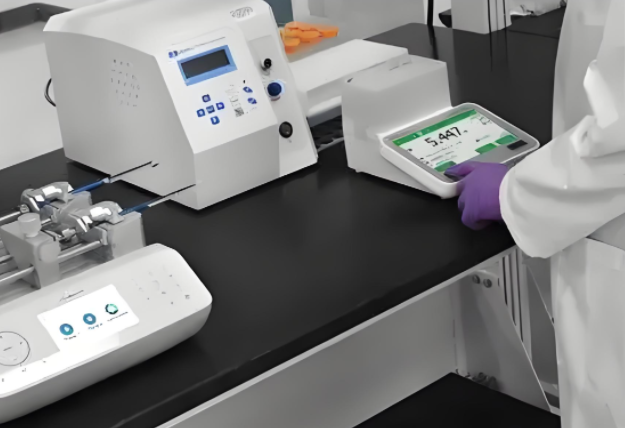
Syringe Pump: Syringe pumps are specialized tools used primarily in research, medical, and analytical environments. They are essential for precise fluid handling in applications like drug infusion, laboratory experiments, and chromatographic analysis, where precision and stability are paramount.
| Feature | Peristaltic Pump | Syringe Pump |
| Fluid Contact | Fluid contacts only the hose, preventing contamination | Fluid contacts the syringe’s internal components |
| Flow Range | Medium to large flow rates | Small volumes, microliters to milliliters per hour |
| Precision | Lower accuracy, potential flow rate fluctuations | High accuracy with minimal fluctuation |
| Suitable Liquids | Viscous, particulate, and corrosive liquids | Clear solutions, biological fluids, non-particulate liquids |
| Maintenance Costs | Simple hose replacement, low cost | Regular syringe replacement, more complex |
| Applications | Industrial, pharmaceutical, food processing, chemical | Medical, scientific research, laboratory |
Conclusion: Which Pump is Better?
Peristaltic pumps and syringe pumps each have their advantages, and the key lies in your specific needs:
If your application requires the transfer of corrosive, viscous, or large volumes of liquid, a peristaltic pump is the better choice. If your application requires precise control of small volumes of fluid, a syringe pump is more suitable.
If you are looking for high-quality peristaltic pumps, JIHPump offers a variety of models to meet different flow rate requirements and application scenarios. Contact them immediately for more product information!