
What is a 5V Peristaltic Pump? Benefits, Uses, and Buying Guide
In fields such as automated fluid control, smart hardware development, and laboratory equipment manufacturing, transferring micro-volumes of liquid accurately and without contamination has always been a core technical challenge. While common submersible or diaphragm pumps offer high flow rates, they usually fail to achieve precise micro-control, and the liquid is highly susceptible to contamination from the pump’s internal mechanical components.
This is precisely why the 5V Peristaltic Pump has become the go-to choice for numerous engineers, OEM manufacturers, and DIY makers. Here, we will provide an in-depth analysis of the working principles, core parameters, typical application scenarios, and control/selection strategies for micro 5V peristaltic pumps.
What is a 5V Peristaltic Pump? How Does It Work?
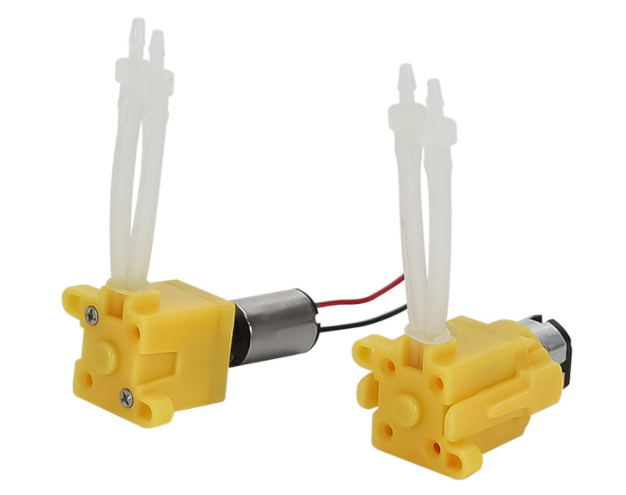
A 5V peristaltic pump (also frequently referred to as a micro 5V metering pump or micro fluid pump) is a type of positive displacement pump. Working principle of peristaltic pump is similar to squeezing a fluid-filled tube with your fingers, as your fingers move along the tube, the fluid inside is pushed forward.
Mechanically, a 5V peristaltic pump primarily consists of a motor, a pump head with rollers, and a flexible tube:
- The motor drives the rollers inside the pump head to rotate.
- The rollers alternately squeeze and release the elastic tubing.
- A vacuum is created in the squeezed area, drawing liquid in; as the rollers advance, the liquid is smoothly “peristaltically” pushed out.
Why Choose a 5V Voltage Supply?
Compared to common 12V or 24V industrial peristaltic pumps, 5V micro peristaltic pumps offer unique and distinct advantages:
1. Ultra-Safe 5V Low-Voltage Operation
The 5V voltage output is significantly lower than the safety level of voltage for humans; hence it is absolutely safe to touch. It can be powered directly by power banks of smartphones, USB ports, or lithium batteries and does not require any 220V AC supply input. Therefore, it is very suitable for students’ maker projects (Arduino/Raspberry Pi), mobile outdoor detection, or small medical equipment with high safety levels.
2. Completely Contamination-Free Delivery
When this pump is running, the liquid flows strictly inside the flexible tubing, never coming into contact with any internal mechanical parts or metals. This “isolated delivery” method ensures the fluid is completely safe from mechanical wear or lubricant contamination. Consequently, it is ideal for pumping baby milk, beverages, medical solutions, chemical reagents, and various sensitive laboratory samples.
3. Precise Flow Rate Control
A 5V peristaltic pump can control the volume of each dispense with the precision of a syringe. By adjusting the motor speed (using PWM control), you can effortlessly speed it up or slow it down. Even better, it supports bidirectional rotation (reversible flow). Reversing the pump slightly after dispensing completely solves the issue of dripping or leaking at the nozzle.
4. Compact and Space-Saving Structure
Thanks to the use of micro-motors, these 5V peristaltic pumps are incredibly small and lightweight, many models are only the size of a thumb or a fist. They can easily fit into tightly packed machine interiors, such as automatic household soap dispensers, wall-mounted pet waterers, or micro coffee machines, without adding any bulk to the overall equipment design.
5. Dry-Running Capability and Strong Self-Priming
Standard water pumps will quickly burn out if they run without water. However, a 5V peristaltic pump is completely immune to idling (dry running); even if the liquid runs out, it can idle for hours without damage. Additionally, it does not require pre-priming (filling the tube with water beforehand). Upon startup, it generates a strong suction lift to draw liquids up from lower levels, offering peace of mind when used in unattended automated plant watering systems.
Core Technical Parameters of 5V Micro Peristaltic Pumps
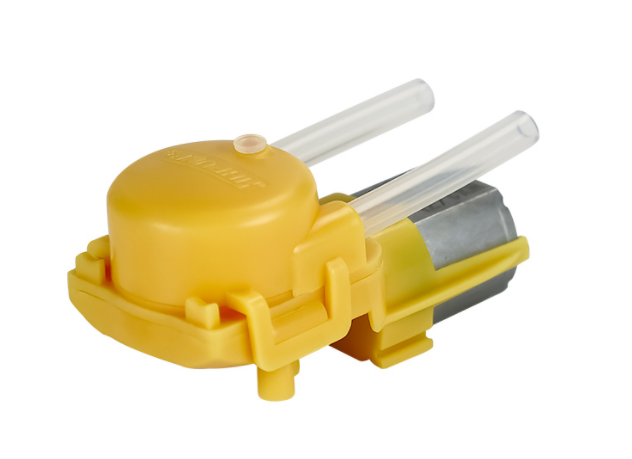
When selecting a model or designing a product, understanding the following core parameters will help you quickly lock in the most suitable micro peristaltic pump:
| Key Technical Indicators | Typical Range & Description |
| Operating Voltage | 5V DC (Supports PWM speed regulation) |
| Reference Flow Rate Range | Typically 5 ml/min to 100 ml/min (Depending on tube ID and motor speed) |
| Current Draw | Static/Idle approx. 0.2A; Peak load or startup current can reach 0.5A – 1.0A |
| Standard Tube Material | High-elasticity Silicone; Pharmed or Viton tubes customizable for chemical resistance |
| Motor Type | DC Brushed Motor (Highly cost-effective) or 5V Stepper Motor (For high-precision control) |
| Fluid Direction | Bidirectional / Reversible (Change flow direction by swapping polarities or via a driver) |
4 Typical Application of 5V Peristaltic Pump
With their compact size, high precision, and clean, contamination-free delivery, 5V micro peristaltic pumps find extensive long-tail applications across major industries:
1. Smart Agriculture & IoT (Arduino DIY Projects)
The 5V Peristaltic Pumps have emerged as the main component of the Automated Plant Watering System in both automated gardens and smart houses. With the help of the moisture sensor, one can directly use the 5V pump to provide metered water supply to the precious plants through an Arduino.
2. Automated Liquid Dispensing & Unattended Retail
Micro peristaltic pumps are excellent for precision filling and dispensing equipment. Examples include automatic coffee machines, micro automated bartenders, perfume filling machines, and automatic pet feeders/medication dispensers. Because they support reversible rotation, the pump can reverse at the end of a cycle to draw back residual liquid from the nozzle, completely preventing drips.
3. Reef Tank Trace Element Dosing
Maintaining a marine reef aquarium requires the regular, automated addition of trace elements like Calcium, Magnesium, and buffers. A 5V peristaltic pump combined with a timer can be configured into a highly cost-effective aquarium dosing pump.
4. Medical, Environmental & Laboratory Instruments
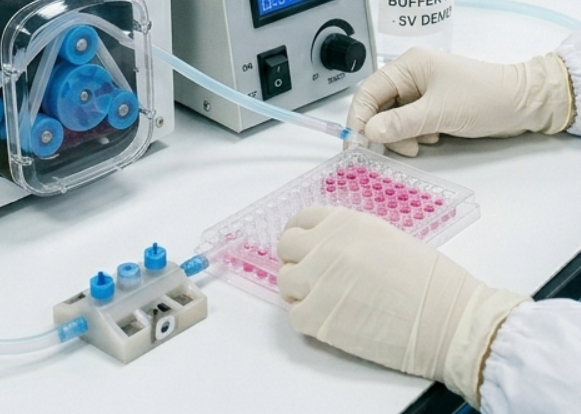
In biochemical analysis, environmental water sampling, and laboratory micro-titration projects, 5V micro peristaltic pumps serve as low-cost metering pumps. They can precisely deliver microliter level reagents, ensuring the accuracy of experimental data.
5V vs. 12V vs. 24V Micro Peristaltic Pumps
Micro peristaltic pumps with different voltages exhibit distinct variations in application scenarios, torque, and flow rate performance. Below is a direct comparison for your selection process:
| Dimension / Parameter | 5V Micro Peristaltic Pump | 12V Common Peristaltic Pump | 24V Industrial/Commercial Pump |
| Primary Positioning | Portable, DIY, Micro-volume control | General purpose, Balanced cost-performance | Industrial grade, Long lifespan, High load |
| Typical Flow Range | 5 – 100 ml/min | 20 – 500 ml/min | 50 – 2000+ ml/min |
| Motor Torque / Power | Low (Suitable for thin tubes, low viscosity) | Medium (Fits most standard flexible tubes) | Strong (Easily squeezes thick-walled industrial tubes) |
| Power Convenience | Extremely High (Supports USB, power banks, microcontrollers) | Medium (Requires 12V adapter or vehicle power) | Standard (Requires industrial switching power supply) |
| Continuous Lifespan | Short to Medium (Best for intermittent work) | Medium (Suitable for equipment integration) | Long (Supports 24/7 high-intensity continuous operation) |
| Typical Applications | Smart watering, portable testing, Arduino | Car washes, vending machines, lab equipment | Industrial water treatment, large medical devices, pharma |
Which Type to Choose?
1. 5V Peristaltic Pump: The Go-To for Portability and Makers
Can be powered directly via USB or a power bank, making it safe and highly versatile with power sources. It is optimized for low-viscosity liquids and short-duration, intermittent operations, the top choice for mobile portable devices and open-source maker projects.
2. 12V Peristaltic Pump: The Sweet Spot Between Performance and Cost
The most common general-purpose voltage on the market. It offers higher torque and flow rates than the 5V version, enabling it to accommodate thicker tubing. It is highly suitable for automotive equipment and various small-to-medium commercial automation machines.
3. 24V Peristaltic Pump: The Heavy-Duty Industrial Workhorse
Engineered specifically for 24/7 high-intensity continuous operation. With robust torque, it easily handles high-viscosity liquids and thick-walled industrial pump tubing. Boasting minimal power loss and high interference resistance, it is a standard component in industrial hardware.
How to Drive and Control a 5V Peristaltic Pump Correctly?
A number of creators and hobbyists try to control their 5V peristaltic pump through the direct connection to a microcontroller, such as Arduino, but end up having the reset of the board or broken parts.
IMPORTANT FACT: You should not connect your 5V peristaltic pump directly to the input/output pins of a microcontroller because the output current of most microcontrollers does not exceed 20mA-40mA, while the startup current of 5V DC motor exceeds 500mA.
Correct Hardware Driver Solutions:
Use a Switching Transistor or MOSFET Module: One can use the S8050 or PN2222 transistors or IRF520 MOSFET modules as electronic switches. The microcontroller sends a small electric current to the transistor that switches on/off the external 5V power supply connected to the pump.
Use a Motor Driver Chip (e.g., L298N or TB6612FNG): For the case where your 5V peristaltic pump may be used both to forward and reverse the direction of pumping or regulate the speed of pumping through Pulse Width Modulation (PWM), then using a specialized motor driver IC is the solution.
Use a Flyback Diode: Since the pump motor is an inductive load, it will induce a reverse EMF voltage whenever it is switched off. Therefore, one should always use a diode across the positive and negative terminals of the pump.
How to Source High-Quality 5V Peristaltic Pumps?
For procurement of product development with large commercial quantities, we would like to suggest you measure the supplier performance on the following aspects:
Silicone Tubing Lifespan and Ease of Replacement: Silicone tubing is a consumable that will experience fatigue with continuous usage. Good micro peristaltic pumps will have quick click or disassembling pump heads making tube replacement quick and easy.
Noise Reduction: Some DC gear motors tend to create audible gear noise during operations. In case your device needs to be operated in silence places such as office, home or hospital, make sure you take note of noise reduction techniques from the supplier.
Flow Consistency: Evaluate whether the pump’s flow rate drifts during prolonged continuous operation or frequent start-stop cycles. For applications requiring extreme precision, consider requesting a customized 5V version driven by a stepper motor.
Looking for Premium 5V Peristaltic Pump Solutions?
Whether you are an OEM manufacturer developing a brand-new automated fluid device or a cross-border e-commerce seller requiring reliable, high-volume supply, having an experienced fluid engineering partner is vital.
JIHPump provides a comprehensive lineup of fluid control solutions ranging from micro DC peristaltic pumps and stepper precision metering pumps to custom pump tube materials. We can tailor the ideal 5V micro pump to match your exact flow requirements, dimensional constraints, and power budgets. Don’t hesitate to contact us today!
FAQs about 5V Peristaltic Pump
Q: Can a 5V peristaltic pump run dry?
A: Yes, peristaltic pumps natively support short-term dry running without causing immediate damage.
Q: Can it be powered via USB?
A: Yes, most 5V peristaltic pumps can run directly off standard USB power sources.
Q: Is it suitable for food-grade applications?
A: Yes, provided that it is equipped with food-grade silicone tubing or FDA-certified flexible hoses.
Q: Is the flow rate stable?
A: Under stable motor speed control, the flow rate exhibits highly repeatable and reliable precision.