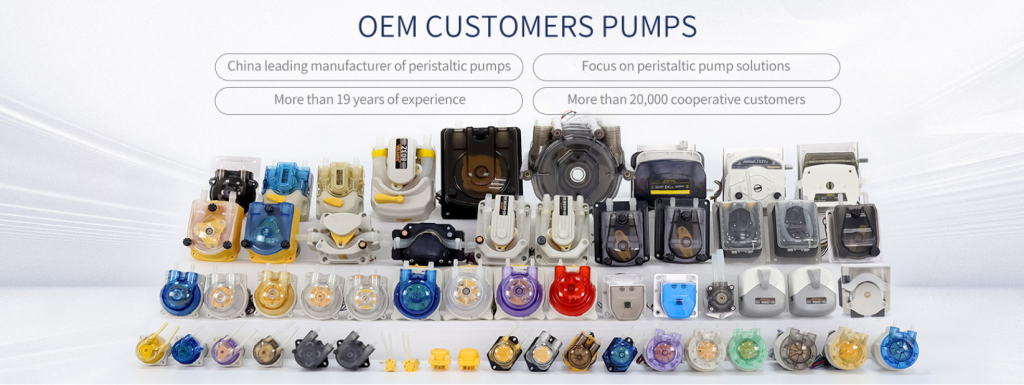
12V Peristaltic Pump: Benefits, Uses and Buying Guide
Truth is, if you’ve ever had to pump something gritty, deal with a liquid that goes bad if you beat it up too much, or figure out precise dosing off a battery in the field, you’ve probably run into the same frustration.
Traditional pumps are good at letting you down in those situations. They clog up, they start leaking, and before you know it you’re pulling things apart for the third time this month. A 12v peristaltic pump sidesteps most of that by doing one thing differently: the fluid never leaves the tube. That’s the core idea behind it. A 12v peristaltic pump runs on 12 volts DC, operates quietly, keeps the fluid path clean, and doesn’t come with a long list of parts that need constant attention.
In this guide, we’ll walk through what these pumps actually are, how they work, where you’ll find them in practice, and how to approach choosing one, without turning it into a heavy engineering read.
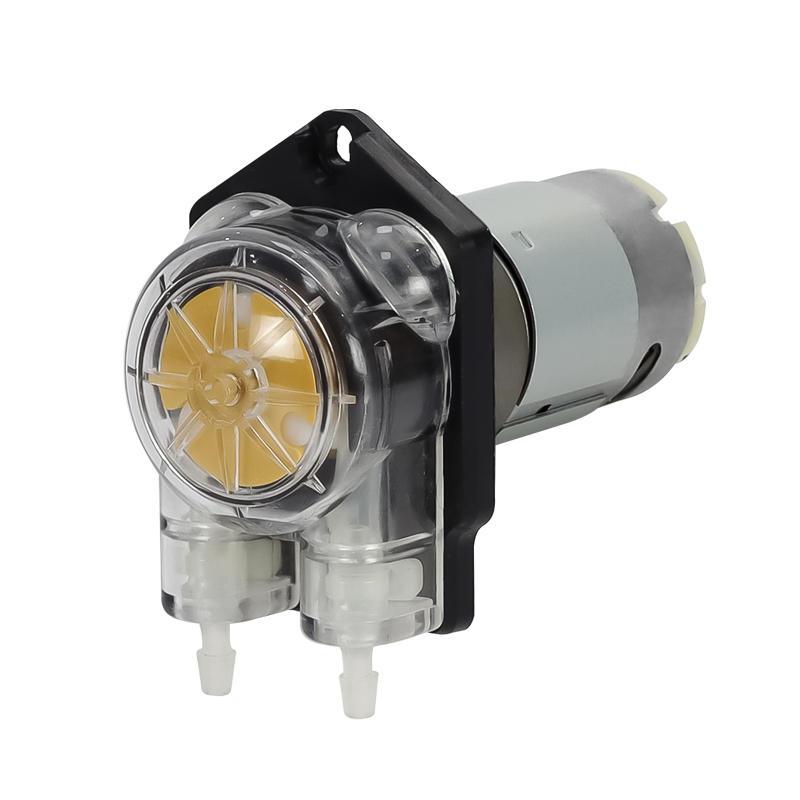
What Is a 12V Peristaltic Pump?
So what exactly is a 12V peristaltic pump?
It belongs to a category called positive displacement pumps, meaning each cycle pushes out a predictable volume of fluid. You can think of it like a measuring spoon that scoops a consistent amount every single time.
It runs on 12 volts DC, and when you look inside, there are really just three main components. A motor provides the rotation. A pump head holds the rollers and the tubing track in position. And a flexible tube carries the fluid.
The key design insight is straightforward: the liquid only ever touches the inner wall of that tube. It never comes into contact with metal parts, seals, or any other moving components inside the pump. No contact with metal parts, no seals in the fluid path, no moving bits dunked in your chemical.
If you’re more familiar with something like a centrifugal pump, where an impeller spins fast and flings liquid outward (think of a fan blowing air around), or a diaphragm pump that uses a wobbling membrane to pull and push, you’ll notice right away what’s missing on a peristaltic design.
There’s no mechanical seal, those seals that try to stop fluid creeping along a shaft, and often fail. No packing glands to tighten and replace. No check valves that can stick open or clog.
This seal-less design eliminates common failure points found in other dosing technologies, such as when comparing a solenoid pump vs. peristaltic pump for precision dosing. The tube itself does double duty: it’s both the pumping chamber and the sacrificial wear item. When it eventually needs changing, you yank the old one out and thread a new one in, thirty seconds maybe, no tools, no calling maintenance. When it wears out, you just swap in a new piece of tube, takes half a minute, no tools, no dismantling.
The range of 12v peristaltic pumps on the market today is actually pretty broad.
- Tiny micro pumps weigh just a few dozen grams and can start at a few millilitres per minute, useful for portable analysers.
- Mid‑range ones easily do over a hundred millilitres per minute.
- Industrial versions can push several litres per minute and handle things like food filling lines without a problem.
That wide span makes a 12v peristaltic pump a surprisingly flexible piece of equipment across all kinds of fluid handling setups.
How Does a 12V Peristaltic Pump Work?
The way this pump moves liquid is basically copied from your own body. When you eat, your oesophagus uses a series of squeezing waves to push food down; that physiological motion is called peristalsis (a tubular organ pushing contents forward through rhythmic contractions). A 12v peristaltic pump does exactly the same thing, except it pushes your fluid instead of a mouthful of food.
Inside the pump head, there’s a set of rollers (small wheels mounted on a rotor, designed to press down on the tube). They sit on a rotating rotor (the central spinning part that carries the rollers). As the rotor turns, the rollers press on the flexible tube one by one. Where a roller squashes the tube, it creates a temporary seal that traps a small pocket of fluid between two consecutive rollers. As the roller keeps moving forward, that trapped pocket gets pushed along. When the roller lifts off, the squashed tubing springs back to its original shape, creating suction that pulls fresh fluid in through the inlet.
This whole cycle just keeps repeating, and there’s a really handy detail built in: every rotation pushes out a fixed amount of liquid. That gives you a linear relationship between flow rate and speed (when one quantity changes by a fixed proportion to another, like driving at a steady speed, if you double the time you drive, you double the distance). Want to double the flow? Just double the speed. Most of the time, you don’t need a complicated flow meter tied into a feedback loop, and you don’t have to recalibrate constantly. That’s one of the natural advantages that come with a positive displacement design.
What spins the rotor is usually a 12V DC gear motor (a DC motor paired with a reduction gearbox, which brings the speed down and multiplies the torque). It can pull power from a battery, a solar‑charged battery bank, or a regular DC power supply. Some applications need really high precision dosing, and for those, you can find versions that use a stepper motor (a motor that moves in fixed angular steps, every pulse it gets makes it turn one tiny increment, so it’s great for precise position and speed control). Those tend to show up in lab analysers and small instruments where exact volumes matter.
Key Advantages of 12V Peristaltic Pumps
Over time, 12v peristaltic pumps have picked up a few clear strengths that are worth knowing when you’re trying to make a selection.
Only the tubing touches the fluid
This is the biggest one. The liquid stays inside the tubing the whole time, never touching the pump head, metalwork, seals, or valves. The fluid path is physically isolated from the machine’s moving parts.
That comes in really handy in two common situations: when you can’t afford to contaminate the fluid (like medical infusions or food ingredient dosing), and when the fluid would eat the pump alive (strong acids, oxidising chemicals). You just need to confirm that the tubing material can handle the liquid; you don’t have to worry about the pump body getting destroyed.
Stable metering with a simpler setup
Because each rotation moves a set volume, a 12v dc peristaltic pump gives you a pretty steady flow under constant speed. You often don’t need to add a separate flow meter (a sensor that measures how much fluid is passing through in real time).
Controlling speed gets you close enough to the right flow rate, and from an engineering standpoint, that means fewer components in the system and fewer places for something to fail.
Gentle on the fluid
The pumping action is more of a soft squeeze and release, not high‑speed stirring or hard shoving. That low shear force (very little tearing or crushing stress on the fluid) matters a lot when you’re dealing with shear‑sensitive stuff. Think cell suspensions, protein solutions, and certain polymer flocculants. A centrifugal pump spinning fast could rip those structures apart. A peristaltic pump tends to leave them pretty much intact.
Self‑priming and able to run dry for a bit
You don’t have to fill the pump with liquid before starting it. A 12v peristaltic pump can self‑prime (pull liquid up by itself without needing to be manually flooded first) and usually hits quite a high vacuum level.
Even better, it can tolerate running dry for a short time. If the liquid supply gets interrupted, the pump can keep running for a while without damage. A lot of other pump designs would burn up their seals or seize under the same conditions.
Maintenance is really just swapping tubing
For the person running the machine day to day, maintenance mostly means changing the tube now and then. There’s no mechanical seal to dismantle, no valve to clean, no bearing to regrease.
Replacing the tube usually takes maybe thirty seconds—faster if you’ve done it a few times. In a continuous production setting, this means less downtime, lower overall running costs, and an opportunity to further optimize efficiency by following specific secrets to extending peristaltic pump tubing life.
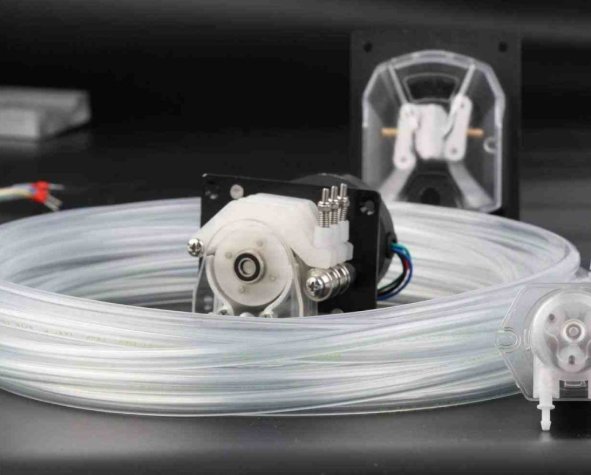
Common Applications of 12V Peristaltic Pumps
These pumps show up in more places than most people realise. Here are some of the typical industry spots where they’ve become a pretty standard part.
Food and beverage equipment
Automatic syrup dispensers, the dairy pump inside an ice cream machine, the concentrate dosing pump in a coffee maker, many of those are 12v peristaltic pumps.
Cross‑contamination is a big deal in food production. With a peristaltic pump, the product only ever travels through the tubing. When it’s time to clean, you just put on a new piece of tube, and you get a completely fresh fluid path, a lot less labour than taking apart and scrubbing a whole pump chamber.

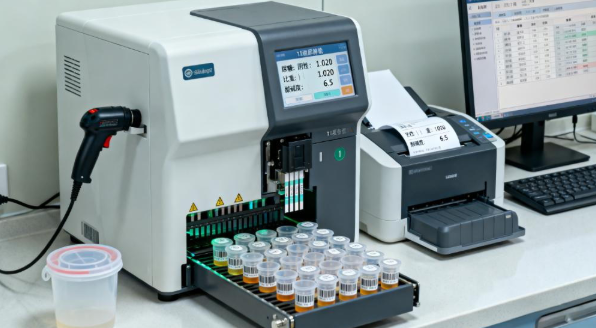
Medical and in‑vitro diagnostic instruments
Clinical chemistry analysers, blood rheometers, and similar devices need to transfer reagents and samples without any residue or contamination, and with tight volume control.
They almost always use tiny 12v peristaltic pumps. Low speed, smooth running, and they don’t destroy blood cells or other sample components, which is something centrifugal pumps struggle with.
Environmental monitoring and field sampling
Water quality technicians often have to carry their gear to a riverbank or a discharge outlet. There’s no mains electricity out there, so everything runs off batteries. A 12v dc peristaltic pump works straight from a DC source, it doesn’t weigh much, and it fits nicely inside a portable sampler.
It can also do low‑flow sampling without yanking so hard that it stirs up bottom sediment, which helps get a representative sample.
Industrial chemical dosing
Adding brightener to an electroplating bath, injecting biocide into a cooling tower on a schedule, and dosing detergent in a laundry setup are all chemical metering tasks.
One under‑appreciated strength of a 12v peristaltic pump in these jobs is how it handles liquids that generate gas bubbles, like sodium hypochlorite. A diaphragm pump can get vapour lock when gas collects in the line, and it can’t pick up liquid anymore. A peristaltic pump doesn’t really care if there are bubbles inside the tube; it just keeps pushing everything forward.
Smart home appliances and commercial cleaning machines
These days, the water refill pump in a robot vacuum‑mop combo and the cleaning solution pump in a floor scrubber are often 12v peristaltic pumps.
They don’t mind being mounted at odd angles, they run quietly, and they don’t use much power. That fits really well into home and commercial environments where space is tight, and noise is a concern.
Ink delivery in inkjet printing
A wide‑format inkjet printer needs to move ink from the reservoir to the printhead without noticeable pulsation (that’s when the pressure or flow surges and then drops, like a tap going from a rush to a trickle).
With a multi‑roller peristaltic pump, the overlap between roller actions keeps pulsation down to a pretty low level, giving you a steady ink supply during printing.
12V Peristaltic Pump Flow Rate and Control Methods
When it’s time to pick a pump, flow rate, and how you control it are two things you can’t skip.
What determines the flow rate
It comes down to three main factors: motor speed, the inside diameter of the tubing, and how many rollers are in the pump head. Higher speed and a larger tubing ID mean more liquid moved per minute; that’s the straightforward part.
Roller count affects the size of each little fluid pocket squeezed out. More rollers make smaller individual pockets and less pulsation, but at the same speed, the total flow drops a bit. Fewer rollers give you bigger pockets and higher total flow, but the pulsation becomes more noticeable. That’s the trade‑off you need to think about during selection.
The range on the market is wide. The smallest micro pumps start at just a few millilitres per minute. Mid‑size ones run to a couple of hundred millilitres per minute. Big industrial units easily reach several thousand millilitres per minute. Depending on your environment, you may need to evaluate different industrial peristaltic pump types and selections to handle large-scale filling flows without a problem, as the range on the market today is actually pretty broad.And because you can often change the tubing size on the same pump head, the flow rate can vary by a factor of several times, giving you quite a bit of room to adapt to different systems.
Common ways to control speed and flow
The simplest route is voltage adjustment or PWM speed control. PWM (pulse‑width modulation, where you switch the power on and off very fast to get the effect of a lower average voltage, like quickly feathering a tap to get a steady moderate stream) costs little, and the wiring is simple. You’ll find this approach inside plenty of small appliances.
When you need really accurate volumes, stepper motors usually enter the picture. A stepper moves one precise angular step per pulse, so you can know exactly how many rotations it has made and where it stopped. If your spec is something like “dispense 5.2 mL per shot with minimal error,” that’s stepper motor territory.
For industrial setups that talk to a PLC or a host computer, many 12v peristaltic pumps support an analogue control signal or RS485 communication (a serial communication method common in industrial gear, letting multiple devices share a single bus and exchange data with a computer or PLC). That way, you can adjust the flow rate and check the pump’s status from a control room.
A lot of pumps also come with a small built‑in keypad and digital display. You can set and read the speed and flow right on the pump itself, which is handy for local operation. No need to pull out a laptop each time, just turn a dial or punch in a number.
How to Choose the Right 12V Peristaltic Pump
There’s no one‑size‑fits‑all answer, but if you work through these five questions in order, you can usually narrow things down pretty quickly.
Get your flow requirements clear
Try to nail down three numbers: the flow you’ll run at most of the time, the absolute minimum you might occasionally use, and the peak flow you’ll ever need. Then match those against the flow curves in a selection chart.
One detail that easily gets missed, if you change the tube size, the actual flow at the same RPM changes too. So it’s not just about the pump head model; you need to confirm the tubing spec as well.
Check chemical compatibility between your liquid and the tube
This is where things most often go wrong in practice. Different fluids attack tube materials in very different ways. Common options include silicone, PharMed BPT, Norprene, and fluoroelastomer. Each has its own chemical resistance profile and expected life.
If you’re not sure, a reliable approach is to take a short piece of tubing and soak it in the actual fluid for a few days. Watch for swelling, colour change, or hardening.
Look at the available space and operating conditions
You need to know how much room you’ve got for the pump, whether it runs continuously or just occasionally, and what mounting orientation is allowed. Tightly packed OEM enclosures often can only fit a micro pump head. Stations that need a lot of flow will need a bigger unit.
Some pumps behave differently standing upright versus lying flat; for example, air purging and service life might vary, so it’s worth asking the manufacturer.
Pick the right control method
If all you need is on/off, a basic brushed DC motor version is usually enough and keeps the cost down. Want to adjust speed? PWM or variable voltage will do it.
Need precise metering and data exchange with a higher‑level system? Then you’ll want a stepper motor with a communication interface. The control choice affects how easy the pump is to live with later, so it’s a good idea to settle it early in the selection process.
Don’t overlook how easy it is to change the tubing
For equipment that needs regular tube replacement, whether the pump head allows quick, tool‑free swapping is a detail worth paying attention to. Some designs let you pop the old tube out and the new one in within seconds by hand. Others might force you to remove the surrounding panels first.
On a production line where downtime is expensive, the time it takes to change a tube feeds directly into your maintenance cost, so it belongs on your checklist.。
Why Choose JIHPump 12V Peristaltic Pump
Flexible OEM customization, not just standard specs
When you’re fitting a 12v peristaltic pump into your equipment, the three usual sticking points are mounting hole spacing, supply voltage mismatch, and tubing chemical compatibility. JIHPump can adjust the mounting interface and motor voltage. For tubing material, they offer options like silicone, PharMed BPT, Norprene, and others, so you don’t have to redesign your whole machine around a fixed pump specification.
Every pump is tested before it leaves the factory
Flow accuracy in a peristaltic pump depends a lot on manufacturing consistency. JIHPump has shipped over a million units. That volume itself has stress‑tested a quality control approach where every single 12v peristaltic pump is powered up and checked, not just a random sample from a batch.
A wide product line that makes one‑stop sourcing practical
From micro to higher flow, JIHPump’s 12v peristaltic pump range covers roughly 10 mL/min up to 3405 mL/min. The WX1 series weighs about 41 grams and fits tight spaces, while the 603Z series handles larger filling flows. Having multiple pump types available within the same supplier system reduces the coordination effort of dealing with several vendors.
Engineering support that follows the project through
From sampling and testing to small pilot runs and then full production, JIHPump has an application engineering team that can help with testing and parameter adjustments. Their website shares application cases across food, medical, environmental, printing, and other industries. Because they handle manufacturing in‑house, lead times during peak periods are relatively predictable, which makes planning a bit easier. since this will help to lower liquid friction as well as increase the lifespan of the pump and pipes. The inclusion of these pumps in the PLC controlled system makes it possible to make instant adjustments in view of variations in viscosity due to temperature differences.