
Applications of Peristaltic Pumps in University Laboratories
University laboratories are dynamic environments where precision, versatility, and reliability are paramount. From delicate cell cultures to aggressive chemical reactions, researchers require equipment that can handle a diverse range of fluids with accuracy and minimal risk of contamination. Peristaltic pumps have emerged as a vital tool in these settings, offering a unique combination of features that make them ideal for a wide array of laboratory applications.
This article explores the core characteristics and advantages of peristaltic pumps, delves into their typical applications within university laboratories, and outlines essential precautions for their use.

Core Features and Advantages of Peristaltic Pumps
A peristaltic pump is a device that transfers fluid by squeezing a flexible tube, and its working principle simulates the way the human intestinal tract peristalsis. The rollers or blocks in the pump head perform periodic squeezing and releasing movements on the hose in a rotational or linear motion, thereby driving the liquid in the tube to flow in a directional manner.
This structural design endows the peristaltic pump with the following significant characteristics:

Complete Isolation of Fluid from the Pump Body
The fluid path of a peristaltic pump is achieved solely through disposable or replaceable tubing. The liquid does not come into direct contact with the pump body throughout the process, avoiding the risk of cross-contamination and protecting the pump mechanism from corrosive or reactive substances.
This feature is particularly important in biological experiments requiring strict contamination control (such as cell culture, drug preparation).
Precise Flow Control
Peristaltic pumps can achieve high-precision flow regulation (with error ranges typically below ±1%) by adjusting the rotational speed or extrusion frequency, meeting the needs of laboratories for micro-reagent addition or long-term constant flow delivery.
For example, in electrochemical analysis, where electrolyte needs to be delivered to the electrode surface at a fixed rate, the stability of a peristaltic pump is significantly better than that of a traditional syringe pump.
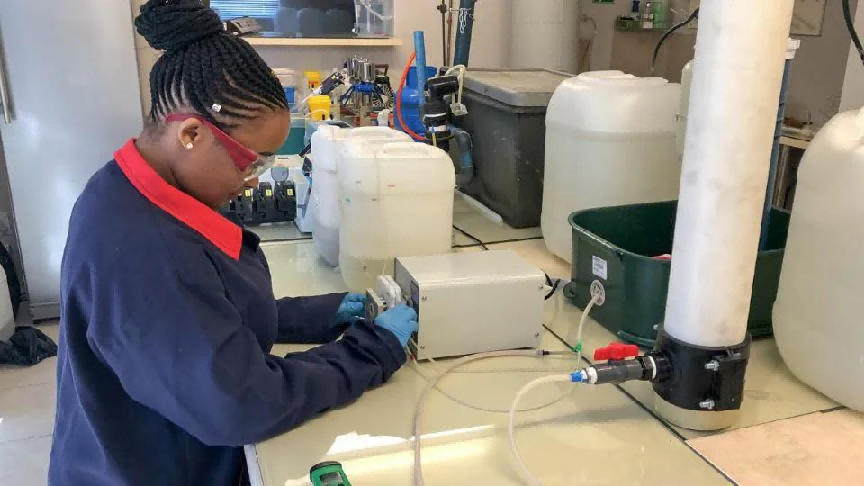
Wide Range of Media Adaptability
Whether it’s corrosive liquids (such as strong acids and bases), high-viscosity fluids (such as polymer solutions), or mixtures containing suspended particles, as long as you select a hose with the appropriate material, peristaltic pumps can safely transport them. From aqueous solutions to organic solvents, peristaltic pumps can adapt to various chemical compatibilities.
In materials laboratories, this characteristic makes them an ideal choice for handling nanoparticle dispersions.
Easy Maintenance and Cleaning
The simple design of peristaltic pumps makes them incredibly easy to maintain and clean. The only part that typically requires replacement is the tubing, which can be swapped quickly and easily. Cleaning is also straightforward, as the fluid path can be flushed by simply running the pump with a cleaning solution. This minimizes downtime and ensures the pump remains in optimal condition.
Typical Application Scenarios of Peristaltic Pumps in University Laboratories
The unique characteristics of peristaltic pumps make them indispensable in various university laboratory settings:
Chemical Synthesis and Reaction Control
In processes like catalytic reactions and polymer synthesis, peristaltic pumps can precisely control the addition rates of reactants, catalysts, and solvents, ensuring the accuracy of reaction kinetic data. They are also used in automated synthesis systems. Their isolating properties also prevent corrosion of the pump body by organic solvents.
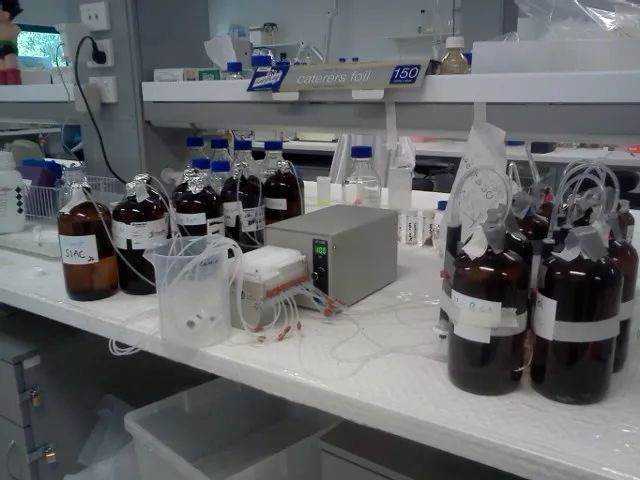
Biomedical Experiment Support
Peristaltic pumps play a vital role in cell culture, drug delivery, and other biomedical applications. Their gentle pumping action minimizes shear stress on cells and other delicate biological materials.
Scenarios such as cell culture media transfer and in vivo perfusion experiments require absolutely clean fluid contact surfaces. Medical-grade silicone tubing combined with the complete isolation design of peristaltic pumps perfectly meet this need. In addition, in microfluidic chip research, multi-channel peristaltic pumps enable parallel control of complex flow paths.
Environmental Engineering Simulation Systems
In large-scale installations such as water pollution treatment models and artificial wetland simulations, peristaltic pumps, with their long-distance conveying capacity and anti-clogging properties, can stably transport wastewater containing impurities, supporting research on environmental parameter monitoring.
For example, researchers studying environmental processes often use peristaltic pumps to create controlled flow conditions in simulated ecosystems or experimental setups.
Combined Use with Analytical Instruments
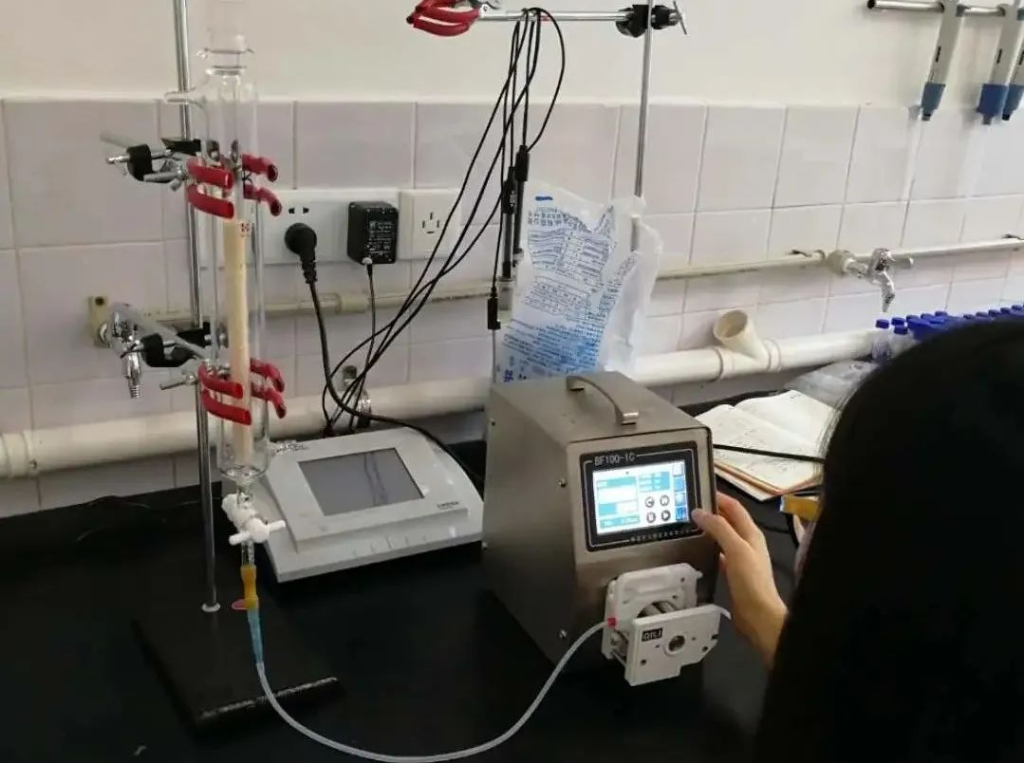
Peristaltic pumps are often integrated with analytical instruments, such as chromatography systems, spectrophotometers, and mass spectrometers. They provide a reliable and consistent flow of samples or reagents, ensuring accurate and repeatable analytical results. In addition, the pulsation suppression technology of peristaltic pumps (such as multi-roller design) can reduce signal noise and improve the repeatability of detection results.
Precautions for Using Peristaltic Pumps
In a multidisciplinary university laboratory, the application scenarios of peristaltic pumps cover multiple stages from basic research to engineering development:
- Maintenance: Regular inspection of the tubing is crucial. Over time, the tubing can wear out due to repeated compression, leading to leaks or reduced flow rates. Replacing the tubing regularly, according to the manufacturer’s recommendations, is essential. Checking the pump head rollers for wear and tear is also advisable.
- Operation: Ensure the tubing is properly installed and secured in the pump head. Avoid running the pump dry, as this can damage the tubing. When using viscous fluids, select tubing with the appropriate wall thickness and material to prevent excessive stress on the pump. Always start and stop the pump gradually to avoid pressure surges.
- Cleaning: Clean the tubing regularly to prevent the buildup of deposits or contamination. Flush the tubing with an appropriate cleaning solution, ensuring compatibility with the fluid previously pumped. For sterile applications, use aseptic techniques and sterilize the tubing as needed.
- Repair: If the pump malfunctions, consult the manufacturer’s manual or contact their service department for assistance. Do not attempt to repair the pump yourself unless you are qualified to do so. Using genuine replacement parts is essential for maintaining the pump’s performance and warranty.
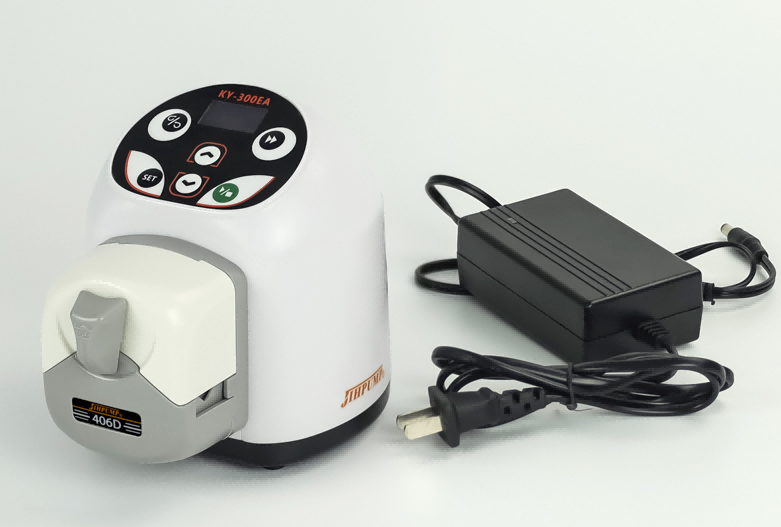
JIHPUMP Peristaltic Pumps – Intelligent Fluid Transfer Equipment for University Laboratories
JIHPUMP offers a range of peristaltic pumps designed specifically for the demanding needs of university laboratories. These pumps incorporate advanced features such as:
- Precise Digital Control: JIHPUMP peristaltic pumps offer user-friendly digital interfaces that allow for precise control of flow rates, dispensing volumes, and other parameters. Many models feature programmable functions, allowing for automated fluid handling tasks.
- Variable Speed and Flow Rate Ranges: JIHPUMP pumps cater to a wide range of flow rate requirements, from microfluidic applications to larger-scale fluid transfers. Their variable speed capabilities allow for fine-tuning of flow rates to match experimental needs.
- Chemical Compatibility: JIHPUMP offers a wide selection of tubing materials compatible with various chemicals and biological fluids. This ensures that researchers can find the perfect tubing for their specific application.
- Compact and Durable Design: JIHPUMP peristaltic pumps are designed to be compact and robust, making them suitable for use in crowded laboratory environments. Their durable construction ensures reliable performance over extended periods.
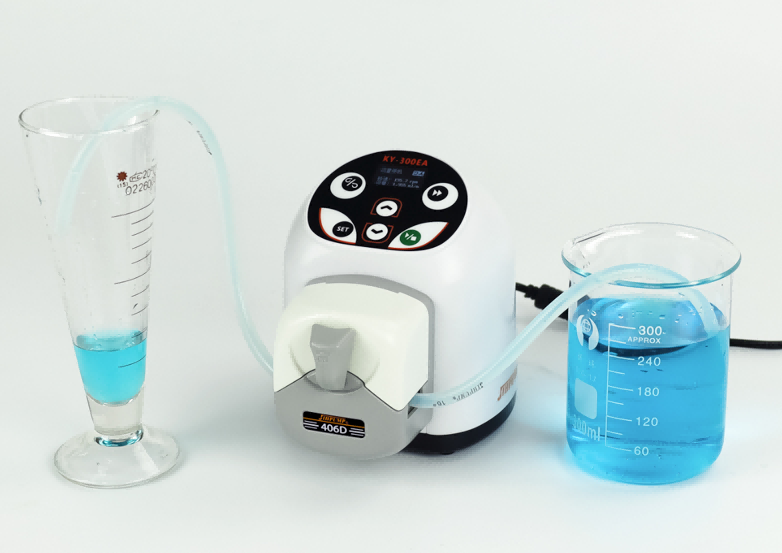
With the increasing prevalence of microfluidic technology and high-throughput screening platforms, the demand for intelligent fluid transfer equipment in university laboratories will continue to rise. JIHPUMP’s peristaltic pumps, combining accuracy, versatility, and ease of use, make them a valuable tool for researchers across various disciplines.