
Are Peristaltic Pump Self Priming? A Guide to Self-Priming Principles and Limits
Peristaltic Pumps, due to their core advantages such as high-precision dosing, zero pollution, and low maintenance, have become standard configurations in industries like chemical processing, modern laboratories, food and beverage, medical devices, and environmental water treatment. For many procurement personnel, the most common practical question encountered during selection is:
Are Peristaltic Pumps Self Priming?
The brief and direct answer is: Yes, peristaltic pumps are inherently naturally self-priming pumps (Naturally Self-Priming Pumps).
Unlike centrifugal pumps, peristaltic pumps do not require pre-priming (Priming) before they can automatically draw in liquid and begin delivery. Therefore, they are particularly suitable for working conditions that involve intermittent operation, low liquid levels, or require frequent starts and stops.
Here, we will introduce in detail why peristaltic pumps have self-priming capabilities, what the self-priming height is, what the advantages and limitations are, and how to choose a self-priming peristaltic pump suitable for your application.
What is the Self-Priming Capability of a Pump?
In fluid mechanics, self-priming capability refers to the ability of a water pump, upon starting, to automatically discharge air from the suction pipeline and form a sufficient local vacuum, thereby spontaneously drawing liquid that is lower than the pump’s installation position into the pump body, during which there is no need to manually fill the pump or pipeline with liquid.
For industrial integrated equipment (such as underground storage tank extraction, high-level dosing systems), a pump with self-priming capabilities means:
- Zero manual intervention: No need for manual priming or water addition.
- Gas-liquid mixed transport: Capable of directly discharging air pockets within the suction pipeline.
- Reduced system cost: Eliminates the need to additionally install foot valves, vacuum priming tanks, or complex automated priming devices.
Why Can Peristaltic Pumps Achieve Natural Self-Priming?
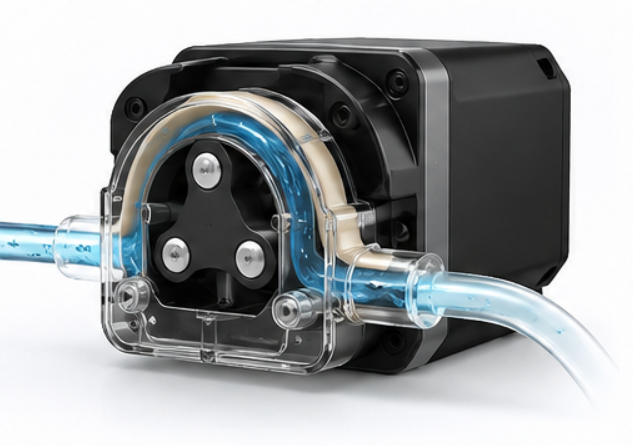
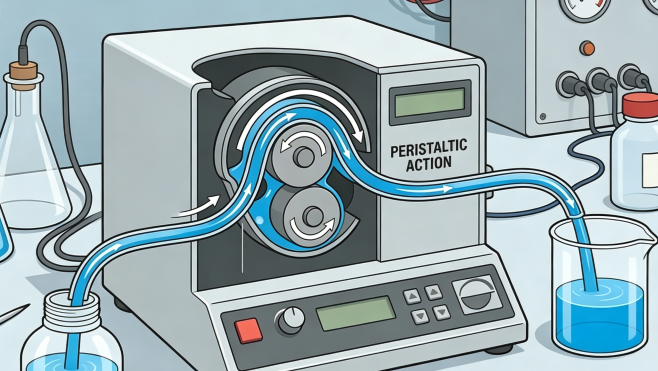
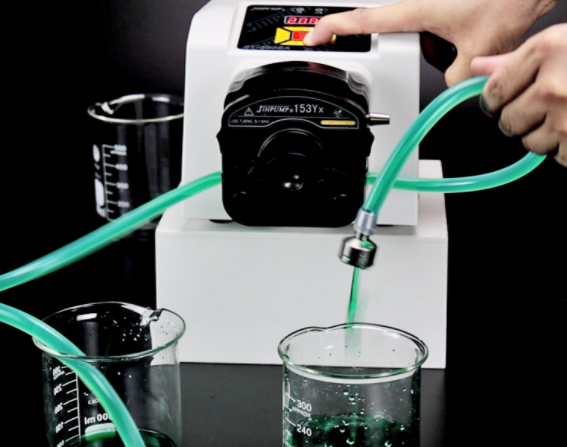
The self-priming capability of a peristaltic pump stems from its unique positive displacement (Positive Displacement) working mechanism. Its working process is just like human fingers squeezing a flexible hose filled with fluid. The specific physical process is as follows:
[Roller completely compresses the hose] ──> [Enclosed volume pushes forward] ──> [Roller leaves / Hose relies on elasticity to restore] ──> [Instantaneous generation of local vacuum]
Absolute physical seal: The motor drives the rollers (Rollers) or shoes inside the pump head to rotate. The rollers cooperate with the pump housing to completely compress the hose (Occlusion). This compression point forms an absolute physical shut-off barrier between the suction end and the discharge end.
Generation of vacuum: As the roller rolls forward to push the fluid, the flattened hose, after the roller leaves, relies on its own rebound elasticity (Hose Restitution) to rapidly restore its original geometric shape.
Atmospheric pressure push-in: The restoration of the hose causes the internal volume to expand instantly, thereby creating a very strong local vacuum (negative pressure) in the suction end pipeline. Under the action of external atmospheric pressure, the liquid at the lower position is continuously pushed into the hose, achieving self-priming.
Since the fluid only comes into contact with the inner wall of the hose during the entire delivery process and does not touch the pump head body, bearings, or seals, this not only achieves its stable self-priming performance, but also fundamentally eliminates the risk of cross-contamination and medium leakage.
What is the Maximum Self-Priming Height of a Peristaltic Pump?
Many users care about: exactly how high can a peristaltic pump suck?
In reality, the self-priming height (suction lift) does not have a unified value; different brands, different models, and different working conditions will all have variations. Under normal circumstances:
| Working Condition | Typical Self-Priming Height (Suction Lift) | Practical Application Suggestion |
| Standard clean water medium | 3.0 to 5.0 meters of water column | Suitable for the vast majority of conventional dosing scenarios |
| Ordinary industrial liquid | 5.0 to 7.0 meters of water column | Need to consider pipeline resistance loss |
| Optimized design / Reinforced hose models | Can reach 8.0 to 9.5 meters of water column | Already close to the physical limit under standard atmospheric pressure |
According to the principles of fluid mechanics, the theoretical maximum suction lift limit under standard atmospheric pressure is approximately 10.3 meters of water column. High-performance industrial peristaltic pumps can reach a practical dry suction height of around 9 meters, ranking among the best among all positive displacement pumps.
Limitations and Factors Affecting Self-Priming Height:
The actual self-priming height is also affected by the following factors:
- Hose Material
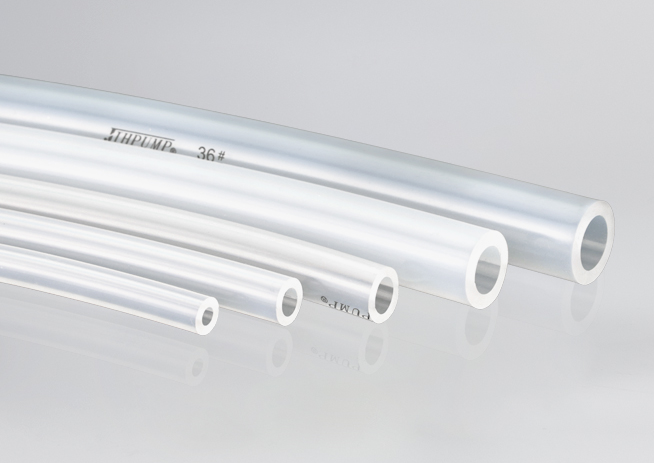
Hoses of different materials have different elasticities. For example: Silicone tubes (Silicone), Norprene tubes, Santoprene tubes, PVC tubes. The better the elasticity, the stronger the rebound force after the hose deforms, the more stable the negative pressure formed, and the self-priming effect is usually also better.
- Tube Diameter Size
Hoses with smaller tube diameters, due to the small volume of internal air, are usually easier to form a vacuum; while larger tube diameters are suitable for higher flow rate delivery, but the air evacuation time during dry suction is slightly longer. Therefore, a reasonable selection needs to be made based on flow requirements.
- Liquid Viscosity
When delivering clean water, the self-priming capability is the best. If delivering high-viscosity liquids such as syrup, ink, and glue, the fluid resistance increases, and the self-priming height may decrease.
- Rotation Speed
Within a reasonable range, increasing the rotation speed can speed up the vacuum extraction rate and enhance the liquid suction capability; however, excessively high rotation speed may also accelerate hose wear, so comprehensive consideration is required.
- Installation Method
The shorter the suction tube, the fewer the elbows, and the better the seal, the better the self-priming effect. If a tiny air leak exists at the suction tube connection, air will continuously enter, and the self-priming capability will drop significantly.
What are the Advantages of Peristaltic Pump Self-Priming?
No need for manual pump priming: This is one of the greatest advantages. The equipment can automatically suck liquid upon startup, saving manual operation time and improving work efficiency.
Can idle for a short time: Many pumps are easily damaged in their mechanical seals when running without liquid (dry running), whereas peristaltic pumps, because the liquid does not contact internal mechanical structures, can idle for a short time without causing serious damage. This makes them more suitable for automatic control systems.
Simpler pipeline design: Since there is no need to install additional pump priming devices and complex liquid-leading systems (such as foot valves, priming tanks), equipment design costs can be effectively reduced.
Low maintenance cost: Peristaltic pumps have no mechanical seals, nor do they require complex lubrication systems. Usually, only regular replacement of the hose is needed to restore performance, greatly reducing maintenance costs.
Can deliver media containing air: Peristaltic pumps can not only deliver liquids, but can also handle media mixed with liquid and air, making them very suitable for metering dosing and sampling systems.
Avoid medium contamination: The liquid only passes through the hose and does not contact the pump body. For the food, beverage, biopharmaceutical, and laboratory industries, this advantage is particularly important.
What are the Limitations of Peristaltic Pump Self-Priming?
Although peristaltic pumps possess excellent self-priming capabilities, they are not applicable to all working conditions. For example, the following extreme conditions will cause them to be limited:
- Ultra-long liquid suction distance (leading to excessively large pipeline resistance)
- Ultra-high viscosity liquids (leading to slower hose rebound)
- Ultra-large particle media (may cause local jamming or affect hose rebound)
- Ultra-high flow continuous delivery (under large-flow industrial scenarios, other pump types may be more economical)
In addition, as the hose is used long-term, its elasticity will gradually decline, and the self-priming capability will decrease accordingly. Therefore, it is recommended to replace the hose regularly based on operation time to ensure the best delivery performance.
Compared with Centrifugal Pumps: Whose Self-Priming Capability is Stronger?
| Comparison Item | Peristaltic Pump | Centrifugal Pump |
| Whether it has self-priming capability | Yes (Inherently possesses it) | Mostly no (Requires special design) |
| Whether it requires pump priming | No | Yes |
| Whether it allows idling | Can idle for a short time | Not recommended (Extremely easy to burn out mechanical seals) |
| Whether it has mechanical seals | None | Has |
| Whether it is prone to leakage | Extremely low (No seals) | Relatively high |
| Maintenance cost | Lower (Only change tube) | Higher |
If the application requires frequent starts and stops, automatic liquid suction, or avoiding leakage, peristaltic pumps are usually the more appropriate choice.
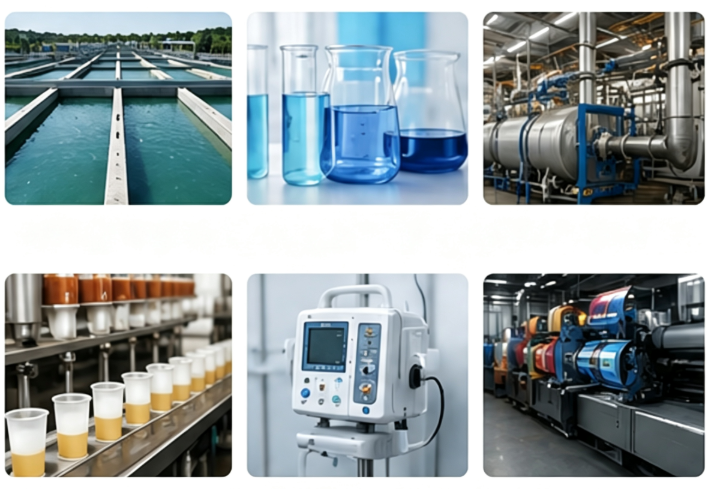
Which Applications are Best Suited to Utilize the Self-Priming Capability of Peristaltic Pumps?
Due to possessing strong natural self-priming capabilities, peristaltic pumps play an irreplaceable role in many industrial and laboratory scenarios:
Chemical Dosing Systems:
Used for the precise addition of corrosive or easily gas-precipitating chemicals such as acids, alkalis, sodium hypochlorite, and flocculants. The self-priming characteristic of peristaltic pumps makes them unafraid of gas binding phenomena; even if gas pockets are generated inside the pipeline due to chemical reactions, they can rely on strong negative pressure to smoothly discharge them and continue stable suction.
Water Treatment Industry:
In wastewater treatment or swimming pool water quality regulation, chemicals are usually stored in low-position chemical barrels on the ground. Relying on excellent dry self-priming height, peristaltic pumps can be directly installed at high points of the process line for remote low-position suction, saving the trouble of installing foot valves and priming tanks.
Food and Beverage Industry:
Suitable for the delivery of high-viscosity or highly hygiene-demanding raw materials such as syrup, chocolate sauce, fruit juice, and dairy products. Its self-priming capability ensures that every time it restarts, it can quickly suck high-viscosity liquids from the bottom of the storage tank into the pipeline, and the gas-liquid mixed transport characteristic greatly reduces material residue inside the pipeline.
Medical and Pharmaceuticals:
Widely applied in scenarios with strict requirements for cleanliness, such as dialysis equipment, bioreactors, and pharmaceutical compounding. Strong self-priming force allows the pump to automatically draw medicinal liquid or blood through closed sterile hoses without any manual priming, perfectly balancing high automation and zero pollution risk.
Laboratory Equipment:
In environmental monitoring sampling, automatic titration, and various chemical analysis instruments, peristaltic pumps are indispensable supporting components. Their excellent dry suction and idle-allowable characteristics allow the instrument to automatically switch suction between air and samples, achieving precise intermittent sample collection and reagent distribution.
OEM Equipment Manufacturing:
Widely integrated into packaging machinery, inkjet printing, environmental monitoring instruments, vending machines, and various industrial automation assembly lines. Natural self-priming simplifies the fluid pipeline design of the whole machine, allowing OEM manufacturers to achieve a ready-to-use liquid-leading effect for equipment with lower hardware space and maintenance costs.
How to Improve the Self-Priming Performance of a Peristaltic Pump?
If you hope to obtain better self-priming effects in actual working conditions, you can refer to the following engineering optimization suggestions:
Shorten the length of the suction tube as much as possible:
Reducing the length of the pipeline at the suction end and decreasing the number of elbows can effectively lower the friction resistance of the fluid along the way, thereby reducing the negative pressure loss when the pump establishes a vacuum.
Choose a hose of appropriate material and specifications:
Prioritize the selection of industrial-grade hoses with strong rebound elasticity and thick walls (such as thick-walled rubber or high-quality thermoplastic elastomers); the strong shape recovery force can generate higher internal vacuum degrees.
Avoid pipeline air leaks:
Strictly inspect all joints and flanges of the suction end pipeline; under high negative pressure environments, extremely tiny leak points will continuously replenish air, leading to a large drop in self-priming height or even failure.
Select appropriate rotation speed based on the medium:
For clean water or gases, the rotation speed can be appropriately increased to speed up the air evacuation rate; but for viscous liquids, the rotation speed should be lowered to allow sufficient geometric shape recovery time for the hose.
Regularly check and replace aging hoses:
Hoses will produce fatigue and lose rebound elasticity after being compressed long-term; once a hose is found to be flat and unable to spring up, it should be replaced in time to restore the best self-priming negative pressure.
Keep the suction end clear and avoid blockages:
Regularly clean the filter screen or pipeline valves at the suction end to prevent solid impurities from jamming and increasing suction resistance, ensuring that the liquid can be smoothly pushed into the hose by atmospheric pressure.
These measures can not only significantly enhance the self-priming efficiency and suction lift of the pump, but also effectively avoid motor overload, thereby extending the overall service life of the equipment.
How to Choose a Suitable Self-Priming Peristaltic Pump?
During procurement or equipment integration selection, it is recommended to focus on and evaluate the following key technical dimensions in order to accurately interface with the manufacturer:
Required flow range:
Clarify the maximum and minimum flow requirements of the equipment per minute or per hour during normal operation, which directly determines the model of the pump head and the internal diameter size of the matching hose.
Working pressure:
Evaluate the outlet backpressure in the delivery pipeline system, and select a pump head and wall-thickness hose that can withstand this pressure and still maintain good sealing and self-priming performance when under pressure.
Self-priming height requirement:
Accurately measure the actual vertical height difference between the liquid source level and the pump installation position to ensure that the limit dry suction height of the selected model can cover this physical distance.
Delivered medium type:
Clarify the chemical composition of the delivered liquid (such as acids, alkalis, organic solvents, etc.), so as to choose a hose material that has excellent chemical compatibility with it and will not undergo swelling or degradation.
Liquid Viscosity:
High-viscosity fluids (such as ink, syrup) will greatly limit fluidity and hose rebound, and lower-speed motors and higher-torque drivers must be selected accordingly.
Hose Material:
Comprehensively consider chemical resistance, mechanical life, rebound resilience, and temperature resistance performance, and choose the type with the highest comprehensive benefit among silicone, rubber, and various specialized composite tubes.
Continuous operation or intermittent operation:
For 24-hour continuous operation conditions, an industrial-grade AC or brushless DC motor needs to be configured; whereas intermittent, short-time dosing can select a high-cost-performance stepper motor.
Whether food-grade or medical-grade certification is required:
Applications involving human health and clean processes must ensure that hoses and fluid-contacting parts possess FDA, USP Class VI, or domestic related hygienic clean certifications.
Whether OEM/ODM customization is required:
For equipment integrators (OEM), it is necessary to clarify the installation space dimensions of the pump, control communication protocols (such as Modbus, RS485, or analog control), and special appearance customization requirements.
Combining actual working conditions to provide the above parameters to engineers for scientific selection can ensure from the source that the peristaltic pump operates stably for a long time in subsequent operations, reducing the failure rate to the minimum.
Conclusion
Peristaltic pumps have natural self-priming capabilities, which is one of their important advantages distinguishing them from many traditional pumps. Relying on the working principle of rollers compressing the hose to form negative pressure, peristaltic pumps can automatically suck liquid without pump priming, can idle for a short time, and can effectively avoid leakage and cross-contamination. Therefore, they are widely applied in fields such as chemical processing, laboratories, food and beverage, medical, water treatment, and automation equipment.
Of course, the self-priming capability will be affected by factors such as hose material, liquid viscosity, installation method, rotation speed, and liquid suction height. Selecting the appropriate model and doing well in routine maintenance can fully unleash the stable and efficient delivery performance of peristaltic pumps.
Looking for a Reliable Self-Priming Peristaltic Pump Manufacturer?
If you are looking for a performance-stable self-priming peristaltic pump manufacturer, choosing a professional manufacturer with rich industry experience will help you complete product development faster and enhance equipment competitiveness.
JIHPump focuses on the research, development, and manufacturing of peristaltic pumps, and can provide a variety of flow ranges, pump head structures, and hose material choices to meet the needs of industries such as laboratories, medical, food and beverage, environmental water treatment, and industrial automation.
If you are currently selecting a suitable self-priming peristaltic pump for a project, welcome to contact JIHPump, we will provide you with the product most suitable for you!
Frequently Asked Questions (FAQ)
Q1: Can peristaltic pumps idle?
Yes. Most peristaltic pumps allow short-time idling, but since dry running lacks liquid lubrication, friction inside the hose wall will generate heat. Long-term idling may accelerate hose wear, so continuous liquid-free idling operation is not recommended.
Q2: Do peristaltic pumps require pump priming?
Usually no. Peristaltic pumps rely on the working physical principle of rollers compressing the hose and the hose releasing to rebound to form negative pressure, which can suck in liquid and discharge air by itself.
Q3: What is the maximum self-priming height of a peristaltic pump?
Generally 3 to 8 meters. Some models optimized for high negative pressure design can reach approximately 9 meters under standard working conditions, but the specific value needs to refer to specific product parameters and actual fluid working conditions.
Q4: Why did the peristaltic pump suddenly lose its self-priming capability?
Common reasons include: hose aging and deformation losing elasticity, suction pipeline joint air leakage, installation height exceeding the maximum allowable suction lift range, foreign matter blockage inside the pipeline, or incorrect motor rotation direction. After checking and eliminating the above factors, most problems can be resolved.
Q5: Can peristaltic pumps deliver air?
Yes. Peristaltic pumps are capable of delivering mixed media of air and liquid, and can also directly evacuate the gas inside a pipeline. Therefore, they are very suitable for applications such as gas sampling, precise quantitative metering, and automated dosing.