
Peristaltic Pump Controller: How It Achieves Precise and Stable Fluid Control?
In the design of automated fluid control systems, engineers often focus heavily on the peristaltic pump head, tubing durability, or chemical compatibility. However, they frequently overlook the “brain” of the system, the peristaltic pump controller.
A high-quality peristaltic pump driver/controller determines flow accuracy and dispensing repeatability. It also directly impacts communication efficiency, anti-interference capabilities, and the overall development cycle of the equipment. Choosing the right control solution is critical, especially in sectors like OEM equipment integration, medical diagnostics, food automation, and environmental monitoring.
This guide provides an in-depth breakdown of the core control modes and key technical parameters of peristaltic pump controllers, delivering a professional industrial selection guide to help you find the optimal solution for your project.
What is a Peristaltic Pump Controller?
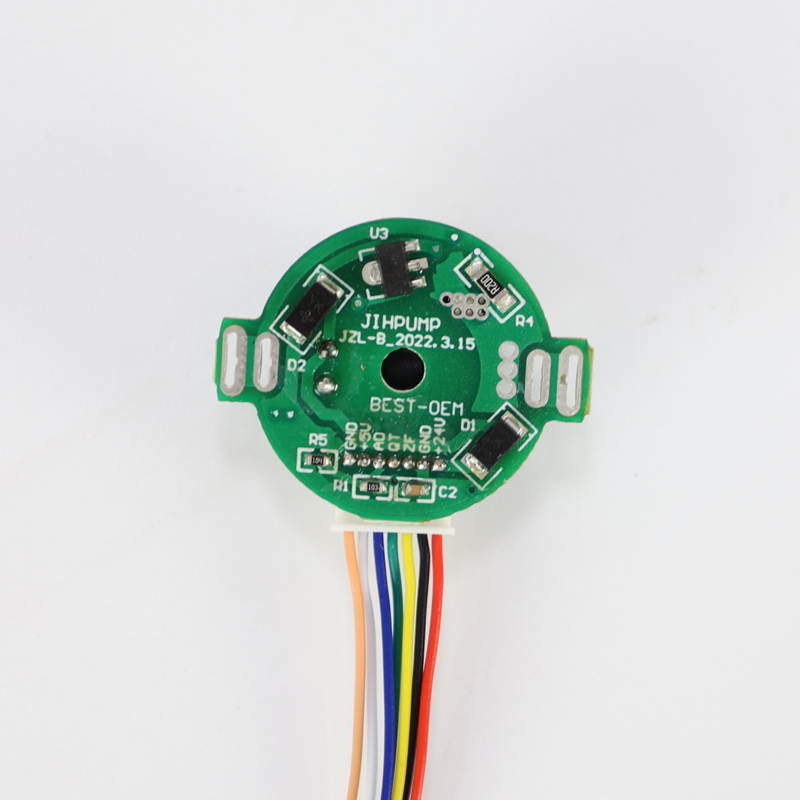
A Peristaltic Pump Controller is an electronic system engineered specifically to manage the operation of the driving motor. It never comes into direct contact with the fluid. Instead, it handles the entire pumping process by sending precise electrical signals to the motor, such as a stepper motor, brushless DC (BLDC) motor, or servo motor.
A standard controller typically manages the following core control tasks:
Start/Stop Control: Responds rapidly to start and stop commands to minimize fluid overshot caused by motor inertia.
Speed Control: Precisely regulates motor speed, which directly determines the instantaneous fluid flow rate.
Direction Control: Supports switching between clockwise and counterclockwise rotation to change fluid direction or perform back-suction (Anti-drip).
Flow Adjustment: Converts physical rotational speed (RPM) into a digital flow rate display.
Timing: Controls the pump’s running duration and interval times.
Calibration: Eliminates volumetric errors caused by tubing wear or changes in fluid viscosity.
External Signal Control: Processes analog and digital signals received from external sensors, PLCs, or switches.
Why Is a Peristaltic Pump Controller So Important?
In many cases, customers consider a powerful peristaltic pump controller to be sufficient for meeting their requirements of fluid delivery. But in practice, the controller makes up for everything, from precision and stability of work to the degree of automation.
A modern peristaltic pump controller increases effectiveness, excludes the possibility of human error, minimizes expenses on equipment repair, and provides much space for system upgrade later on.
Here are the five fundamental values of a high-performance controller for you:
1. Eliminating Flow Pulsation for Precision Fluid Control
A peristaltic pump’s flow rate is determined by the pump head, tubing, and motor speed (RPM), the latter of which is regulated entirely by the controller. High-precision controllers deliver a smooth pulse output, effectively neutralizing fluid pulsation to ensure a uniform, stable flow. This is vital for high-accuracy applications like biological experiments, chemical dosing, and liquid medicine dispensing.
2. Locking Operational Parameters for High Repeatability and Consistency
In industrial manufacturing and laboratory environments, fluid delivery “reproducibility” directly affects product quality. Whether dispensing a single 10 mL dose of a reagent or continuously transferring 500 mL of nutrient solution per hour, a digital controller records and executes identical parameters every single time. This eliminates manual operational errors and guarantees batch-to-batch consistency.
3. Seamless Master Computer Connectivity for Industrial Automation
The modern generation of controllers for peristaltic pumps include in-built communication standards that make it simple to interface these controllers with PLCs, HMIs (human-machine interfaces), SCADA, and industrial robots. The whole process will be able to carry out the start-stop procedure, speed changes, and quantitative dispensing through the data bus protocol.
4. Preset Smart Programs to Cut Production Labor Costs
Traditional operations rely heavily on manual monitoring, which is inefficient and prone to errors. Smart controllers support multiple preset operation programs to achieve automated start/stop cycles, quantitative filling, and fault alarms. This allows long-cycle, multi-station transfer tasks to run unattended, significantly reducing manual intervention and lowering operating costs.
5. Built-In Electrical Safeguards to Maximize System Security
An outstanding controller serves as a safety guardian for fluid systems. Contemporary industrial-level controllers provide motor overload protection, overcurrent, overvoltage protection, power off parameters preservation, and automatic shut-down alerts. In case of any blockages or voltage problems with the pipeline, the controller will automatically act on the system to prevent any damage to the motor and piping system.
Types of Peristaltic Pump Controllers
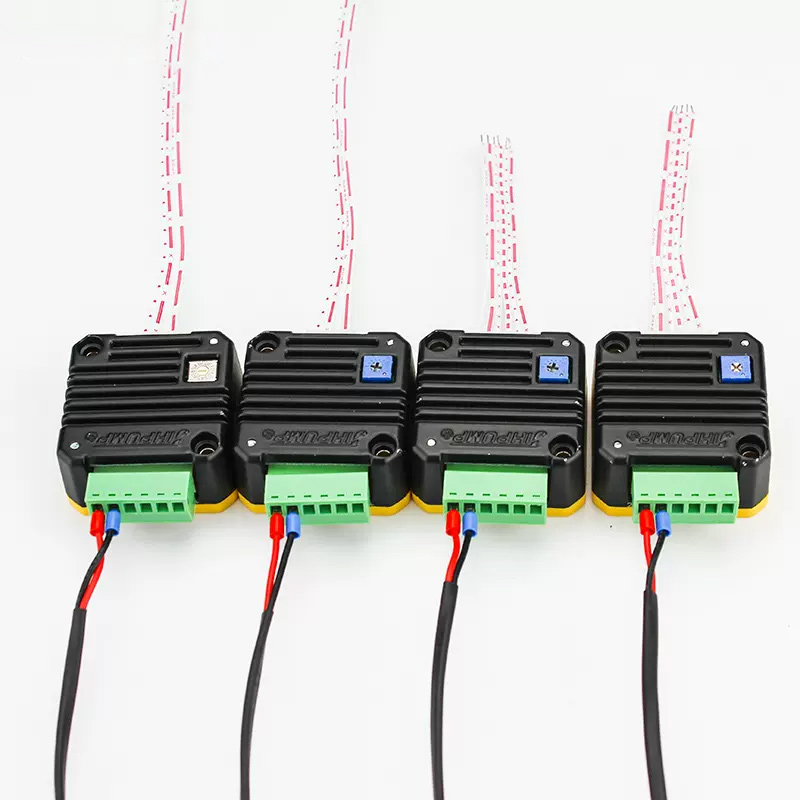
Depending on the application scenario, budget, and integration complexity, peristaltic pump controllers are divided into several mainstream categories:
| Controller Type | Core Features | Best For |
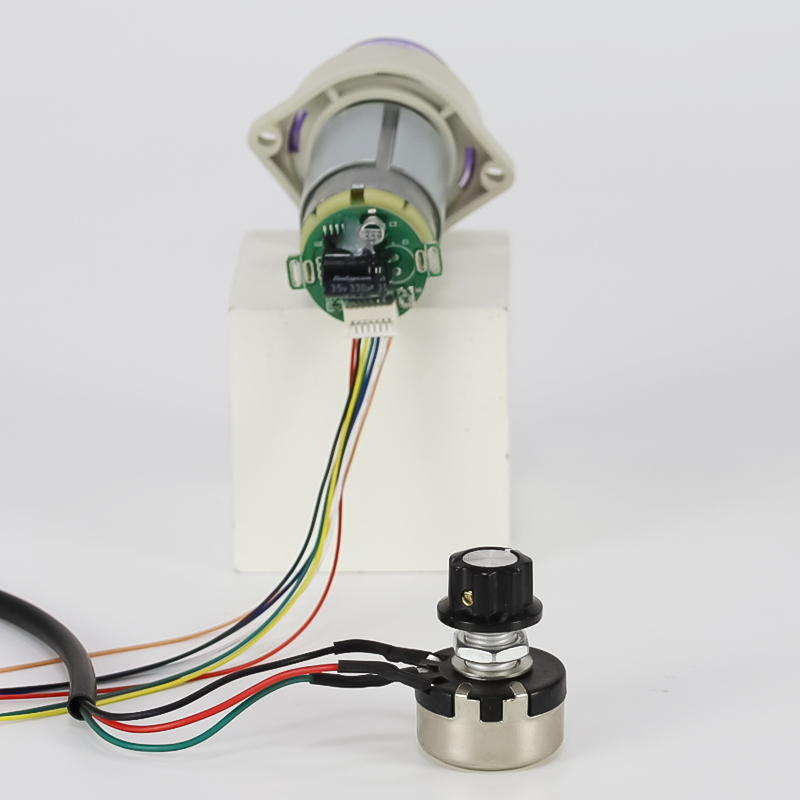
| Basic Speed Controller | Manual speed adjustment via a knob or potentiometer; single-function and simple structure. | Simple fluid transfer where precise metering is not required. |
| Digital Controller | Equipped with an LCD/LED digital display; supports button-based parameter configuration and flow calibration. | Laboratories, university R&D, and routine fluid analysis. |
| Intelligent Controller | Supports complex programming and multi-segment logic control; features rich bus interfaces. | Industrial automation and intelligent production lines. |
| Touch Screen Controller | Features a color touchscreen for intuitive HMI; supports graphical recipe management. | High-end medical devices, pharmaceutical workshops, and cleanroom environments. |
| PLC Controlled (Board-level) | Enclosure-free board or module form factor; completely driven by external automation signals. | OEM mechanical equipment integration and automated cabinet assembly. |
Crucial Features to Consider When Selecting a Controller
When choosing a peristaltic pump controller, looking solely at whether it can adjust speed can lead to unexpected integration hurdles later on. The following seven hard-core features determine whether a controller is truly suitable for your equipment:
1. Speed Range
Different processes require drastically different motor speed ranges. For micro-liquid addition or high-viscosity fluids, the controller must output high torque smoothly at ultra-low speeds (0.1–30 RPM). Conversely, routine industrial delivery demands high-speed driving between 100–600 RPM. If your process handles both high and low flow rates, prioritize a controller with a wide speed-regulation ratio.
2. Control and Repeatability Precision
The microstepping drive capability of a controller directly dictates fluid flow stability. High-quality stepper motor controllers typically restrict speed errors to ≤±0.2% and maintain flow repeatability within ≤±0.5%. This is crucial for industries like pharmaceuticals and biochemical engineering to minimize batch errors.
3. Intelligent Flow Calibration
Over long periods of mechanical squeezing, tubing experiences elastic fatigue (aging), causing the actual flow rate to drift from its initial setting. Controllers equipped with calibration functionality allow users to input actual weight data, using an algorithm to automatically correct control parameters. This eliminates frequent manual valve adjustments and ensures long-term metering accuracy.
4. Direction & Anti-Drip Control
Premium controllers support bidirectional delivery and feature a smart “back-suction” function (reversing by a small angle the moment the pump stops). This is highly practical in food filling and reagent dispensing, utilizing pipeline negative pressure to cleanly snap off liquid drops, achieving anti-drip performance, automated line clearing, and fluid recovery.
5. Dispensing Mode
For applications requiring precise liquid dosing, the controller should feature built-in dispensing algorithms. Users only need to set the target volume, number of cycles, and interval times; the system then automatically calculates the required motor pulses and executes the task flawlessly. This function is the core of medicine bottle filling, flavor/fragrance dosing, and biological reagent addition.
6. Industrial Communication Interfaces
To integrate smoothly into automated factories, a controller’s data interaction capability is a must-have selection criterion:
Digital Bus: Prioritize products that come standard with RS485 / Modbus-RTU protocols for simple wiring and strong anti-interference. High-end applications can opt for CAN bus or Industrial Ethernet.
Analog Control: Should support 0-10V or 4-20mA signals for seamless connection to PLCs or legacy industrial control systems.
7. Human-Machine Interface (HMI)
Modern controllers are phasing out tedious DIP switches. Controllers utilizing LCDs or color touchscreens with intuitive menus display real-time speed, flow rate, and alarm statuses. This drastically reduces the learning curve for operators and prevents operational errors.
Typical Applications of Peristaltic Pump Controllers
The controller of peristaltic pumps finds wide application because of their contamination-free transfer, low maintenance, and precision metering in different areas:
R&D in Laboratories (Micro Precision Delivery): Research in laboratories presupposes small volume transfer and high precision. The controller provides a constant-speed and constant-volume delivery of chemicals, samples, and cell cultures. It excludes operator errors and ensures accuracy of data in scientific research.
Medicine (High-Safety Core Drives): The controller serves as a “brain” for infusion pumps, dialysis systems, In-Vitro Diagnosis (IVD), and biochemical analyzers. It should have high stability that is ensured by precise microstepping drives and a full set of electronic alarms.
Biopharmaceuticals (Strict GMP Compliance): Pharmaceutical workshops must strictly control fluid delivery volumes to meet compliance standards. By locking down parameters for quantitative filling, automated liquid batching, and CIP/SIP (Clean-in-Place/Sterilize-in-Place) processes, controllers guarantee batch-to-batch consistency for injections and vaccines.
Food & Beverage (Zero-Contamination Flavor Dosing): Fluid is completely isolated from the outside world during flavor/fragrance blending, seasoning addition, colorant injection, and juice metering. Controllers manage ingredient ratios via precise dispensing modes, eliminating cross-contamination to satisfy food hygiene standards while ensuring exact flavor profiles.
Water Treatment & Environmental Monitoring (Smart Linked Dosing): In environmental monitoring, pH regulation dosing, and flocculant/disinfectant delivery systems, controllers link deeply with PLC systems. They automatically and dynamically adjust chemical dosing based on real-time feedback from onsite water quality sensors, achieving true unattended environmental control.
Standalone Controller vs. Integrated Peristaltic Pump: How to Choose?
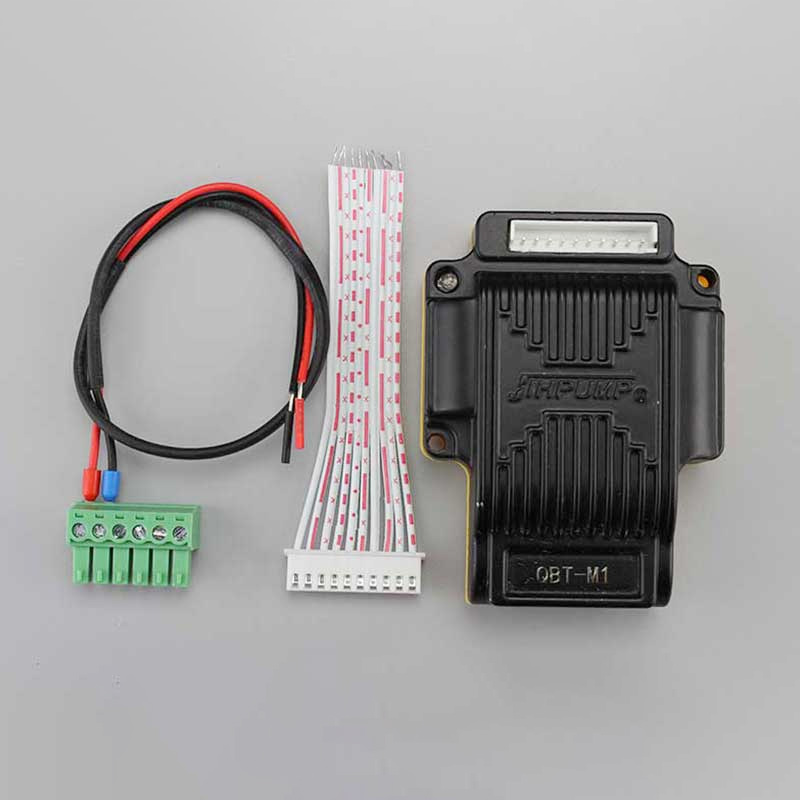
Many customers debate whether to source a standalone controller + peristaltic pump setup or purchase an all-in-one integrated peristaltic pump. Both options offer distinct advantages:
| Comparison Metric | Standalone Controller | Integrated Peristaltic Pump |
| Installation | Controller and pump are separate units | Controller is built directly into the pump body |
| Flexibility | High; can be freely matched with different pumps | Lower; configuration is fixed |
| Maintenance | Easier to isolate and replace the controller | Requires servicing the whole unit |
| Secondary Development | Highly suitable for OEM integration | Fixed functions; harder to customize |
| Automation Integration | Highly straightforward | Moderate |
| Upfront Cost | Slightly higher | Lower |
Selection Tip: If you are an equipment manufacturer (OEM) or plan to upgrade your automation system in the future, a standalone controller solution is highly recommended. If your setup is for a laboratory, small-scale standalone equipment, or simple fluid transfer applications, an integrated product is more economical and easier to install.
Conclusion
In addition to being the engine that drives the peristaltic pump, the Peristaltic Pump Controller is the foundation of accurate metering, automatic operation, and intelligent fluid handling. Choosing the correct controller dramatically improves the performance of your equipment and protects the investment of your system for future development.
If you are a laboratory scientist, an original equipment manufacturer, or an industrial automation specialist, your choice must take into consideration all of the factors including flow rate, control mechanism, communications, expandability, and environment in order to identify the best fit.
If you are searching for a dependable Peristaltic Pump Controller or even developing your own fluid delivery system, JIHPump can provide all of the services needed including product selection and design through custom OEM manufacturing.