
Pumping Sodium Hypochlorite (Bleach): Key Challenges and System Considerations
As a commonly used bleaching agent, sodium hypochlorite is widely used in disinfection, water treatment and hygiene fields. It is generally introduced into the production process through low-flow dosing devices in a continuous or intermittent mode.
Its operation is not very demanding, but there are many problems in the pump delivery process. To ensure stable drug delivery and accurate measurement, it is necessary to combine the fluid properties and avoid the inherent shortcomings of the pump delivery equipment.
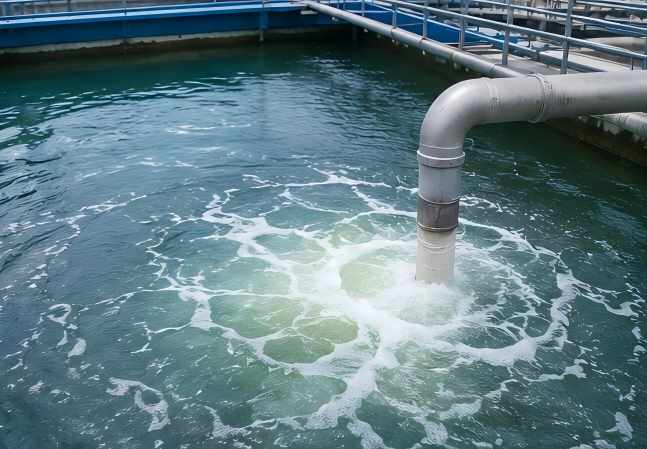
Why Sodium Hypochlorite Is Difficult to Pump
The main difficulty in pumping sodium hypochlorite lies in its unstable chemical properties. This compound will gradually decompose under normal storage conditions, and high temperatures, light exposure, and certain pollutant substances will accelerate this decomposition process. One of the main consequences of this process is the generation of gas in the stored liquid.
The generation of gas will cause instability on the suction side of the pump system. Even a small amount of entrained gas can disrupt the continuous liquid column, resulting in unstable suction conditions and irregular discharge.
In addition to its instability, sodium hypochlorite also has a strong oxidizing property. It reacts with many commonly used metals and elastomers, which limits the material choices for components in contact with liquids. Over time, this can lead to deterioration of seals, pipes, and internal components of pumps, especially in systems that rely on direct contact between fluids and mechanical parts.
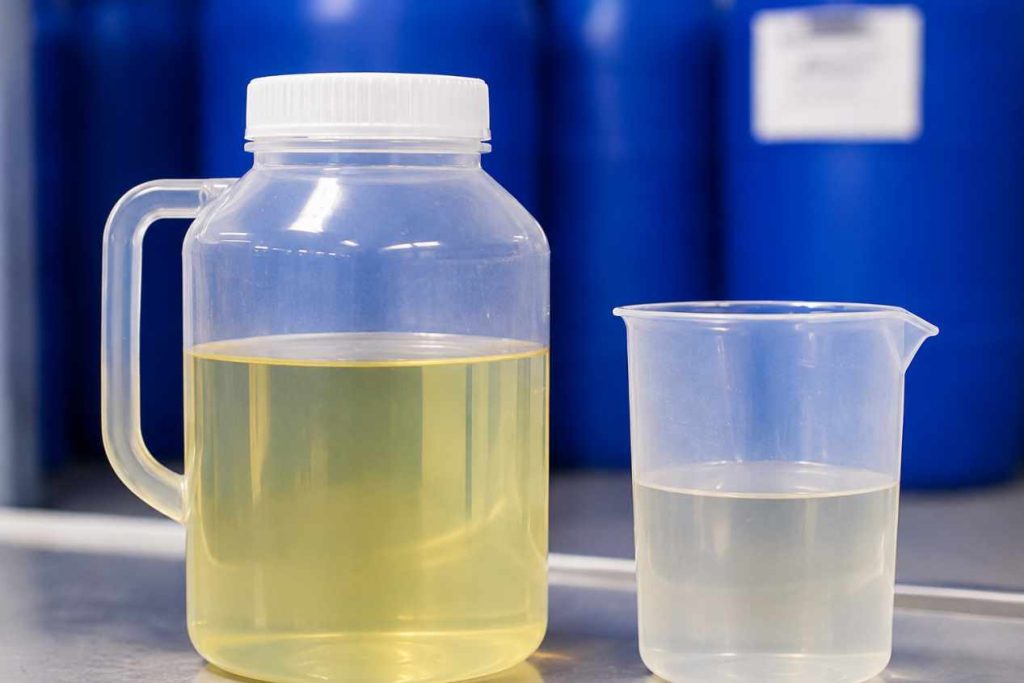
Therefore, sodium hypochlorite is not a “corrosive liquid” in the traditional sense. It is a highly reactive chemical medium whose properties constantly change during storage and operation. This makes stable pumping extremely challenging.
Where Pumping Systems Fail in Practice
In real-world dosing systems, performance issues with sodium hypochlorite are often not caused by insufficient pump capacity, but by mismatches between fluid behavior and pumping mechanism design.
One common failure mode is suction instability caused by gas accumulation. When gas forms in the suction line, it interrupts the continuity of the liquid column, leading to irregular intake conditions. This results in fluctuating discharge volumes even if the pump speed remains constant.
Another frequent issue is the gradual degradation of sealing and wetted components. Pumps that rely on valves, diaphragms, or mechanical seals are particularly vulnerable in oxidizing environments. Over time, exposure to sodium hypochlorite can reduce sealing performance, which leads to leakage or inconsistent metering accuracy.
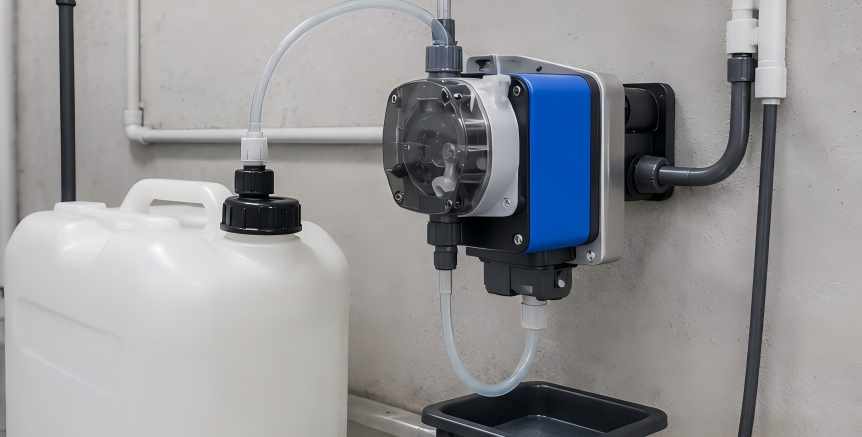
Back pressure variation at the injection point is also a significant factor. In many dosing installations, discharge conditions are not perfectly stable. Changes in pipeline pressure or flow resistance can directly influence volumetric consistency in certain pump types, especially those that are sensitive to system resistance.
These issues often appear gradually rather than suddenly, which makes system instability more difficult to diagnose. In many cases, the pump continues to operate, but dosing accuracy slowly drifts outside acceptable limits.
Why Peristaltic Pumps Match These Failure Modes
Compared with pumping systems based on valves or seals, the interaction mode between peristaltic pumps and sodium hypochlorite is completely different. The key difference lies in that the fluid being pumped is isolated within a flexible pipeline, rather than directly contacting the mechanical components.
Since the chemical substances are completely confined within the pipeline, the internal mechanism of the pump does not come into direct contact with the fluid. This eliminates many of the typical failure points associated with oxidative degradation, such as valve wear or seal corrosion.
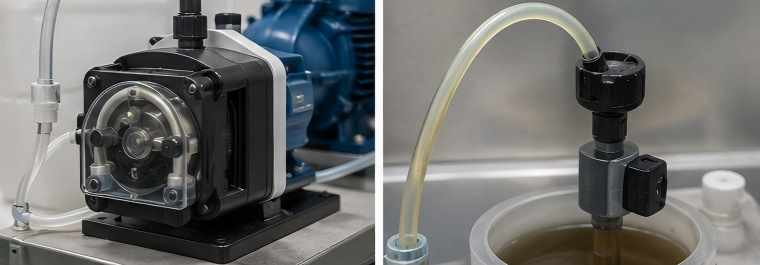
From a functional perspective, flow delivery in a peristaltic pump is achieved through controlled compression and relaxation of the tubing. This means that the pumping mechanism is not dependent on internal check valves or precision sealing interfaces. As a result, the system is less sensitive to gradual chemical attack on internal mechanical structures.
Peristaltic pumping also shows a different response to gas presence in the fluid. While gas can still affect volumetric accuracy to some extent, it does not typically cause mechanical failure or flow interruption in the same way it can in rigid displacement systems. The flexible tubing allows the system to continue operating even under non-ideal suction conditions.
In addition, variations in discharge back pressure have a reduced impact on the mechanical integrity of the pumping process. The displacement is governed primarily by tubing deformation, which provides a more mechanically consistent pumping action under fluctuating external conditions.
However, it is important to note that system performance is still influenced by tubing condition and suction design. Long-term operation depends on maintaining suitable tubing material compatibility and preventing excessive wear due to compression cycling.
Summary
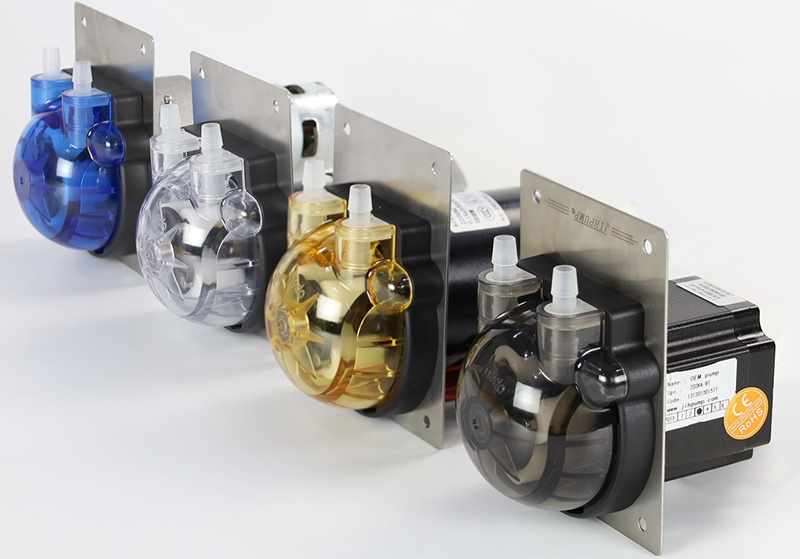
The process of sodium hypochlorite pumping simultaneously encounters two major challenges: chemical properties and hydraulic conditions. Traditional pump equipment is unable to achieve stable measurement. The fluid property of this agent is unstable, and it is prone to generating gas and has compatibility issues with materials, which easily leads to various equipment failures.
Most operational failures are not caused by the insufficient rated flow of the pump body, but rather by the interaction between different pumping structures and highly active and variable fluids. Equipment equipped with valves, seals, and hard flow channels are particularly sensitive to such conditions.
The peristaltic pump isolates the medium through a flexible hose and adopts a low-sealing, volume-based transportation structure, which can effectively solve these problems. Although it still has certain usage limitations, it can significantly avoid the common failures of the sodium hypochlorite measurement system and is therefore widely used in various industrial scenarios.