
Solenoid Pump vs. Peristaltic Pump: 5 Critical Factors for Precision Dosing
In the realm of precision fluid handling, the choice between a solenoid diaphragm pump and a small peristaltic pump often dictates the success of an entire automated system. Whether you are designing a laboratory analyzer, a high-end aquarium auto-top-off (ATO), or an industrial chemical dosing line, understanding the mechanical divergence between these two technologies is essential.
Although the two pumps have the same aim of moving micro-volumes of fluids, there is a huge difference in physics, resulting in divergent outcomes. This article will discuss and analyze these five critical factors that every engineer should take into consideration before integrating.
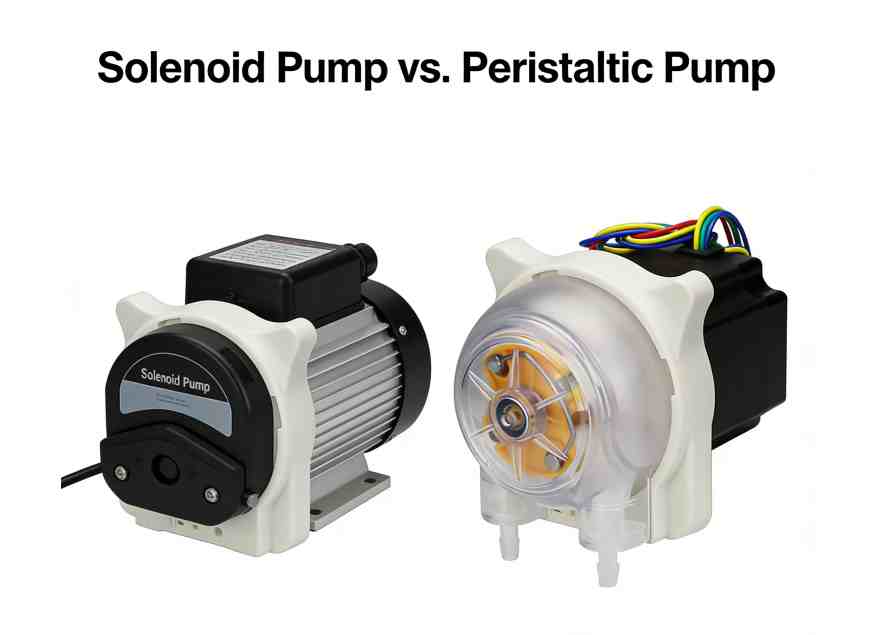
Factor 1: Fluid Contamination & Chemical Compatibility
The most notable difference between these two pumps lies in the wetting path – the part of the pump that actually comes into contact with the liquid.
The “Tube-Only” Advantage of Peristaltic Pumps
In a micro peristaltic pump, the liquid is completely enclosed within a flexible elastic tube. The rollers of the pump compress the elastic tube, pushing the liquid forward. Since the liquid does not come into contact with the pump head, motor or valves, cross-contamination risks are completely avoided. This makes peristaltic pump technology the “gold standard” in the following fields:
- Pharmaceutical Dosing: Maintaining sterility is effortless.
- Abrasive Slurries: Hard particles cannot damage the pump’s internal mechanics because there are none.
Internal Wetted Parts of Solenoid Pumps
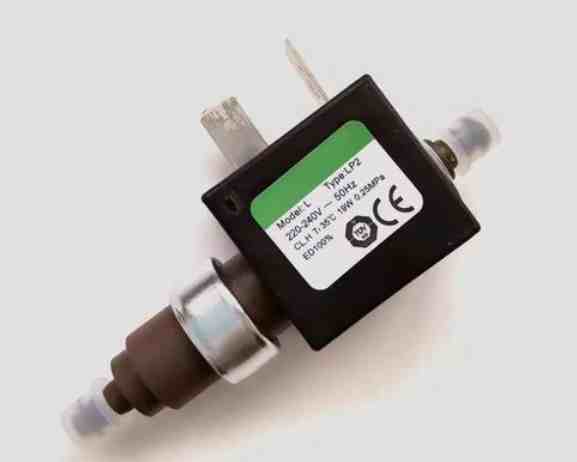
The solenoid pump uses an electromagnet coil to move a plunger or diaphragm back and forth. This requires internal check valves, which are balls or flaps, and the use of a spring. This means that the fluid used has to be compatible with the diaphragm material, valve seats, and O-rings. If the fluid used is corrosive and crystallizes easily, the internal moving parts may seize, resulting in failure.
Factor 2: Precision & Flow Consistency
When we talk about “Precision Dosing,” we are looking for two things: linear accuracy and minimal pulsation.
Linear Flow via Stepper Motors
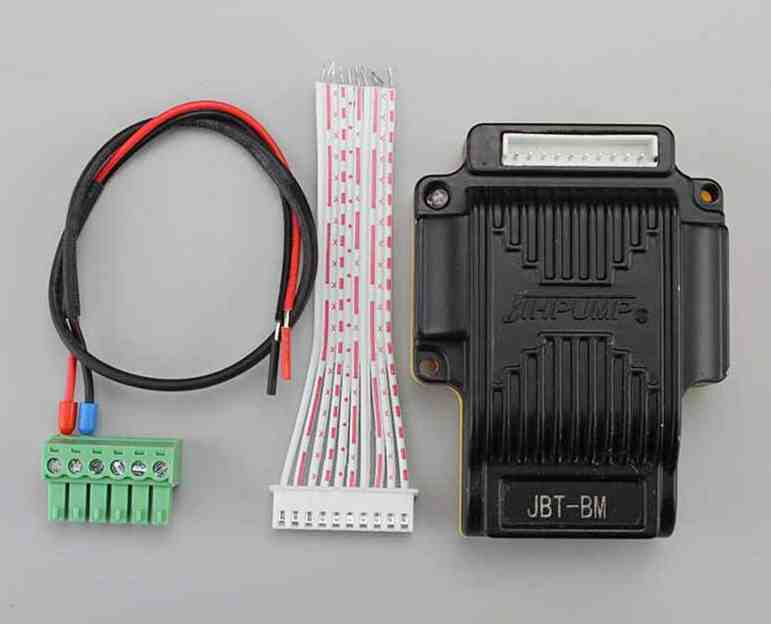
Modern small peristaltic pumps often utilize stepper motors. Because each “step” of the motor corresponds to a specific volume of fluid displaced by the rollers, the flow rate is highly linear and predictable. If you double the RPM, you double the flow. The accuracy is usually within ±1% – making it an ideal choice for filling sample bottles or titration.
Pulse-Based Dosing in Solenoid Systems
Solenoid pumps are inherently “pulsatile.” They move fluid in discrete “strokes” or bursts. While they can be very accurate in terms of volume per stroke, they struggle with providing a smooth, continuous flow at low speeds. Furthermore, their accuracy is highly sensitive to back pressure; as the resistance in the discharge line increases, the stroke volume often decreases, requiring frequent re-calibration.
Factor 3: Priming, Suction, and Gas Locking
In many industrial and laboratory setups, the pump is located above the liquid source, requiring strong self-priming capabilities.
Why Peristaltic Pumps Excel in Dry-Running
A peristaltic pump is a true positive displacement pump. The constant occlusion of the tube creates a powerful vacuum, allowing it to prime itself even when the tube is completely dry. Furthermore, it is impervious to gas locking. If an air bubble enters the line, the pump simply pushes it through without losing its prime.
The Air-Bubble Challenge for Solenoid Pumps
Solenoid pumps often encounter the problem of air blockage. If air gets trapped in the pump chamber (air lock), the diaphragm may only compress the air instead of pushing the liquid, resulting in a complete stop of the flow. This usually requires the operator to manually “release the air”, thereby increasing the downtime in an automated environment.
Factor 4: Maintenance Efficiency & Downtime
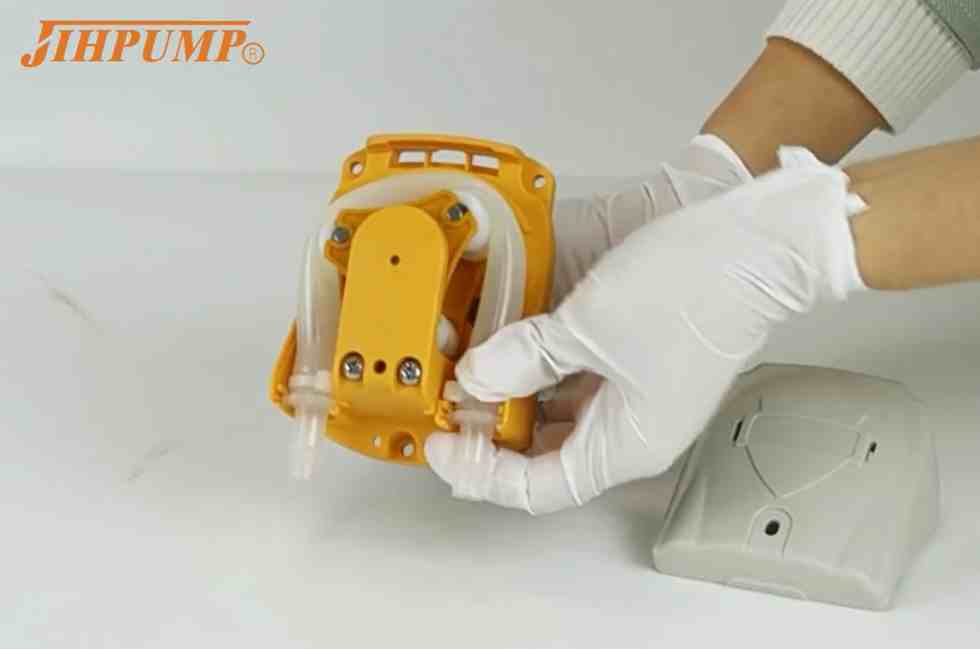
For any operator, the total cost of ownership (TCO) depends on the amount of time the machines are “offline” due to maintenance.
- 60-second maintenance process for peristaltic pumps: The maintenance of peristaltic pumps requires only one procedure: replacing the hose. In high-quality pumps (such as the JIHPUMP series), such a procedure can be performed within one minute without any tool usage. Once the hose is replaced, the pump can be considered “brand new” because there are no other parts in contact with the chemical.
- Complexity of the solenoid valve: For the maintenance of the solenoid pump, it is necessary to disassemble the pump head to clean or replace the check valve and diaphragm. If the valve seat is slightly corroded by chemical corrosion, the accuracy of the pump will be reduced. In that case, it needs to be fully reconstructed and tested.
Factor 5: Handling Viscous & Shear-Sensitive Fluids
The “gentle” nature of the pumping action is often overlooked but critical for specific media.
- Shear Sensitivity: In the field of biotechnology, pumping living cells or sensitive polymers requires extremely low shear forces. The gentle “rolling” action of peristaltic pumps can protect the structural integrity of these fluids. In contrast, the high-speed “banging” action of the diaphragm of a solenoid diaphragm may damage fragile molecules.
- Viscosity: High-viscosity liquids (such as oil or syrup) are difficult to pass through the narrow check valves of solenoid pumps. However, as long as the motor has sufficient torque to drive the rollers to rotate within the pipeline, the peristaltic pump can handle liquids with even higher viscosity.
Technical Comparison Data: At a Glance
The following table summarizes the performance benchmarks for a typical industrial-grade small dosing setup.
| Feature | Peristaltic Dosing Pump | Solenoid Diaphragm Pump |
| Media Contact | Tubing Only (Zero Contamination) | Diaphragm, Valves, O-rings |
| Max Pressure | Typically up to 0.3 MPa | High (Up to 1.5 – 2.0 MPa) |
| Self-Priming | Excellent (Dry-run capable) | Moderate (Requires liquid in head) |
| Flow Stability | Smooth / Linear (with Stepper) | Pulsatile / Non-linear |
| Maintenance | Seconds (Tool-free tube change) | Minutes/Hours (Valve cleaning) |
| Gas Handling | Excellent (Pushes bubbles through) | Poor (Prone to gas locking) |
Which Dosing Technology Fits Your Project?
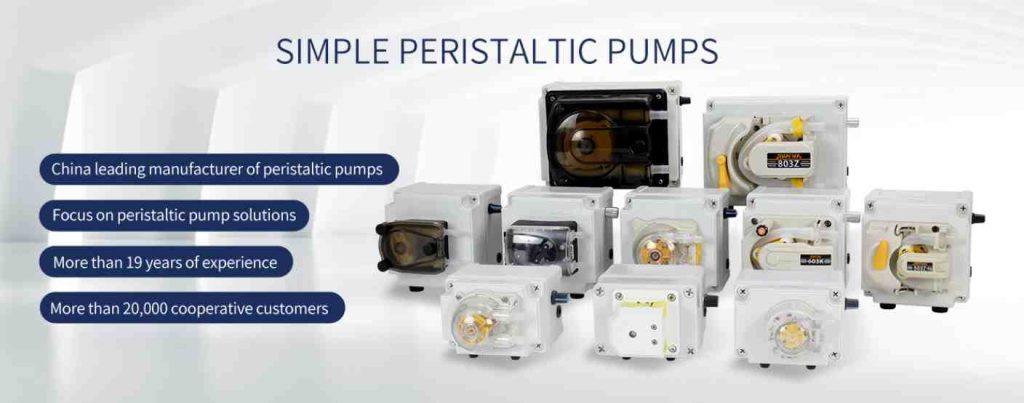
The choice between these two technologies depends on your specific application requirements:
If the following conditions are met, please select the peristaltic pump:
- You need to handle various fluids and must avoid cross-contamination.
- You need to achieve high precision under low flow rates (< 500 ml/min).
- You need to pump viscous, abrasive or shear-sensitive liquids.
- Your system must be easy for end users to maintain.
If the following conditions are met, please select the solenoid diaphragm pump:
- You need to overcome the high back pressure (exceeding 0.5 MPa).
- You need to continuously pump a single clean fluid (such as water or alcohol).
- This application allows for high-frequency pulsating flow.
For a manufacturing firm that requires precision in measurement and user experience, in a low-pressure environment, the flexibility and reliability provided by a peristaltic pump are unmatched compared to a solenoid pump. By focusing on fluid integrity and user experience, you can achieve a higher return on investment and a stronger automated system.