
What is Used to Transfer Precise Amount of Liquid? – 5 Solutions
In fields like scientific research, medical testing, and industrial manufacturing where precision is everything, transferring liquids accurately is a fundamental and crucial skill.
Whether you’re dealing with a droplet as tiny as morning dew or a torrent of liquid flowing in bulk, choosing the right tool is like wielding a legendary weapon, directly impacting the accuracy and efficiency of your results. So, what is used to transfer precise amount of liquid? Let’s dive in and find out!
5 Ways to Transfer Precise Liquids
In laboratory and specialized operation settings, accurately transferring liquids is crucial for ensuring the reliability of experimental results. Here’s a detailed introduction to several commonly used precision liquid transfer tools, including their features, advantages, and typical application scenarios.
1. Precision Peristaltic Pump
A precision peristaltic pump is a highly reliable liquid transfer device widely used in industrial and laboratory settings, especially in applications requiring contamination-free and highly accurate fluid handling.
Compared to standard peristaltic pumps, precision models offer superior control over flow rates, transfer volumes, and delivery stability, achieving ultra-precise transfers from microliter to liter scales.
Advantages:
- High-Accuracy Flow Control: Delivers extremely precise and consistent flow rates with minimal error, ensuring reliable repeatability across operations.
- Adjustable Flow Rates: Offers variable speed settings to meet various process requirements, from ultra-slow drips to faster continuous flows.
- Contamination-Free Operation: Liquids only contact the internal tubing, effectively eliminating the risk of cross-contamination between samples or batches.
- Versatile Operation Modes: Supports both continuous delivery and intermittent (pulse) delivery, allowing customization for different experimental or production needs.
- Handles a Wide Range of Liquids: Capable of transferring not only aqueous solutions but also viscous, corrosive, or shear-sensitive fluids without degradation.
Application Scenarios:
- Pharmaceutical Processes: Precise micro-addition of liquid components in drug manufacturing, ensuring dosage accuracy and product consistency.
- Biological Research: Accurate perfusion of cell culture media or buffer solutions in sensitive biological experiments.
- Food Industry: Hygienic, contamination-free delivery of additives, flavors, or nutritional supplements in food production processes.
- Water Treatment Systems: Precise dosing of chemical reagents, such as coagulants or disinfectants, in water purification and environmental monitoring.
As an industry-leading peristaltic pump manufacturer, JIHPump offers high-quality precision peristaltic pumps specifically designed to meet the demands of various high-requirement applications.
Its products feature precise flow control, reliable long-term operation, and broad application compatibility, providing stable and accurate liquid transfer solutions across the pharmaceutical, food, chemical, and biological research fields.

2. Pipette
Pipettes are among the most widely used tools in laboratories, designed for accurately drawing and dispensing small volumes of liquids. Depending on the needs, pipettes can be categorized into several types, such as disposable plastic pipettes, glass pipettes, and adjustable-volume micropipettes.
Advantages:
- High Precision Control: Capable of accurately transferring liquids within a set volume, with minimal error.
- Simple Operation: Intuitive and easy to use for routine tasks.
- Ideal for Micro-Volume Transfers: Especially suitable for transferring volumes below several milliliters.
Application Scenarios:
- Biological Laboratories: Preparing culture media, enzyme reaction systems, etc.
- Pharmaceutical Research and Development: Dispensing small-dose drug solutions.
- Medical Testing: Sampling and processing serum, plasma, and other biological fluids.
3. Burette
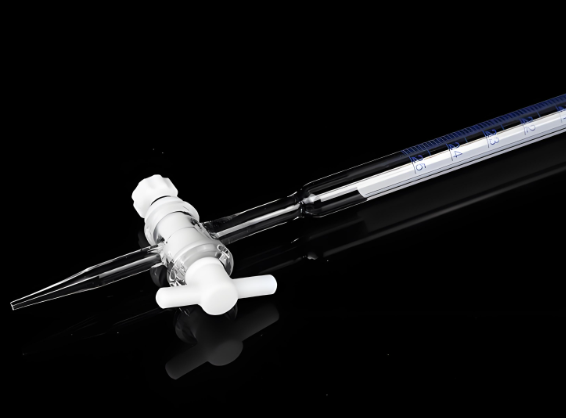
A burette is a device that allows for the precise and controlled release of liquids, essential for experiments requiring dropwise addition. It typically features a valve or stopcock for fine-tuning the flow rate, making it indispensable for chemical titration and quantitative analyses.
Advantages:
- Extremely High Accuracy: Enables the release of liquid down to a single drop, critical for high-precision experiments.
- Continuous Micro-Volume Delivery: Allows for smooth, consistent liquid dispensing.
Application Scenarios:
- Chemical Analysis Experiments: Such as determining solution concentrations via titration.
- Acid-Base Titrations: Monitoring color changes to determine the end point of reactions.
4. Micropipette
Micropipettes are precision instruments specifically designed to handle micro- to nanoliter volumes of liquids. Featuring adjustable volume settings, they are indispensable in experiments where absolute accuracy is required.
Advantages:
- Wide Adjustable Volume Range: Common ranges extend from 0.1 μL to 1000 μL.
- Precision at the Nanoliter Scale: Ensures consistency and reproducibility of experimental results.
- Disposable Tips: Minimize the risk of cross-contamination.
Application Scenarios:
- DNA Extraction: Handling very small volumes of DNA solutions or reagents.
- PCR Setup: Accurate sample loading for standardized reactions.
- Cell Culture: Precise addition of small volumes of culture media or supplements.
5. Syringe
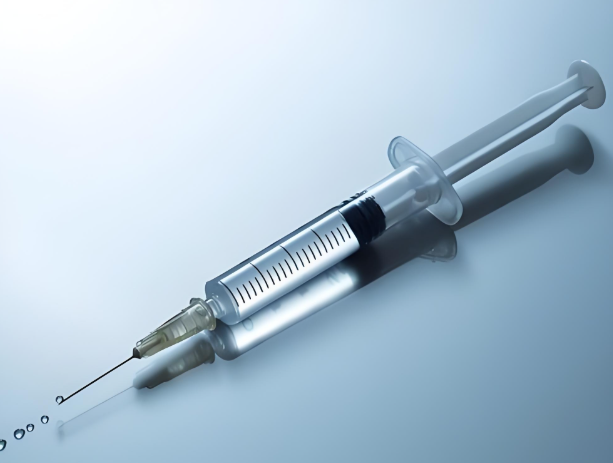
Beyond its medical uses, the syringe is also a practical tool for liquid transfer in laboratory settings. It is suitable for transferring small to medium volumes (typically between 1 mL and 50 mL) and offers a flexible, cost-effective solution.
Advantages:
- Easy Control: The plunger allows for fine adjustment of liquid delivery speed and volume.
- Suitable for Small to Medium Volumes: Meets a wide range of laboratory transfer needs.
- No Power Required: Ideal for fieldwork and environments without electricity.
Application Scenarios:
- Medical Injections: Administering drugs and fluids.
- Small-Scale Laboratory Sample Loading: Transferring buffer solutions, solvents, etc.
- Sample Preparation: Injecting samples for gas chromatography, liquid chromatography, and more.
Overview Comparison of Different Liquid Transfer Tools
| Tool Name | Accuracy | Applicable Volume Range | Application Fields | Operation Method |
| Pipette | High | Micro to small volumes | Laboratory, Biomedical | Manual |
| Burette | Extremely high | Micro volumes | Chemical Analysis, Titration Experiments | Manual |
| Micropipette | Extremely high | Nanoliter to microliter | Molecular Biology, Genetic Engineering | Manual |
| Syringe | Medium to high | Small to medium volumes | Medical, Laboratory Operations | Manual |
| Peristaltic Pump | High | Small to large volumes | Industrial, Pharmaceutical, Automation | Automatic |
How to Choose the Right Liquid Transfer Tool?
In practical applications, selecting the correct liquid transfer tool is crucial to achieving precise results and ensuring efficient workflows. The choice largely depends on factors such as the volume of liquid to be transferred, accuracy requirements, liquid characteristics, and operational mode.
Here are some key considerations when choosing the right tool:
1. Transfer Volume
Micro Volumes: If you need to transfer very small amounts (nanoliters to microliters), a micropipette or pipette is ideal. These tools provide precise handling and are commonly used in molecular biology and biomedical research.
Larger Volumes: For larger volumes transferring(milliliters to liters), a peristaltic pump is the best option. It provides consistent, controlled flow and is suitable for both small and large-scale applications, such as in industrial processes or pharmaceutical manufacturing.
2. Accuracy Requirements
High Accuracy: If your work requires extremely high precision, such as in titration experiments, a burette is the best choice. It allows for precise, drop-by-drop liquid delivery, ensuring accuracy in chemical analysis and titrations.
Moderate Accuracy: For everyday laboratory tasks that require accuracy but not to the level of a burette, a pipette or micropipette is sufficient. These tools are versatile and provide reliable accuracy for transferring small to medium volumes.

3. Liquid Characteristics
Corrosive or Sensitive Liquids: If you are working with corrosive or high-purity liquids, choose tools that prevent contamination. Peristaltic pumps are ideal because the liquid only touches the tubing, reducing the risk of contamination. Additionally, corrosion-resistant materials are available to handle harsh chemicals like acids or bases.
Viscous Liquids: For thick or viscous liquids, such as oils or syrups, peristaltic pumps and syringes work well. These tools can handle such liquids without clogging or compromising accuracy.
4. Operational Mode
Manual Operation: For small-scale, occasional liquid transfers, manual tools like pipettes or burettes are suitable. They are easy to use and offer flexibility for laboratory experiments that don’t require continuous operation.
Automated Operation: For high-volume, continuous, or repetitive tasks, automated tools like peristaltic pumps are ideal. They ensure a steady, consistent flow of liquid over extended periods, reducing the need for manual intervention and improving operational efficiency in industrial or pharmaceutical environments.
Summary
The need for precise liquid transfer is ubiquitous across various fields. From simple manual pipettes to efficient automated peristaltic pumps, each tool has its own advantages, and the choice should be made based on specific requirements.
If you need to achieve efficient and accurate liquid transfer in experiments, production, or medical processes, selecting the right tool will significantly improve both the quality and efficiency of your work.