
Choosing the Right Silicone Tubing for Peristaltic Pump Systems
Pharmaceutical enterprises must ensure safety and reliability in all aspects such as experiments and production. During the transfer process, flexible tubes, especially silicone tubes, play a very important bridging role and are widely used in all aspects of the entire production process. Taking biopharmaceuticals as an example, from the preparation of culture media, buffer solutions, fermentation, purification to the filling of finished products, all aspects must ensure safety and reliability. The silicone tube for peristaltic pump plays a very important bridging role.
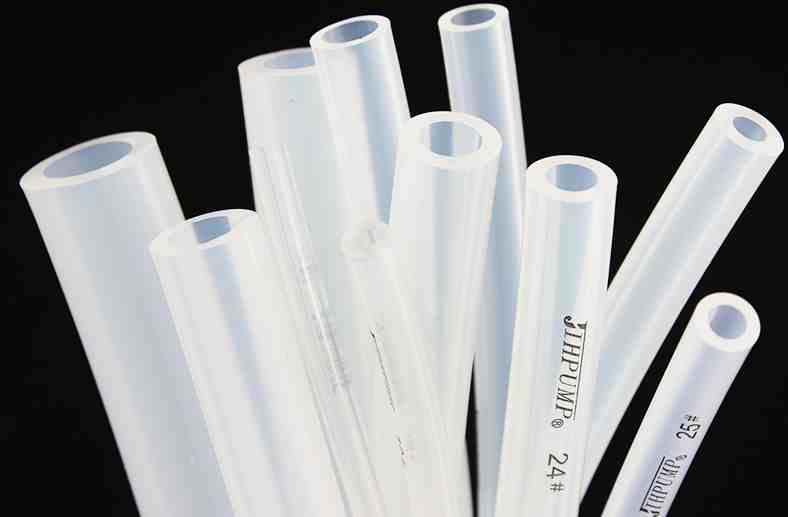
How to Choose the Right Peristaltic Pump tube?
The flexible hose of a peristaltic pump, which is an important component affecting the fluid transmission result, is often overlooked by people. If the selection and daily maintenance and replacement of the peristaltic pump hose are not given due attention, it may lead to fluid transmission errors and even disastrous consequences. Below, we will introduce how to choose a suitable peristaltic pump hose:
1. Relevant Industry Certifications
When the peristaltic pump system is used in the pharmaceutical industry, according to industry requirements, the hoses used for transporting fluids must comply with corresponding certification standards. For example:
- USP (United States Pharmacopeia)
- EP (European Pharmacopoeia)
- FDA (Food and Drug Administration of the United States)
- NSF (National Sanitation Foundation)
- RoHS (Restriction of Hazardous Substances Directive of the European Union)
- REACH (Registration, Evaluation, Authorization and Restriction of Chemicals of the European Union)
- GB4806.11-2016 (Chinese Food Safety Standard) of China, etc.
Only by using compliant peristaltic pump hoses and obtaining professional certification standards provided by the hose manufacturers can pharmaceutical companies meet the required standards when selling and exporting products, avoiding violating relevant laws and regulations or being restricted due to non-compliance. Picture
2. Resistance to Chemical Corrosion / Compatibility

When different fluids are being transported, the hose should exhibit certain excellent chemical properties, which is called chemical compatibility. For example: low adsorption, good heat resistance, not prone to aging, non-swelling, corrosion resistance, low leaching substances, etc.; the anti-chemical corrosion performance decreases with the increase of temperature. Chemical substances that have no effect on the hose at room temperature may have an impact on it as the temperature rises.
3. Pressure-bearing Performance
The application of peristaltic pumps is limited by the pressure-bearing capacity of the hoses. If the system pressure exceeds the limit of the hose’s pressure-bearing capacity, the hose will expand, resulting in excessive wear or rupture of the hose. Factors affecting the pressure-bearing capacity of the hose include: material, ratio of diameter to wall thickness, etc.
4. Hose Size
The specifications of the hose mainly include inner diameter, outer diameter and wall thickness as the main parameters. For example, they can be represented by specification codes or in the form of “inner diameter * outer diameter * wall thickness”. The size of the hose has a direct impact on the flow rate. Excellent pump designs will consider the inner diameter and wall thickness suitable for the hose, and match the optimal hose size or range of hose numbers. The inner diameter of the hose determines the flow rate; the wall thickness affects the ability of the hose to be compressed and rebound, and has a significant impact on the lifespan of the hose. Generally, the more the pump system requires precise control of the flow rate, the higher the requirement for the compatibility of the hose size. At the same time, issues such as the viscosity of the transported fluid and the presence of particles will further influence the selection of hose models.
5. Temperature
The working temperature range of the hose is also an important factor that users need to consider. Different materials have different temperature performances. Generally speaking, the applicable temperature range of silicone hoses is -40 to 200℃, which can meet users’ requirements for high-temperature or low-temperature environments. Additionally, since the anti-chemical corrosion performance decreases with the increase in temperature, we also need to take into account the impact of temperature on the chemical compatibility of the hose.
6. The Lifespan of the Hose
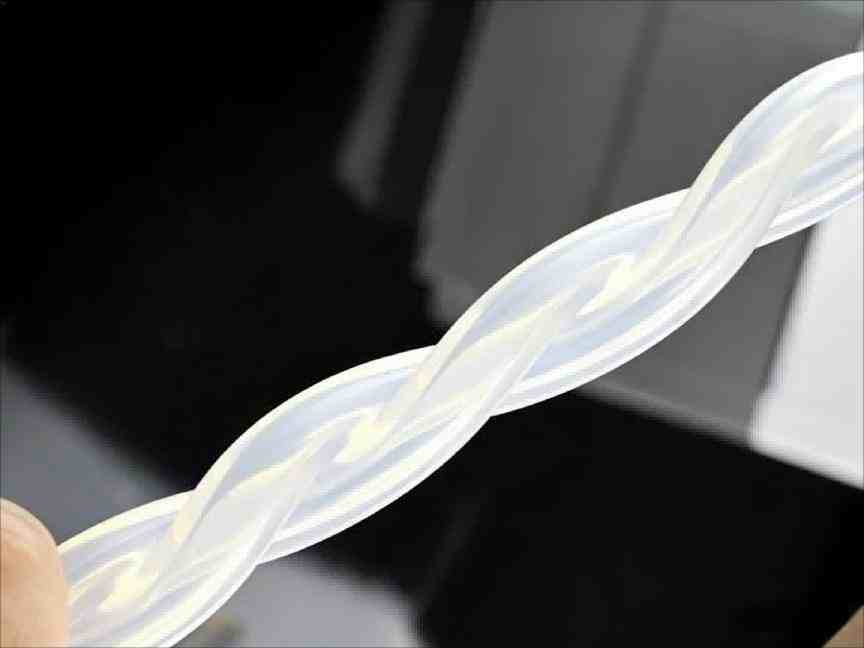
Different hoses have varying abilities to withstand repeated compression and friction from rollers. Different pipe types, materials, pump heads, and operating speeds have different lifespans. The lifespan in a pump system is called flexible lifespan. In specific applications, the pump’s characteristics are quite consistent. Choosing long-life, thick-walled hoses and using large-flow pumps, operating at a lower speed can result in a longer lifespan for the hose. Usually, during actual use, the lifespan of the peristaltic pump hose is affected by factors such as environmental temperature and pressure, the suitability of the selection, and whether the transported fluid is corrosive. You can ensure the hose’s lifespan as much as possible by accurately selecting the components, creating an appropriate environment, or choosing hoses with better durability under specific requirements.
Application-Based Silicone Tubing Selection Reference

When choosing silicone tubes for peristaltic pumps, it is not enough to just look at the material specifications. The silicone tubes must be compatible with the actual application environment in order to ensure the stable performance and long service life of the pump.
| Application | Key Requirements | Potential Risks if Wrong Tubing is Used | Recommended Tubing Properties |
| Food & Beverage Processing | Food safety compliance, hygiene, odor resistance | Contamination, odor transfer, residue buildup | FDA / LFGB certified, smooth inner surface, high purity silicone |
| Pharmaceutical & Laboratory | High cleanliness, stable flow, sterilization resistance | Flow instability, contamination risk, inaccurate dosing | Low extractables, biocompatible, autoclavable or gamma sterilizable |
| Chemical Dosing & Industrial Fluids | Chemical compatibility, temperature resistance | Tubing swelling, hardening, cracking, short lifespan | Chemical-resistant silicone, high temperature tolerance |
| Environmental Monitoring & Sampling | Flow stability, dimensional consistency | Sampling data drift, unstable low-flow performance | High elasticity recovery, tight tolerance ID/OD control |
JIHPUMP focuses on the research, development, production and application of peristaltic pumps, and is committed to providing users with mature and reliable peristaltic pump solutions. The company focuses on meeting the peristaltic pump requirements of OEM customers and can provide customized solutions. For the demand of peristaltic pump hoses, we can offer professional selection and usage guidance. If you want to obtain more product technical support, please contact us.