
Corrosive Liquid Transfer Pump: Which Pump is the Best Choice?
In modern industries such as chemical processing, semiconductors, pharmaceuticals, and wastewater treatment, corrosive liquid transfer remains a high-risk, high-demand process stage. Whether handling strong acids (e.g., sulfuric, hydrochloric), aggressive bases (e.g., sodium hydroxide), or highly volatile organic solvents, choosing the wrong pump results in frequent downtime and soaring maintenance costs, and worse, it can trigger catastrophic safety and environmental incidents.
Faced with complex chemical media, how should procurement managers and process engineers select the ideal corrosive liquid transfer pump? This comprehensive guide breaks down the core pump types, anti-corrosion materials, and critical selection factors to provide a definitive engineering reference.
Why Standard Pumps Fail in Corrosive Environments?
To reduce the amount of capital investment at the beginning of a project, there have been some attempts in the past to employ normal centrifugal pumps in handling chemicals. Yet due to lack of design specifications required for such an application, these machines quickly break down in such a corrosive environment, resulting in loss much more than the initial cost of the equipment.
1. Chemical Corrosion and Erosive Wear
Ordinary centrifugal pumps utilize metals such as carbon steel, cast iron, and low-grade stainless steel (304 SS). As a result of the corrosive nature of acids, bases, and chlorides, the metal housing and associated components of the pumps, including the following are affected:
Holes Forming on the Housing and Deterioration of Impellers: As a result of corrosion that leads to thinning, high-velocity erosion from water flow leads to pitting and destruction of impellers resulting in decreased head.
Cross Contamination: Metal fragments end up getting into the chemical liquid; furthermore, holes formed in the pump housing lead to cross contamination.
2. Mechanical Seal Failure
Centrifugal pumps traditionally use dynamic seals like packings or mechanical seals, where there is contact between a rotating face and a fixed one.
Media Crystal Growth & Abrasive Wear: Chemical fluids tend to be sensitive to processes like crystal growth, evaporation, and the transport of micro-particles. If the media enters the area of the seal faces, these crystals become very abrasive and wear down the faces of the seal rather quickly.
Elastomeric Swelling & Brittleness: Traditional rubber rings, such as O-rings and elastomers used in seals, can expand, deteriorate, and fail when exposed to chemical media.
3. Skyrocketing Maintenance Costs and Production Downtime
The consequences of multiple failures include machine damage as well as reduced profits from operations:
Cascade Shutdown Cost: In continuous industrial processes like fine chemicals, electroplating, and pharmaceutical industries, failure of the pump leads to the shutdown of the whole production process, which causes substantial financial loss.
Expensive Maintenance: Multiple replacements of impellers, mechanical seals, and bearings prove costly.
4. Unmanageable Safety and Environmental Risks
When transferring hazardous chemicals (e.g., industrial-grade sulfuric acid, hydrochloric acid, or flammable solvents), even a pinhole leak presents a severe liability:
Personnel Injuries and Environmental Citations: Chemical exposure causes severe chemical burns to operators and hazardous gas inhalation, while exposing the company to heavy regulatory fines.
Secondary Disasters: Volatile, flammable solvents leaking near electric motors or mechanical friction zones can instantly ignite fires or explosions.
4 Main Types of Corrosive Liquid Transfer Pumps
Industrial applications vary widely in flow rates, pressures, and fluid characteristics (viscosity, particulates, volatility). Consequently, chemical-resistant pumps have evolved into several distinct mechanical architectures:
1. Peristaltic Pumps
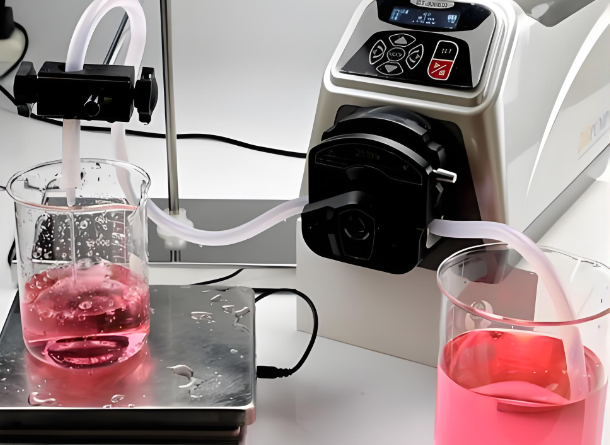
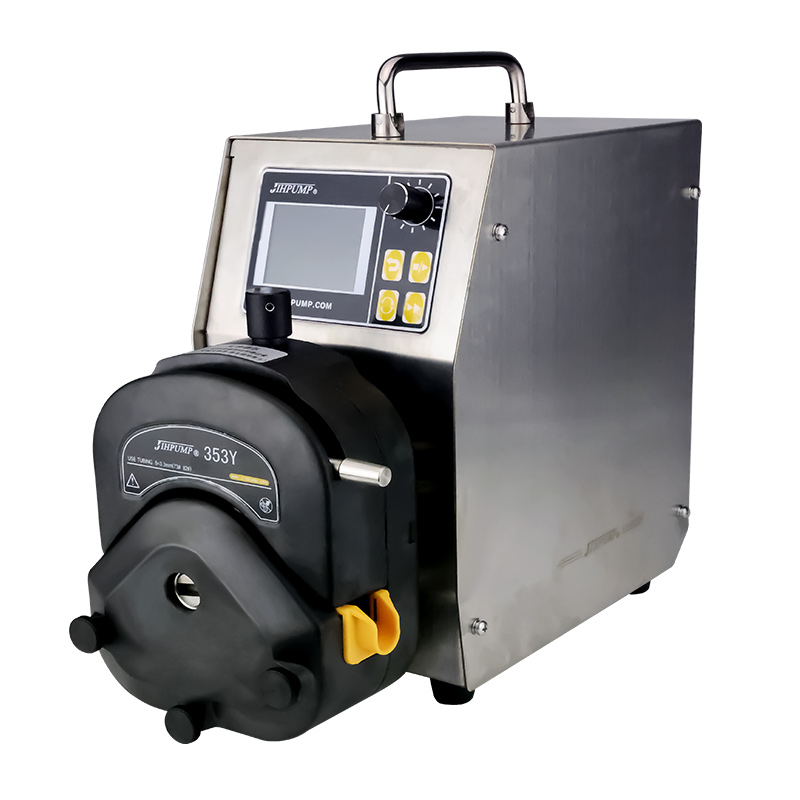
Peristaltic pumps offer one of the safest fluid-handling methods for low-to-medium flow corrosive liquids. Operating on a positive displacement “hose squeezing” principle, rollers or shoes sequentially compress and release a flexible tube to drive the fluid forward.
Core Advantages:
- Totally Isolated: The fluid will be totally enclosed in the tubing, without ever contacting the pump housing or the rotor or any of the inner workings of the pump. The result is that the pump operates without any seals at all.
- Low Maintenance: There is no wear component other than the tubing. By changing the tubing, you effectively overhaul the whole wetted end of the pump.
- Versatility: The shear sensitivity, unlimited capability to dry run, and chemical versatility through tubing change.
Typical Applications: Laboratory chemical analysis, precision chemical dosing in fine chemicals, and low-flow metered suction of concentrated acids and bases.
2. Magnetic Drive Pumps
Magnetic drive (mag-drive) pumps eliminate the traditional shaft seal altogether. Instead, they utilize a magnetic coupling where an external drive magnet rotates an internal magnet assembly (attached to the impeller) through a solid containment shell.
Core Advantages:
- Absolute Containment: By replacing dynamic seals with a static containment shroud, the fluid is completely sealed inside the pump. This completely eradicates external leakage of volatile, toxic, flammable, or hazardous chemicals.
- High Efficiency: Engineered for continuous, long-term, stable operations across medium-to-large flow rates.
Critical Limitations: Strictly forbidden from running dry. Mag-drive internal sliding bearings rely entirely on the pumped fluid for lubrication and cooling. Running dry causes instant heat buildup, leading to magnet demagnetization or bearing seizure. They are also unsuited for fluids carrying abrasive solids.
Typical Applications: Petrochemical processing, bulk acid/base circulation, chemical tank car unloading, and continuous transfer of high-risk chemicals.
3. Diaphragm Pumps
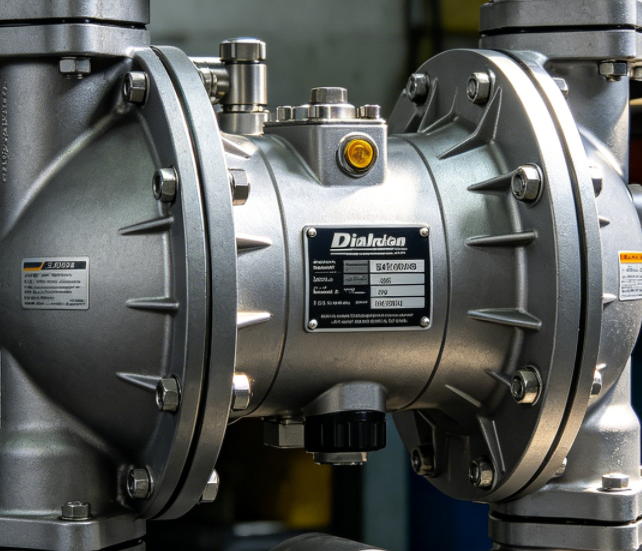
Diaphragm pumps utilize the reciprocating motion of a flexible membrane to alter the volume of the pump chamber, paired with check valves to regulate fluid intake and discharge. They are commonly powered by compressed air (Air-Operated Double Diaphragm, or AODD) or electric motors.
Core Advantages:
- Exceptional Self-priming Abilities and High Abrasion Resistance: This kind of pump has excellent lifting capability. The absence of any fast-moving impeller allows them to easily move viscous liquids, even slurry.
- Dry Run Operation and Explosion Proofing: As they do not require electricity to operate but rather are powered by compressed air, AODD pumps are explosion proof by nature.
Typical Applications: Chemical dosing and metering systems, chemical-sludge and pickling acid transfer in wastewater treatment, and raw material chemical offloading.
4. Chemical Centrifugal Pumps
When an industrial process demands continuous, large-scale fluid transfer, centrifugal pumps are the industry standard. To survive corrosive media, however, they rely heavily on advanced materials science.
Core Advantages:
Efficiency Leader: Centrifugal pumps offer the highest flow rates and operational efficiencies, yielding the lowest running costs in scaled up production.
Advanced Materials Framework: To resist chemical attack, wetted components abandon standard metals in favor of:
- Non-Metallic Linings/Plastics: Such as PTFE (Polytetrafluoroethylene/Teflon) linings, PVDF (Polyvinylidene Fluoride), or engineered polymers that resist nearly all strong acids and bases.
- Exotic Alloys: Such as Hastelloy or Titanium, deployed to survive extreme combinations of high corrosion, high temperature, and high pressure.
Typical Applications: Large-scale chemical manufacturing, electroplating and pickling lines, industrial desalination plants, and bulk acid-base storage tank transfers.
Quick Corrosive Liquid Pump Selection Reference Table
| Pump Type | Flow Range | Solid Particle Compatibility | Dry-Running Capability | Core Value Proposition |
| Peristaltic Pump | Trace to Medium-Low Flow | Good (Micro-particles only) | Yes | Fluid only contacts the tube; replacing the tube renews the pump. |
| Magnetic Drive Pump | Medium to High Flow | Extremely Poor (No solids) | Strictly No | Static mag-seal design; delivers zero-leakage for high-risk chemicals. |
| Diaphragm Pump | Low to High Flow | Excellent (Abrasion resistant) | Yes | High suction lift; handles viscous and slurry-laden media. |
| Chemical Centrifugal Pump | Extremely High Flow | Poor (Impeller dependent) | No | High-throughput, continuous bulk transfer at scale. |
Chemical-Resistant Materials of Corrosive Liquid Pumps
In fluid handling, “pump selection is material selection.” There is no single universal material, only the material that matches the specific chemical environment. Below are the four primary material classes used in corrosive applications:
1. PTFE (Polytetrafluoroethylene / Teflon)
Polytetrafluoroethylene (PTFE) is among those synthetic polymers with outstanding resistance to chemical degradation and offers virtually total protection against most aggressive chemical environments except molten alkali metals.
Performance Characteristics: Excellent resistance to aqua regia, hydrofluoric acid, concentrated sulfuric acid, bases, and several organic solvents. It has an extensive temperature range of stability (-20°C to 180°C) and possesses very low surface tension and hence anti-scaling properties.
Mechanical Drawbacks: Limited strength and vulnerability to cold flow. As a result, in the case of large pumps used in industries, it is normally employed as liner material (steel-linered PTFE centrifugal pumps).
Application Areas: Transfer of large volumes of acids in chemical plants, mixing of different acids, and transfer of organic solvent chemicals.
2. PVDF (Polyvinylidene Fluoride)
PVDF is a fluorinated hydrocarbon polymer. While its resistance to certain highly oxidizing acids is slightly below that of PTFE, it delivers a superior balance of mechanical strength and purity.
Performance Profile: Tensile strength and structural rigidity significantly exceed PTFE. It offers excellent resistance to mechanical wear and fatigue, allowing it to be machined directly into solid plastic pump bodies or impellers. It features an ultra-low extractable profile, ensuring zero media contamination.
Mechanical Limitations: Highly vulnerable to strong caustic solutions and certain polar solvents. Exposure to hot, concentrated sodium hydroxide (NaOH) or acetone causes rapid chemical degradation, embrittlement, and dissolution.
Typical Applications: Semiconductor wafer cleaning (ultra-pure chemical transfer), lithium battery cathode slurry handling, and high-purity water loops.
3. Exotic Alloys and Stainless Steels
A frequent procurement error is assuming stainless steel is universally corrosion-proof.
316L Stainless Steel: This type of stainless steel contains molybdenum (Mo), which gives it excellent resistance to acidic, basic environments, and wastewater from industry. But when it comes in contact with hydrochloric acid, dilute sulfuric acid, or highly concentrated chloride media, 316L is prone to perforation and pitting.
Exotic Alloys (like Hastelloy, Titanium): In instances where a processing condition involves an extremely corrosive environment, along with pressures and temperatures that exceed those of plastic materials, exotic alloys are a necessity. For example, Hastelloy can withstand hot HCl, whereas Titanium is completely impervious to seawater and hypochlorites.
4. Elastomers (Tubing and O-Rings)
Whether considering peristaltic pump hoses or the static O-rings in centrifugal and mag-drive pumps, elastomer selection dictates the ultimate uptime of the pump:
Fluoroelastomers (Viton / FKM): Outstanding heat and oil resistance, with superior resistance to strong acids. Selection Caution: Extremely sensitive to ketones and esters (swelling immediately upon exposure to acetone).
EPDM: Exceptional chemical resistance to alcohols, ketones, and alkalis; good aging resistance. Note: Very poor chemical resistance to mineral oil products, petroleum, and hydrocarbons.
Perfluoroelastomers (FFKM): “The PTFE of elastomers,” with the combination of flexibility of rubber and the universal resistance of Teflon. Very expensive, used only in critical sealing applications when no chemical can be allowed to pass through.
Engineered Long-Life Hoses (Norprene/PharMed): Peristaltic hose with many times better flex-life than ordinary silicone hose and wide resistance to acids and bases. Weakness: Very limited resistance to solvents.
4 Rules to Choose a Suitable Corrosive Liquid Pump
The safety and reliability of the operation of a fluid handling system can be ensured by carefully assessing the following factors:
Check the “Big Three” (Medium, Concentration, and Temperature)
A material which is capable of surviving 10% dilute sulfuric acid in normal room temperature conditions may fail against 98% concentrated sulfuric acid or an environment of 80 degrees Centigrade.
Evaluate Physical Properties (Solids and Viscosity)
If the fluid contains crystalline precipitate, slurries, or catalyst fines, prioritize a diaphragm or peristaltic pump. If the fluid is clean and low-viscosity, choose high-efficiency mag-drive or lined centrifugal options.
Calculate Operating Parameters (Flow, Head, and Suction Lift)
Define peak flow requirements and total dynamic head. If the pump must be located above the fluid reservoir, evaluate the required suction lift. Peristaltic and diaphragm pumps provide superior, natural self-priming capabilities.
Analyze the Total Cost of Ownership (TCO)
Don’t focus on just the cost to purchase. Quality pumps without seals that can withstand chemicals (heavy-duty peristaltic or magnetically-driven pumps) have higher upfront costs, but due to their zero failure rate and absence of mechanical seal maintenance, they have much lower total cost over two or three years.
Why Peristaltic Pumps Stand Out at Corrosive Fluid Transfer
For low-to-medium flow rates, precise dosing, or challenging fluids (prone to crystallization or containing solids), the peristaltic pump’s design directly solves the fundamental vulnerabilities of traditional chemical pumps:
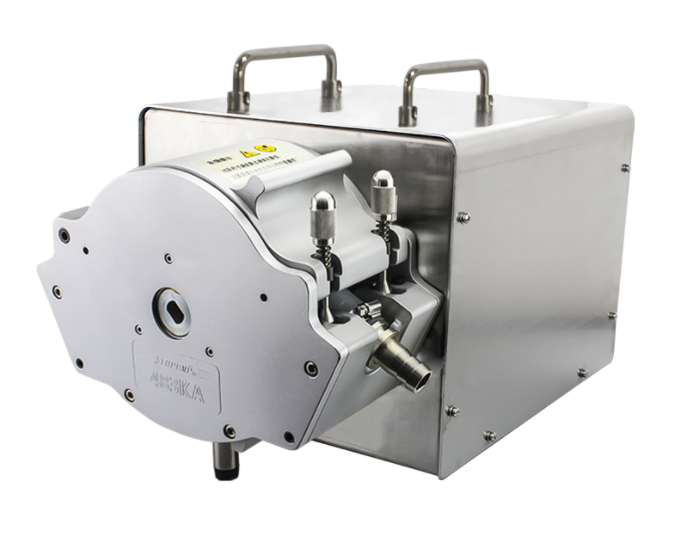
100% Sealless Architecture: By eliminating shaft seals, the fluid remains 100% enclosed within the tube. This removes the risk of aggressive chemical leaks caused by mechanical seal wear.
“Zero-Contact” Pump Body: The fluid never contacts the pump mechanics. Handling a new chemical doesn’t require purchasing an expensive exotic alloy pump, only swapping out the tubing for a compatible material (like FKM or a PTFE-composite hose), ensuring the pump head remains uncorroded.
Valveless, Straight-Through Flow Path: Peristaltic pumps contain no internal check valves. When dosing fluids like sodium hypochlorite, which naturally off-gas, crystallize, or carry abrasive particles, the open fluid path prevents vapor locking, clogging, or valve seizure.
True Dry-Running and Self-Priming: Unlike mag-drive and centrifugal pumps, which fail immediately if run dry, peristaltic pumps can run dry indefinitely. The continuous restitution of the compressed tube generates a powerful vacuum, creating a suction lift of up to 9.5 meters, making them an ideal solution for tank stripping or emptying chemical transport trucks.
Summary
Selecting the correct corrosive liquid transfer pump is a critical engineering decision. Magnetic drive pumps offer reliable, zero-leakage bulk transfer for continuous large flows; air-operated diaphragm pumps handle tough, solid-laden, explosion-proof environments; and peristaltic pumps offer a unique valveless, sealless architecture that makes them the premier choice for precision metering, crystallizing fluids, and severe chemical applications.
Need a Tailored Chemical-Resistant Peristaltic Pump Solution for Your Process?
Contact JIHPump peristaltic pump team today. We will evaluate your chemical parameters, temperature limits, and flow requirements to deliver the optimal fluid transfer solution for your facility.