
How Poor Maintenance Affects Peristaltic Pump Accuracy and Flow Rate?
The peristaltic pump is widely used in laboratories, water sample collection systems, chemical metrology, food processing and pharmaceutical production due to its advantages such as clean operation, strong self-priming ability and precise flow control. In many applications, the accuracy of the peristaltic pump is not merely a performance indicator; it directly affects the reliability of data, product quality and process stability.
However, improper maintenance of the peristaltic pump can seriously affect the accuracy of the data in multiple ways. In this article, JIHPUMP will explain to you the main factors that affect the accuracy and flow rate of the peristaltic pump, and – most importantly: how to correctly calibrate the peristaltic pump to ensure its stable, repeatable and precise operation.
What Affects Peristaltic Pump Accuracy and Flow Rate?
Although peristaltic pumps are often described as “precisely designed”, their accuracy depends on multiple interacting factors. Unlike volumetric pumps with rigid chambers, peristaltic pumps rely on elastic tubes and mechanical compression, making them highly sensitive to wear, material properties, and operating conditions.
The following are the most crucial factors that affect the flow rate and accuracy of the peristaltic pump.
Pump Head Wear and Mechanical Deformation
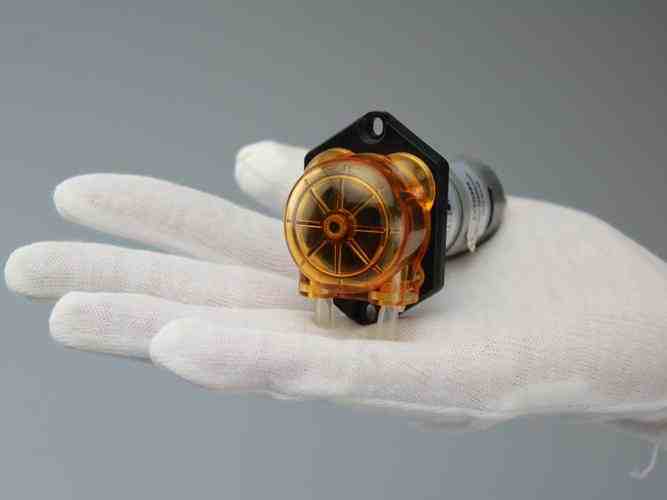
The pump head is the core component of the peristaltic pump. Long-term use or improper use can lead to wear of the pump head, directly causing flow errors. When the rollers of the pump head are eccentric or the pressure blocks are rough and uneven, they will exert uneven compression on the hose, resulting in unstable flow and decreased accuracy.
Experimental data shows that after continuous operation for 500 hours, the inner diameter of the standard silicone hose will shrink by 5% to 8%, which directly results in a 3% to 5% decrease in the flow rate per revolution.
Tube Aging and Material Fatigue
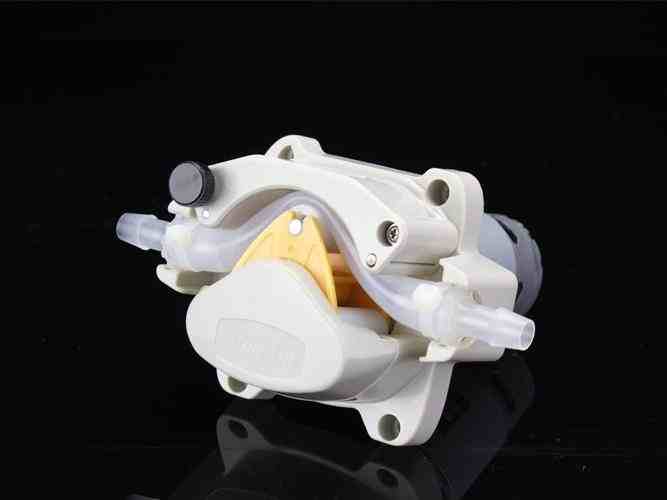
The hose, as a consumable part of the peristaltic pump, its elasticity changes directly affect the flow accuracy. Improper maintenance can lead to the following problems with the hose:
- Material fatigue: Under long-term compression, the hose undergoes elastic fatigue, losing its elastic recovery permanently, resulting in a linear reduction in the actual flow volume.
- Chemical erosion: When transporting corrosive liquids, the material of the hose undergoes swelling or degradation, with a weight loss rate of up to 5%-10%.
- Mechanical wear: If the pump head’s pressing block is rough or the rollers are worn, it causes the wall thickness of the hose to decrease and the transmission curve to change.
These changes will alter the transmission characteristics of the hose, causing the flow value displayed by the driver to deviate from the actual transmission value, and this error will increase as the speed variation range expands.
Flow Control System Drift
Modern peristaltic pumps often use electronic speed control, digital displays, or closed-loop feedback systems to regulate flow. While these systems improve usability, they are not immune to drift.
Possible sources of control system drift include:
- Motor speed tolerance changes
- Encoder signal degradation
- Control board aging
- Software-based flow calculations that do not account for tubing wear
In many cases, the pump continues to display the “set” flow rate, while the actual delivered flow slowly deviates. Without periodic verification and calibration, users may rely on inaccurate digital readings, assuming the system remains precise.
This disconnect between displayed and actual flow is a major contributor to long-term accuracy loss in peristaltic pumping systems.
Environmental Factors
Environmental conditions play a crucial role in the performance of the peristaltic pump, especially because the pipeline is highly sensitive to temperature and pressure changes:
- High temperatures will cause the hose to become soft, reducing pressure stability.
- Changes in humidity may lead to leakage problems;
- Changes in air pressure will affect the viscosity of the fluid, thereby affecting the accuracy of flow rate.
If the laboratory environment conditions are unstable, the accuracy of the peristaltic pump will continue to fluctuate. When the operating conditions change, unless recalibrated under the new conditions, the previously calibrated flow values may no longer be accurate.
Operator and Installation Errors
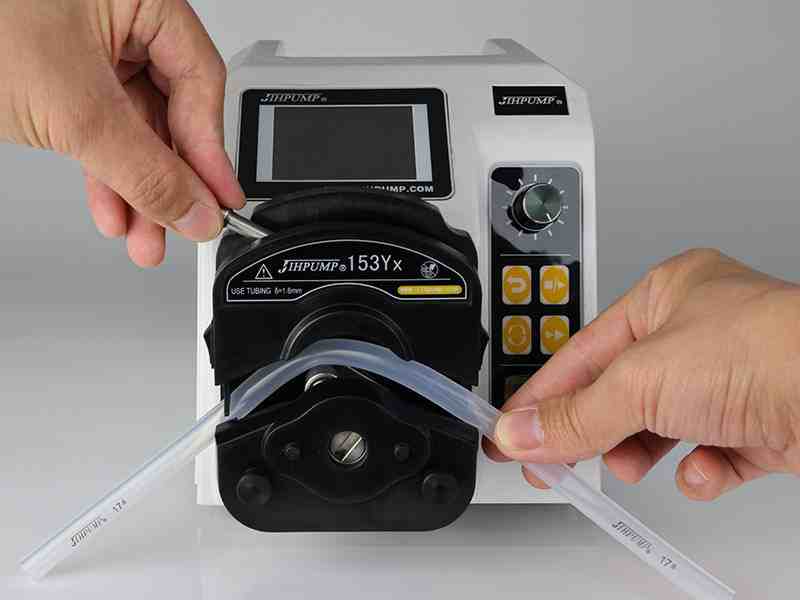
Incorrect operation methods, inappropriate parameter settings, failure to replace worn components in time, and other operational issues can all lead to a decrease in the accuracy of the peristaltic pump. For instance, failing to regularly check the wear condition of the pump tube, not replacing the aged hose in time, and incorrect installation of the pump tube, all can directly result in inaccurate data.
How to Calibrate a Peristaltic Pump
Due to the numerous variables that affect the flow output, calibration is the most effective method for restoring and verifying the accuracy of the peristaltic pump. Calibration ensures that the set parameters of the pump are consistent with its actual output flow under the actual operating conditions. The following is the specific calibration process and recommended tools:
Flow Calibration Standard Operating Procedure
Preparations before Calibration
- Install and record the model of the pump head and pump tube, and power on the peristaltic pump for preheating
- Run the pump at the calibration flow rate for 10 minutes to expel the gas in the pipeline
- Wait until the temperature, pressure and flow rate of the medium are stable before conducting the calibration
Selection of Calibration Points
Determine the calibration points based on the actual usage range of the calibrated instrument. When the user has no requirements, usually select three flow points of 20%, 50%, and 100% of the maximum flow for calibration. Each point should be calibrated at least three times
Calibration Operation Steps
Method 1: Quality method calibration (recommended)
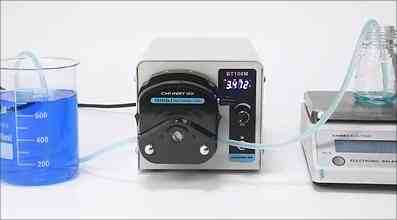
- Place the medium container on the electronic balance and wait for the balance to stabilize before resetting
- Start the peristaltic pump and start timing
- When the rotation speed of the pump head is not less than 60 revolutions and the calibration time is not less than 2 minutes, stop the peristaltic pump and stop timing
- Record the calibration time and the indicated value of the electronic balance
- Calculate the measured flow value using the formula
- Repeat the measurement three times and take the average value as the flow measurement value at this point
Method 2: Intelligent peristaltic pump automatic calibration
- Enter the “Flow Calibration” page
- Set the running time (default is 60 seconds)
- Click the start button to conduct the test. The test will automatically stop when the running time is over
- Enter the measured liquid volume, and the system will automatically pop up a numeric keypad
- It is recommended to conduct the test more than three times and take the average value
- Click the calibration button to complete the calibration
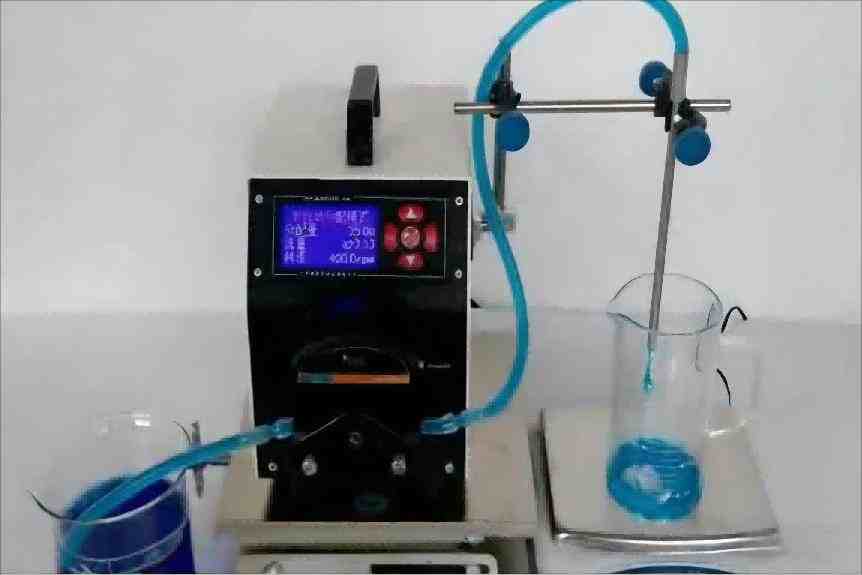
Recommended calibration tools
Flow calibration tool for peristaltic pumps
Electronic Balance
- Accuracy requirement: ±0.01g or higher
- Used for mass method calibration, measuring the mass of the collected liquid
Standard Metal Measuring Device
- Used for volume method calibration, directly measuring the volume of the liquid
- Before the test, the inner wall of the standard device needs to be moistened, and then empty it and let the liquid flow for 2 minutes
Electronic Stopwatch
- Accuracy requirement: ±0.01 seconds
- Used for precise timing
Thermometer
- Mercury thermometer: (0~50)℃, graduation value 0.1℃, maximum allowable error ±0.2℃
- Used to measure the temperature of the medium, ensuring that the difference between the two temperatures does not exceed 0.5℃
Soap Film flow Calibrator (such as M-30 type)
- Calibration accuracy of 0.001%, in line with the US NIST standard
- Suitable for calibration of rotor flow meters in calibration laboratories
Calibration Precautions and Operational Tips
- Calibration speed: Generally no less than 20 rpm to ensure stable flow
- Replace new pump tube: Run at full speed for a few minutes before calibration for better results
- Liquid level of raw material tank: Calibrate when the level is at the middle position (half of the material in the tank) for better results
- Multiple measurements: Take the average of multiple initial distribution values as the calibration value. It is recommended to continuously distribute 10 times and take the average
- Environmental conditions: The instrument and experimental pure water should be left to stand in the experimental environment for more than 2 hours
- Directional calibration: For reversible rotary pumps, calibration should be conducted for both forward and reverse directions separately
By following standardized calibration procedures and selecting appropriate tools, the flow accuracy of the rotary pump can be ensured to reach 0.5% or even higher, meeting the high-precision requirements of laboratory and production environments.
Conclusion
The peristaltic pump boasts excellent flexibility and cleanliness, but its accuracy depends on strict control of mechanical conditions, pipeline conditions, operating environment and calibration specifications. Wear, material fatigue, control drift and human factors can all lead to gradual changes in the flow output.
Understanding the factors that affect the accuracy of peristaltic pumps, monitoring the flow rate of the pumps, and mastering the correct calibration methods for peristaltic pumps are crucial for maintaining reliable measurement results. Through proper maintenance and regular calibration, peristaltic pumps can provide highly repeatable and precise performance in various demanding application environments.