
How Suction Lift Affects Flow Rate and Accuracy?
The peristaltic pump is operating normally, but the flow rate is lower than expected. Moreover, as the suction lift increases, the measurement accuracy will decrease. Have you also encountered this problem?
The fundamental reason for this performance disparity is the suction lift. Although the peristaltic pump can generate a considerable inlet vacuum, the suction lift still plays a crucial role in determining the actual flow rate, flow stability, and measurement accuracy. In this article, we will explore how the suction lift affects the performance of the peristaltic pump and how we design systems to maintain accuracy under actual operating conditions.

The Difference Between Theoretical and Actual Flow Rate
In theory, the flow rate of a peristaltic pump is easy to calculate. It is determined by the internal diameter of the tubing, the effective length of tubing compressed per revolution, and the rotational speed of the pump. Under ideal conditions—short inlet tubing, flooded suction, and no air ingress—the delivered flow closely matches the nominal value specified by the manufacturer.
In practice, however, actual flow rate is highly dependent on suction conditions.
When suction lift is introduced, the pump must rely on inlet vacuum to draw liquid into the tubing after each roller passes. With an increase in suction lift, there is a corresponding reduction in the value of the inlet pressure. It is even possible that the tubing does not assume its original circular form before a compression cycle. This incomplete tube refill directly reduces the volume of liquid captured per revolution.
As a result:
- The pump may rotate at a constant speed
- The tubing size remains unchanged
- Yet the delivered flow rate is lower than the theoretical value
For this reason, peristaltic pumps, although being positive displacement pumps, do not always provide a constant rate of flow even in high suction lift applications.
How Suction Lift Directly Affects Flow Rate
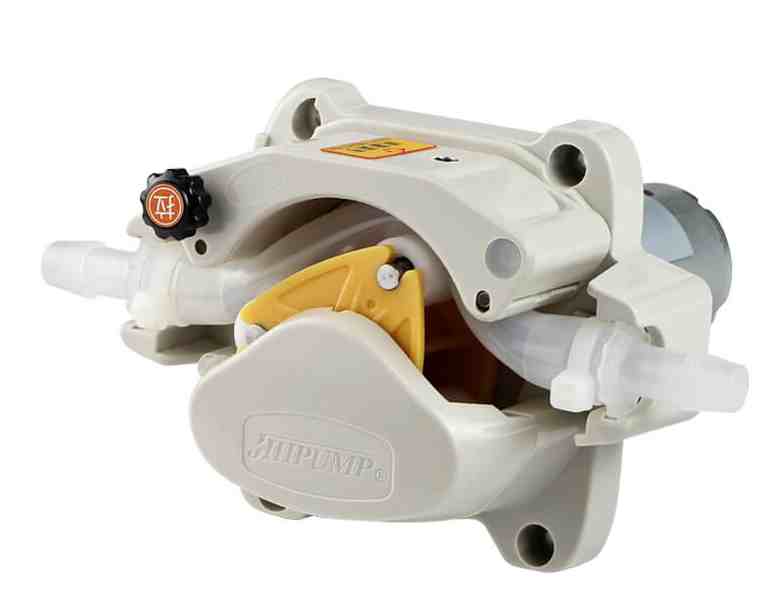
Flow Rate Reduction with Increasing Suction Lift
As suction lift increases, several physical effects occur simultaneously:
- Higher inlet vacuum is required to lift the liquid column
- Tubing recovery becomes slower, especially with stiffer materials
- Incomplete filling of the tubing cavity occurs before the next roller engagement
At low suction lift (near flooded inlet conditions), the tubing refills completely, and flow rate remains close to nominal. At moderate suction lift, a gradual reduction in flow rate is observed. At high suction lift, flow loss becomes significant and may increase sharply with small additional increases in lift.
This behavior often surprises users who expect linear performance based on pump speed alone. In reality, suction lift introduces a nonlinear loss mechanism that limits effective displacement.
Flow Instability at High Suction Lift
Beyond simple flow reduction, flow stability also deteriorates at higher suction lift:
- Intermittent air ingress may occur at the tubing wall or fittings
- Micro-bubbles can form under high vacuum conditions
- The liquid column may partially collapse during refill
These effects cause short-term fluctuations in delivered volume, even if the average flow rate appears acceptable. For applications such as sampling or dosing, this instability can be more problematic than flow loss itself.
Impact of Suction Lift on Dosing Accuracy and Repeatability
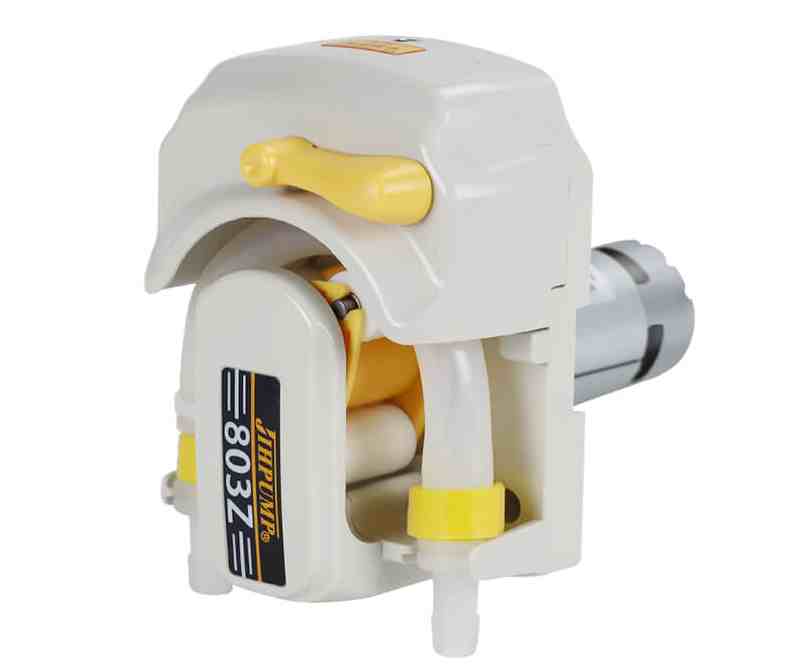
Flow rate is only one part of performance. In many applications, accuracy and repeatability are far more critical.
Inconsistent Tube Refill and Volume Variation
Peristaltic pump accuracy relies on the assumption that each roller movement displaces the same volume of liquid. Under high suction lift, this assumption no longer holds true.
Because tubing refill is incomplete and varies from cycle to cycle:
- Each revolution may displace a slightly different volume
- Short-term repeatability decreases
- Cumulative dosing errors increase over time
This effect is especially pronounced in low-flow applications, where even small volume deviations represent a large percentage error.
Increased Pulsation and Air Entrainment
High suction lift amplifies the inherent pulsation of peristaltic pumps. When the tubing is not fully filled, the transition between rollers becomes more abrupt, increasing flow pulsation. At the same time, air may be drawn into the system through microscopic leaks or permeable tubing materials.
For applications such as:
- Laboratory reagent dosing
- Water quality sampling
- Analytical instrumentation
these micro-bubbles and pulsation effects can severely compromise measurement accuracy and data reliability.
In short, high suction lift affects not only how much fluid is delivered, but also how consistently it is delivered.
How to Minimize Flow Loss and Accuracy Issues Caused by Suction Lift
Although suction lift cannot always be eliminated, its negative impact can be significantly reduced through proper system design and operating practices.
Reduce Suction Lift in System Layout
The most effective strategy is simple: place the pump as close to the fluid source as possible. A lower suction lift reduces inlet vacuum requirements and allows the tubing to refill more completely.
Whenever possible:
- Use flooded suction instead of lift
- Minimize vertical distance on the inlet side
- Avoid unnecessary bends or restrictions in suction tubing
Optimize Tubing Selection
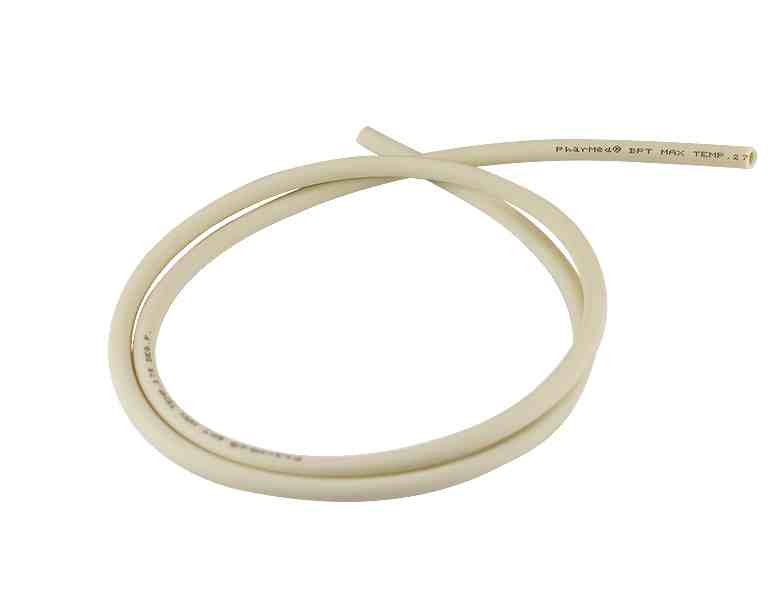
Tubing properties have a major influence on suction performance. Softer tubing materials with high elastic recovery refill more effectively under vacuum conditions.
Key considerations include:
- Material elasticity
- Wall thickness
- Inner diameter
Larger inner diameters and highly elastic tubing generally perform better under suction lift, although they may reduce pressure capability on the discharge side.
Adjust Operating Speed
At high suction lift, increasing pump speed does not necessarily improve performance. Faster rotation reduces the time available for tubing refill, which can further decrease effective flow.
In many cases, lower speeds improve both flow stability and accuracy when suction lift is unavoidable.
Recommended Suction Lift for Accurate Peristaltic Pump Operation

While maximum suction lift values are often listed in datasheets, recommended suction lift for accurate operation is typically much lower. The optimal range depends on the application and performance requirements.
The table below provides general guidance based on typical use cases:
| Application Type | Typical Suction Lift Range | Performance Notes |
| Laboratory dosing | 0–1 m | Best accuracy and repeatability |
| Analytical instruments | 0–1.5 m | Stable flow, minimal pulsation |
| Water sampling | 1–3 m | Acceptable with proper tubing |
| Chemical injection (non-precision) | 2–4 m | Flow loss likely, accuracy reduced |
| OEM general fluid transfer | <2 m preferred | Balance between layout and performance |
These values are not absolute limits, but they represent practical engineering recommendations rather than theoretical maximums. Exceeding these ranges may still allow pumping, but with reduced flow accuracy and stability.
Final Thoughts
The suction lift is one of the most important factors affecting the performance of a peristaltic pump, but it is often underestimated. Although peristaltic pumps can self-suck and operate under vacuum conditions, an excessively high suction lift can result in incomplete pipeline filling, reduced effective flow rate, and decreased flow stability.
To ensure the accurate and reliable operation of the peristaltic pump, the suction lift should be minimized through meticulous system design, appropriate pipe selection, and reasonable performance expectations. Understanding the relationship between suction lift, flow rate and accuracy can help users go beyond the assumptions in the data sheet and achieve predictable results in practical applications.