
Peristaltic Pump Applications in Biopharma: From Cell Culture to Final Filling
Fluid handling is one of the most challenging and delicate tasks in contemporary biopharmaceutical manufacturing. Right from the formulation of cell culture media to the dosing of sterile pharmaceuticals, each process must be handled meticulously. Keeping this in mind, the peristaltic pump used in the pharmaceutical industry is an absolute necessity in both the upstream and downstream processes involved in bioprocessing.
In comparison with the conventional pump technology, the pharmaceutical-grade peristaltic pump is endowed with distinct advantages such as sterility, accuracy, and flexibility. With the growing adoption of single-use systems and stricter regulatory requirements. It is seen that the application of peristaltic pumps for biopharmaceutical production is broadening with time. It is intended to give a comprehensive description of the application of peristaltic pumps from cell culture to final fill.

Applications of Peristaltic Pumps Used in the Pharmaceutical Industry
The application of peristaltic pumps in the pharmaceutical industry is not limited to a single process step. As a high-cleanliness, low-shear, cross-contamination-free, easy-to-operate and maintain volumetric conveying device, with its unique working principle and structural advantages, it covers multiple links including upstream cell culture, medium feeding, midstream separation and filtration, downstream filling, process sampling and online monitoring.
Peristaltic Pumps in Upstream Bioprocessing
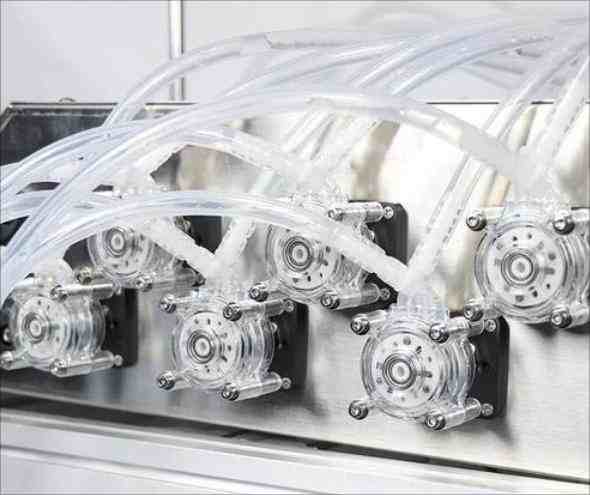
Upstream bioprocessing focuses on cell growth and product expression, where maintaining a stable and contamination-free environment is essential. Peristaltic pumps have been of immense importance during this process due to their delicate mode of operation with the pumped fluid being sterile.
Cell Culture Media Transfer
Peristaltic pumps are common in the transfer of cell culture media from the preparation tank to the bioreactor. In this process, since the media comes into contact with the pipeline alone, the chances of contamination are greatly reduced. This is why peristaltic pumps can be said to be best suited for handling sterile media.
Nutrient Feeding and Buffer Addition
In the process of fermentation or cell culture, there needs to be accurately applied the nutrient solution and buffers for maintaining the optimal growth environment. It is evident that the peristaltic pump is capable of accurately providing low flow rates with a stable flow rate, thereby ensuring the stability of the biological process.
Seed Train Operations
In the seed amplification stage, cells are also very susceptible to shear stress. The low-shear characteristics of peristaltic pumps help preserve cell viability while ensuring reliable fluid transfer between vessels.
Peristaltic Pumps in Downstream Processing
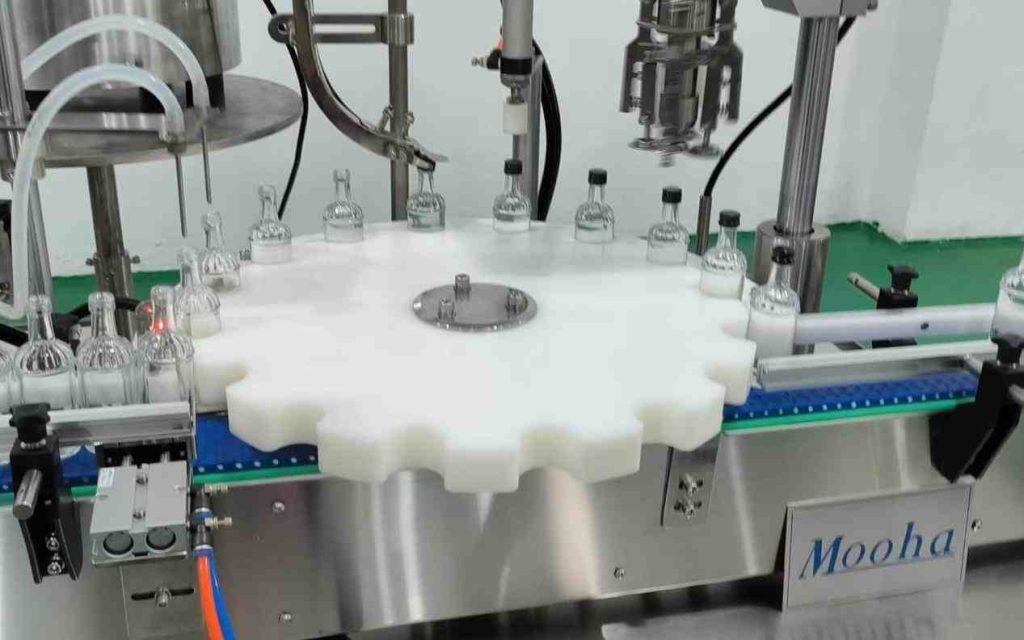
The downstream processes include the harvesting, purification, and concentration of biopharmaceutical products. The fluid handling in this stage typically involves complex biological mixtures. Therefore, pump selection plays a critical role.
Cell Broth and Harvest Transfer
The peristaltic pump is used to transfer the harvested cell culture medium without damaging the proteins or cells. It is not prone to clogging, even when handling viscous fluids, thus being very advantageous.
Filtration and Chromatography Support
Having a stable and controlled flow rate is crucial for filtration and chromatographic instruments. Pharmaceutical peristaltic pumps offer a stable flow rate. It can increase the efficiency of the separation process.
Buffer Preparation and Distribution
The downstream process usually requires frequent replacement of the buffer solution. The peristaltic pump can quickly replace the pipeline and is easy to clean, thus enabling efficient preparation and distribution of the buffer solution in a GMP environment.
Peristaltic Pumps in Final Formulation & Filling
Final formulation and filling are among the most regulated stages in pharmaceutical manufacturing. Any contamination or dosing error at this stage can result in product loss or regulatory non-compliance.
API and Excipient Mixing
Peristaltic pumps are used to accurately transfer active pharmaceutical ingredients (APIs) and excipients into formulation vessels. Their precise flow control ensures correct mixing ratios and product consistency.
Aseptic Filling and Dosing
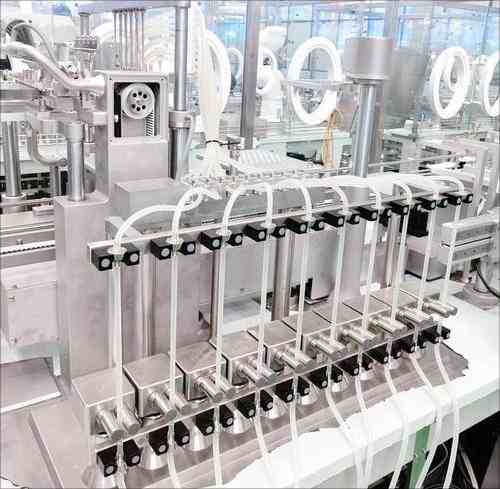
In aseptic filling lines, pharmaceutical peristaltic pumps are commonly used for small-volume, high-accuracy dosing. They are suitable for injectable drugs, vaccines, biologics, and diagnostic reagents.
Sterile Single-Use Systems
As single-use technologies become standard in biopharma, peristaltic pumps are increasingly integrated into disposable filling and formulation systems, reducing cleaning validation efforts and downtime.
Supporting Pharmaceutical Operations
Beyond core manufacturing steps, peristaltic pumps also support various auxiliary pharmaceutical operations that are essential for compliance and efficiency.
CIP and SIP Chemical Transfer
Peristaltic pumps are used to deliver cleaning agents, disinfectants, and sanitizing solutions in clean-in-place (CIP) and sterilize-in-place (SIP) systems.
Laboratory and Pilot-Scale Applications
From R&D laboratories to pilot plants, pharmaceutical peristaltic pumps provide scalability and process consistency, allowing seamless transition from development to commercial production.
Waste and Chemical Handling
Their corrosion-resistant tubing options make peristaltic pumps suitable for transferring aggressive chemicals or pharmaceutical waste streams.
Why Peristaltic Pumps Are Preferred in the Pharmaceutical Industry
There are several reasons why peristaltic pumps are widely preferred in pharmaceutical and biopharmaceutical applications:
- Fully enclosed fluid path for superior sterility
- Low shear pumping ideal for sensitive biological materials
- Easy cleaning and tubing replacement, supporting GMP compliance
- High dosing accuracy and repeatability
- Compatibility with single-use systems
- Low maintenance requirements
These advantages make pharmaceutical peristaltic pumps a reliable solution for both small-scale and large-scale manufacturing environments.
How to Choose the Right Peristaltic Pump for Pharmaceutical Applications
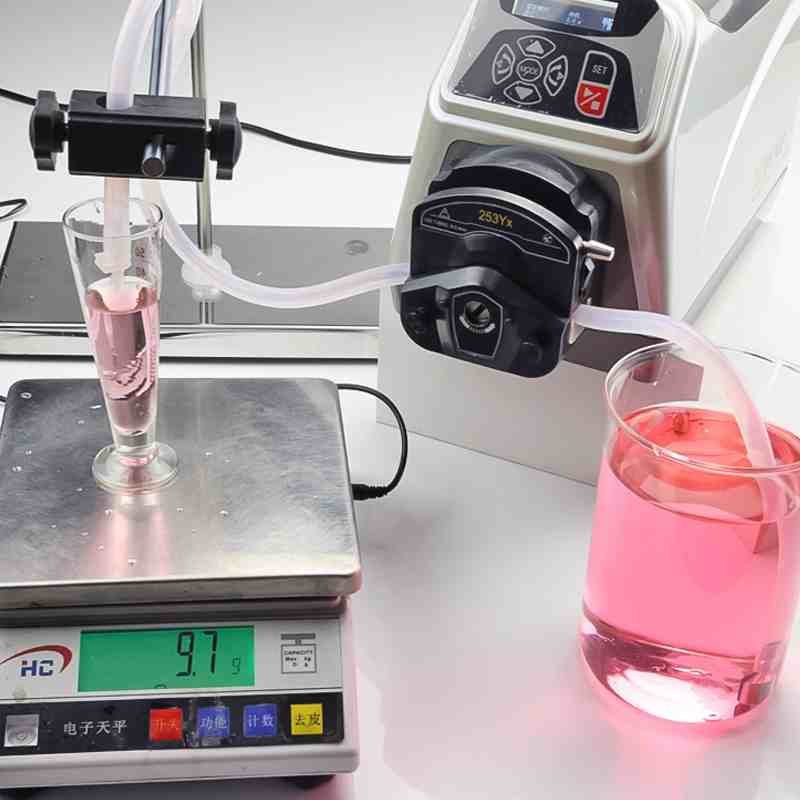
When selecting peristaltic pumps in biopharmaceutical processes, various factors such as fluid properties, system parameters, operating environment, control requirements, and verification requirements need to be comprehensively considered.
Firstly, it is necessary to clearly define the characteristics of the medium to be transported, including its chemical composition, pH value, solvent components, viscosity, particle content, biological activity, and shear sensitivity, etc. These factors determine the selection of the pump tube material. For example, silicone tubes are suitable for high transparency and high-temperature sterilization scenarios, TPV materials have good chemical compatibility, while TPE materials combine flexibility with corrosion resistance.
The next aspect is the requirements for flow and pressure. The specific flow range and system back pressure need to be determined based on the specific process steps. For some processes, extremely low flow rates (such as in the μL/min range) are required for transportation, and dedicated micro-flow peristaltic pumps must be used; while for the transfer of large volumes of materials, pumps with high throughput and high pressure resistance are needed. In filling applications, higher requirements are imposed on the repeatability and dynamic response of the flow.
The design of the pump head is also of great significance. Common configurations include three rollers, six rollers, and multi-pass channels, etc. The more rollers there are, the smaller the flow pulsation will be, and the higher the filling accuracy will be. The multi-channel structure is suitable for multi-batch or parallel process requirements. In addition, the ease of disassembly and assembly of the pump head as well as its sealing performance will also affect the operational efficiency and maintenance frequency of the equipment.
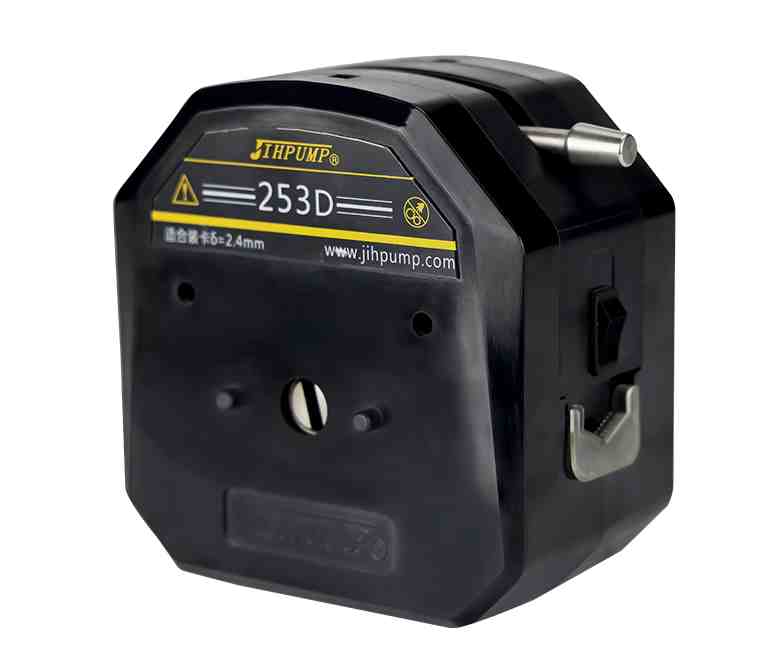
It is also crucial to consider whether CIP/SIP or disposable requirements are suitable. In small-batch or high-risk product production, disposable pump tube assemblies can significantly reduce the risk of cross-contamination and the verification burden, shorten batch switching time, and enhance flexibility.
In Conclusion
Starting from cell culture to purification steps up to aseptic filling, peristaltic pumps in the pharmaceutical industry are essential in every biopharmaceutical process. They are able to handle liquids aseptically, gently, and accurately. This makes these devices essential in biopharmaceutical production.
With the development of continuous flow processes, disposable systems, PAT technologies and digitalized pharmaceutical factories, peristaltic pumps will be more deeply integrated into the intelligent manufacturing system, becoming one of the indispensable core equipment in efficient, safe and compliant pharmaceutical processes.