
How to Choose the Right Automatic Detergent Dispenser for Laundry Rooms?
Nowadays, more and more laundries and laundry factories have chosen liquid cleaners. Due to the various advantages of automatic detergent dispensers, it is believed that more users will choose to use the automatic addition of liquid cleaners. This is also a major trend in the entire laundry industry.
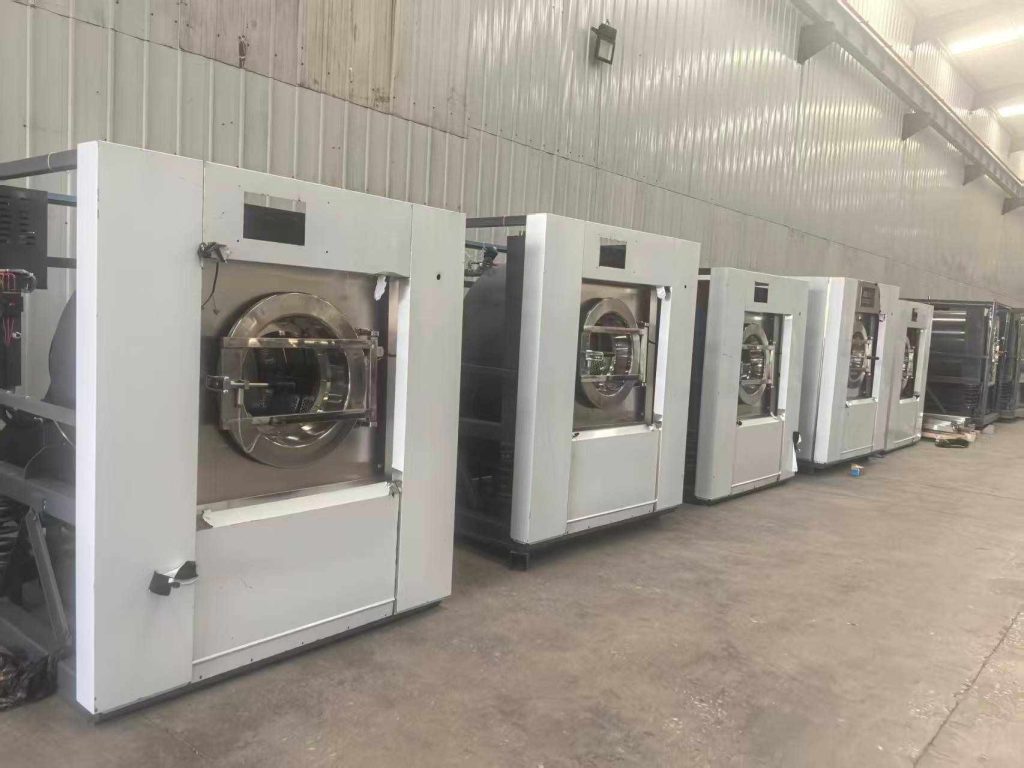
Why Your Laundry Room Needs an Automated Dispensing System?
If you are still using traditional measuring cups, then each time you do laundry, you may waste cleaning agents. Here are the main reasons for switching to a washing machine’s automatic liquid dispenser:
- Cost Control: Excessive foaming can be a significant issue in laundry operations. If your employees use more detergent than required for washing the clothes, then you end up using more water and energy costs.
- Fabric Longevity: Each fabric requires a specific maintenance protocol. The automated system provides the precise quantity of bleach or softener dispenser during the wash cycle to avoid damaging expensive linens with harsh chemicals.
- Safety First: Many commercial laundry detergents have a high concentration level and can irritate your employees’ skin or breathing. Automation keeps these chemicals in closed containers and out of direct contact with your team.
Common Types of Laundry Chemical Dispensers
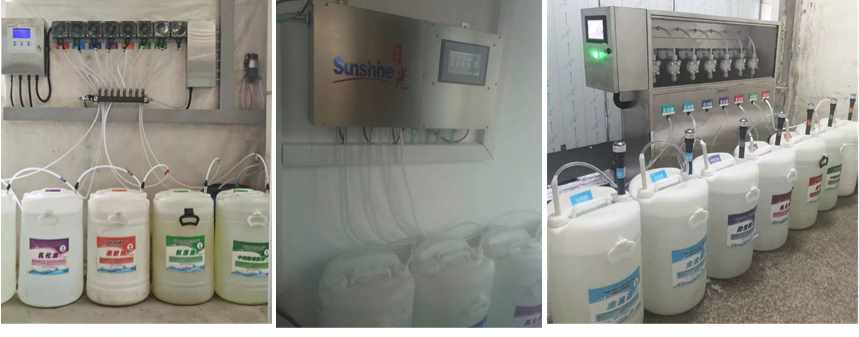
There are mainly three working principles for the distributors currently available in the market, namely: Peristaltic pump Dispenser; Venturi Dispense; Metering pump Dispense. Each of these distributors has its own advantages and disadvantages.
- Peristaltic Pump Systems: The advantages are low price, stable flow characteristics, and simple maintenance. The disadvantage is that the rubber hoses need to be replaced regularly.
- Venturi (Siphon) Systems: The advantages are low failure rate and high cost-effectiveness. The disadvantage is that it requires stable water pressure and has a single material combination for adding materials, which limits the number of units it can be used with.
- Metering Pump Systems: The advantage is high accuracy, but the disadvantage is high cost and high maintenance difficulty. It is generally used for adding materials to laundry nozzles.
Each customer has different sites and equipment, so the selection and combination of the distributors vary. According to the site conditions, they can be divided into wall-mounted and bracket-mounted types. The installation position on site should be convenient for material replacement and subsequent maintenance, and the closer to the single machine, the better (the maximum distance should not exceed 30 meters), so as to ensure the normal operation of the distributor.
How to Choose the Best Detergent Dispenser for Your Laundry Room
When shopping for a system, don’t just look at the price tag. Consider these four factors:
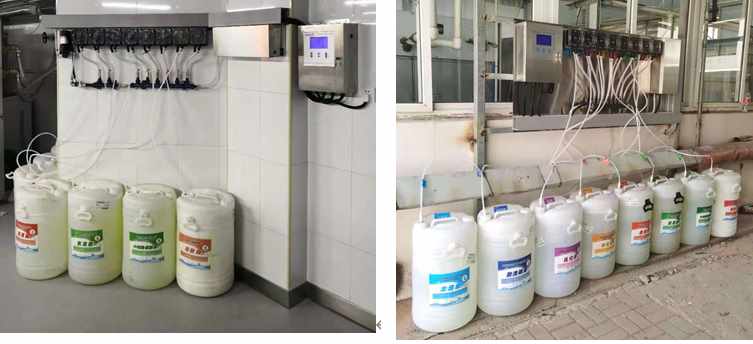
Number of Channels: How many chemicals do you use? A basic setup might only need two pumps (detergent and softener), but a professional laundry room often requires four to six channels for pre-wash, alkali builders, bleach, and souring agents.
Chemical Compatibility: Some chemicals are “aggressive” and can eat through cheap plastic. Ensure the dispenser you choose uses high-quality tubing (like Norprene or silicone) that can stand up to the specific chemicals you plan to use.
Viscosity Handling: Is your detergent thick like honey or thin like water? This is where many systems fail. Peristaltic pumps excel here because their mechanical squeezing action can move thick, concentrated liquids that would clog other types of dispensers.
Ease of Programming: You want a system that is “set and forget.” Look for dispensers with intuitive controllers that allow you to program different formulas for different types of loads (e.g., “Towels” vs. “Delicates”).
Essential Maintenance for Long-Term Performance
Even the best laundry detergent dispenser requires some maintenance to remain in optimal condition.
First, there is a routine maintenance task, including checks before and after the machine is turned on, and keeping records of the maintenance work:
- 1. With a single pump per unit, the peristaltic hose can operate stably for 6 months (14,000 times) at a daily usage of 90 times.
- 2. For the laundry dragon, the peristaltic hose of a single pump can operate stably for 6 months (31,000 times) at a daily usage of 200 times.
- 3. Conduct a comprehensive maintenance every 30 days.
- 4. Check for any leakage, dripping, or spilling at the water dispenser, valve, one-way valve, and connection points.
- 5. Regularly calibrate the pump flow, inspect and maintain the control system, and clean dust. Necessary maintenance is the key to ensuring the normal operation of the distributor.
Upgrading to Automatic Detergent Dispenser
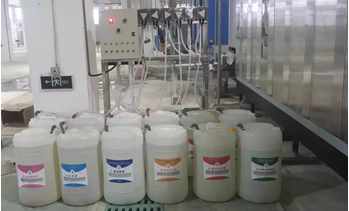
With the continuous improvement of the automation level of laundry operations, choosing the appropriate detergent dispenser for the laundry room has become more important than ever before. A reliable distribution system can enhance the consistency of the washing effect, reduce chemical waste, and simplify daily operations.
From the Venturi distributor to the advanced peristaltic pump system, there are various options available on the market for different laundry environments. The best choice depends on your laundry volume, chemical requirements, maintenance expectations and budget.
For enterprises that require precise and reliable chemical measurement, the automatic distribution system using the peristaltic pump technology has become a practical and widely adopted solution in modern laundry rooms.