
Industrial Peristaltic Pump: Types, Applications and Selections
An industrial peristaltic pump is a positive displacement pump that moves liquids by squeezing a flexible tube. The liquid never leaves the tube. It never touches a gear, a seal, or a bearing. No contamination.
Now, compare that to the little peristaltic pumps you see in labs, like peristaltic pumps in university laboratories. Those are fine for low flow and short runs. Push them harder, and they give up. Industrial-grade units? Different animal entirely. They take higher pressures. They move more volume. They run around the clock in places you wouldn’t want to stand. Corrosive acids. Gritty slurries that chew up lesser equipment. Emulsions that break if you agitate them. Pastes thick as toothpaste. These pumps don’t flinch.
If you’re in pharmaceuticals, food, or chemicals, you already get it. Cleanliness isn’t optional. It’s everything.
This guide walks you through what matters: how these pumps work, the two types you’ll run into, where they earn their keep, what to look for when you’re buying, and, this is the part equipment builders care about, what a real OEM solution actually looks like. We’ll cover choosing a partner you can count on, too.
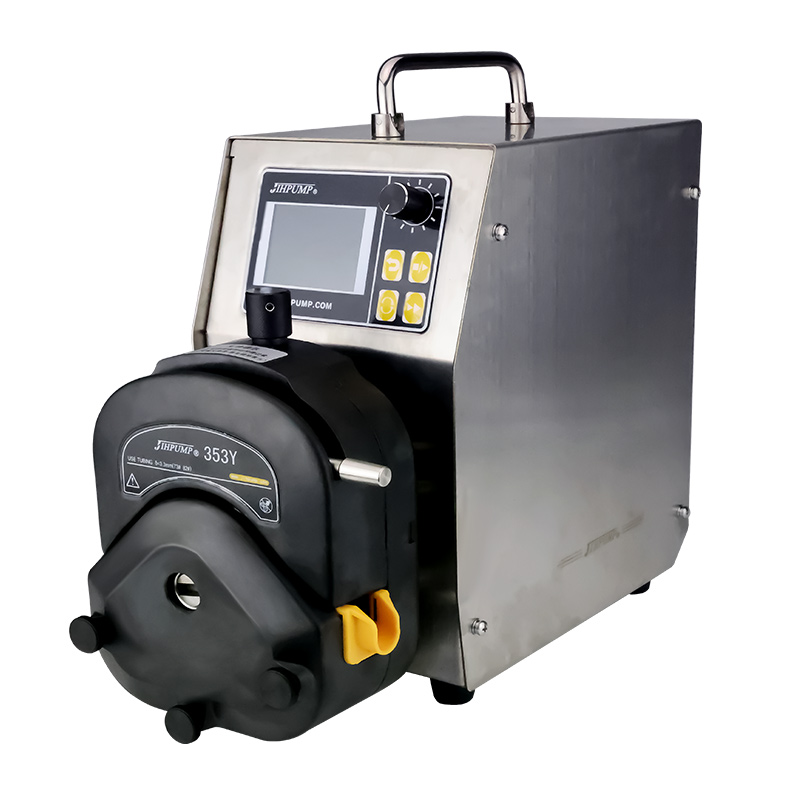
How Industrial Peristaltic Pump Works and Why It Matters
Here’s the mechanism, plain and simple. Rollers or shoes on a spinning arm press against a flexible hose. As that arm rotates, the pinch point moves. Fluid gets pushed forward. Behind the roller, the hose springs back open. That creates suction. More fluid rushes in. Repeat. That’s the whole story. Steady flow, no complications.
But here’s what really matters. The fluid touches only the inside of that hose. Nothing else. No seals. No valves. No metal. That isolation flips the script. Contamination? Gone. And you can run the pump bone dry without wrecking it. No seals to burn out. No impellers to lock up.
What does that actually mean day to day?
Self-priming: You don’t need to prime the line. The pump pulls fluid up from below without complaint.
Gentle handling: Got sensitive biologics? Live cells? Emulsions that shear if you look at them wrong? The rolling action is surprisingly soft.
Reversible flow: Spin the motor backward, and the flow reverses. Instant.
Simple maintenance: Exactly one part wears. The hose. Swap it in minutes. No special tools. No service contract.
Now, one more thing. When the pressure demands climb, you step up to a hose pump. Reinforced rubber hose. Beefier compression. These are built for the rough stuff, abrasive mining slurries, concrete, drilling mud. We’ll get into the differences next.
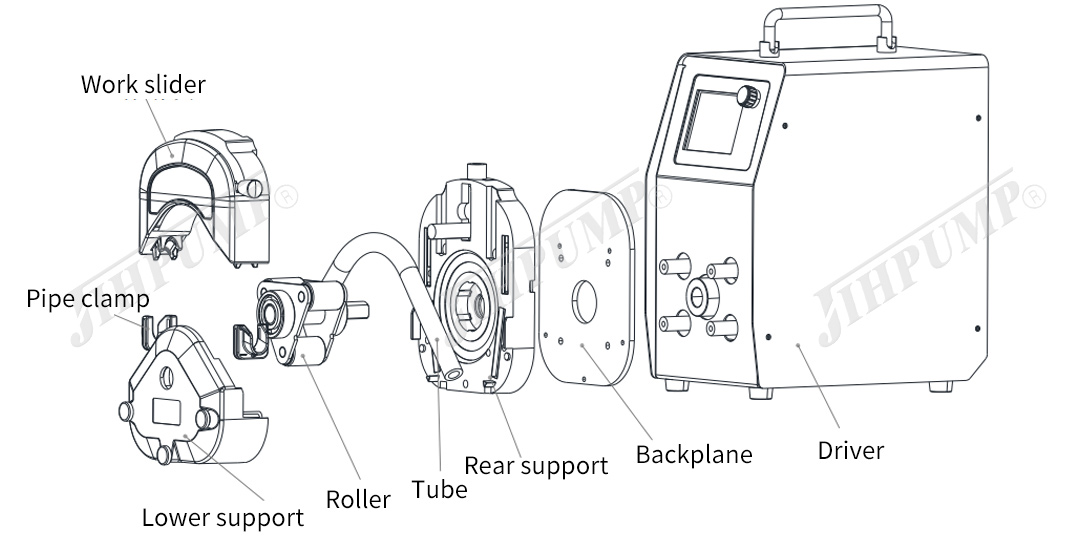
Industrial Peristaltic Tube Pumps vs Hose Pumps: Understanding the Difference
Industrial Peristaltic Tube Pumps
These use extruded tubing, platinum-cured silicone, biocompatible elastomers, that kind of thing. Thin walls. Lots of give. They run at lower to medium pressures and prioritize precision over power. Clean, smooth, accurate.Where do you find them? Pharma dosing. Food flavoring lines. Lab gear. Anywhere cleanliness and exact volumes trump raw force.
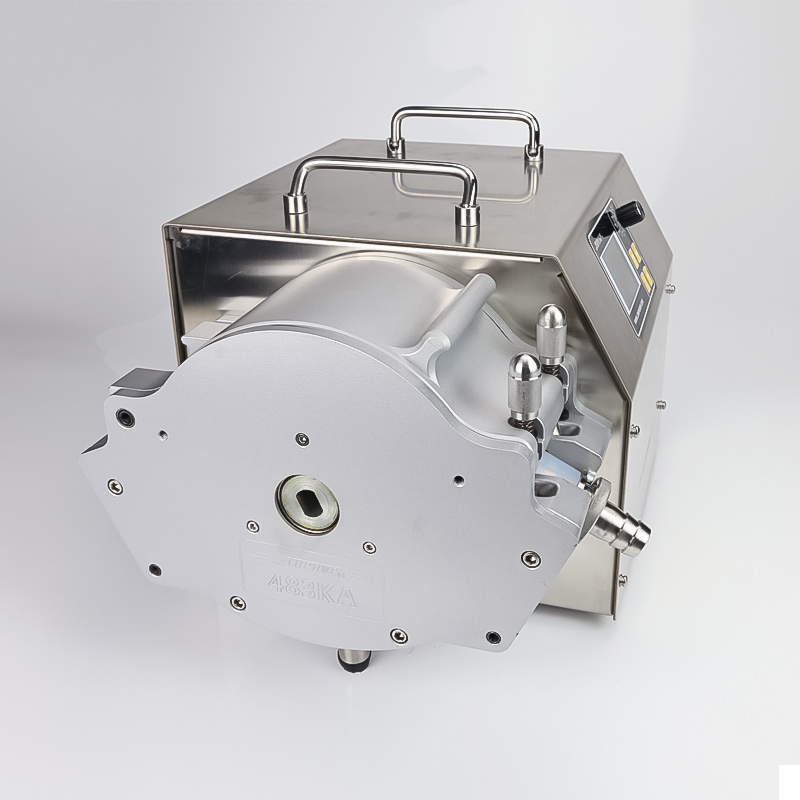
Industrial Peristaltic Hose Pumps
Different beast. Thick, reinforced rubber hoses that take serious compression. Inside, you’ll often find lubricant cutting friction and carrying heat away. These handle abrasive slurries, viscous pastes, and solids measured in millimeters. Mining tailings. Concrete pumping. Chemical waste. Drilling mud. Ugly stuff.The choice isn’t academic. A vaccine maker moving sterile adjuvants needs a tube pump’s precision. A mine pushing abrasive tailings needs a hose pump’s stubborn durability. Wrong pick, and you’re down.
The selection of the appropriate material in the selection process is the most critical decision. The inappropriateness of the pumped medium and the hose material may cause the hose to swell by absorbing the pumped fluid or may cause the hose to brittles by leaching the plasticizers from the elastomer. Both conditions cause the hose to fail.
Where Industrial Peristaltic Pumps Are Used
Industrial Uses for Peristaltic Pumps show up everywhere. When a fluid is hard to handle or contamination is a dealbreaker, these pumps answer the call.
Pharmaceutical and Biotechnology: Cross-contamination between batches? That’s a wrecked production run. A peristaltic pump used in pharmaceutical industry kills that risk. The fluid path is sealed inside tubing you can sterilize or toss. APIs. Excipients. Vial filling. Cell cultures in bioreactors. The pump moves them all. And because the action is gentle, shear-sensitive proteins and live cells survive the trip intact.
Food and Beverage Production: Dosing vitamins into cereal. Moving fruit pulp in a juice plant. These pumps don’t mess with texture. They don’t introduce anything foreign. They run CIP cycles and shrug off washdowns. In a hygienic environment, that’s gold.
Chemical Processing: Sulfuric acid. Caustic soda. Harsh solvents. The fluid never touches metal, so corrosion becomes someone else’s headache. The pump body can be economical. The tubing handles the chemistry.
Water and Wastewater Treatment: Plants use these to meter treatment chemicals. Coagulants. Flocculants. Chlorine. pH adjusters. Self-priming is a lifesaver. And off-gassing chemicals that vapor-lock a diaphragm pump? Not a problem here.
Printing and Coating: Inkjet systems and coating lines circulate inks with peristaltic pumps. Keeps pigment from settling. Maintains color density. Water-based or solvent-based, both work.
Mining and Mineral Processing: This is hose pump country. Abrasive slurries. Thickened tailings. Reagents. High solids that clog anything else. These pumps keep turning.
Choosing the Right Industrial Peristaltic Pump: What to Consider
Picking an industrial peristaltic pump isn’t about one number. Several factors interact. Miss one, and reliability suffers.
| Flow Rate and Pressure | Low flow, low pressure? A compact tube pump fits. High pressure and big volume? You’re in hose pump territory. |
| Fluid Characteristics | The fluid tells you what tubing to use. Silicone handles general work. PTFE stands up to aggressive solvents. Reinforced rubber survives abrasive slurries. Mismatch it, and you’ll swap hoses constantly. |
| Chemical Compatibility of Tubing | This one bites people. Wrong tubing swells, cracks, or dissolves, sometimes in hours. Check compatibility charts. Better yet, test with your actual fluid. |
| Duty Cycle | Industrial pumps are expected to run. And run. Make sure yours is rated for continuous duty at the speed you need. Not all are. |
| Control and Integration | Manual knob? 4-20 mA analog? RS485 or Modbus? For OEM integration, factor in compact drives, custom mounts, and specific protocols. |
| Maintenance Access | Picture the pump buried in a tight cabinet. Now imagine swapping tubing at 3 AM. Quick-change head designs pay for themselves in saved downtime. |
Understanding Industrial Peristaltic Pump Price Factors
Industrial peristaltic pump price runs the gamut. A few hundred bucks for a basic OEM tube pump. Tens of thousands for a big hose pump system. Knowing what moves the needle helps you budget smart.
Performance Specifications: Want more flow? More pressure? You’ll need a bigger motor. Heavier gearbox. Tougher pump head. A unit that pushes 10 liters a minute at 8 bar costs real money. Compare that to 100 milliliters a minute at 1 bar. Physics doesn’t negotiate.
Materials of Construction: Plastic housing? Coated steel? Stainless? Each step up adds cost. Tubing matters, too. Reinforced rubber hose for abrasive slurry runs more per foot than standard silicone.
Motor and Control Technology: Basic fixed-speed AC motor is cheapest. Add a VFD, a servo for positioning, or integrated digital controls, and the price climbs. You’re paying for flexibility and precision.
Certifications and Compliance: Pharma or food use often demands FDA compliance, USP Class VI, or EHEDG design. The testing and paperwork behind those stamps add to unit cost.
Customization and Order Volume: OEM solutions mean custom voltage, specific connectors, unique mounts, maybe private labeling. That customization drives unit price up. But here’s the flip: higher annual volumes bring per-unit cost down through scale. Worth discussing.
Selecting Reliable Industrial Peristaltic Pumps Manufacturers
If you’re buying volume or integrating into OEM gear, the manufacturer matters as much as the pump. A solid partner brings more than parts. They bring support, consistency, and supply you can count on.
- OEM Experience. Not every pump shop really gets OEM. Look for dedicated OEM lines. Flexible configs. Engineers who don’t blink at custom integration questions.
- Production Capacity & Quality. Can they actually deliver? ISO9001 is table stakes, it says quality processes are documented and followed.
- Industry Longevity. Years in the game mean they’ve seen fluid challenges like yours. That knowledge saves expensive mistakes.
- Relevant Certifications. CE. ROHS. Food safety. Make sure their certs match your markets.
- Technical Support. Clear datasheets. Usable CAD models. Engineers who answer. That’s what separates industrial suppliers from commodity sellers.
JIHPUMP Peristaltic Pump Manufacturer
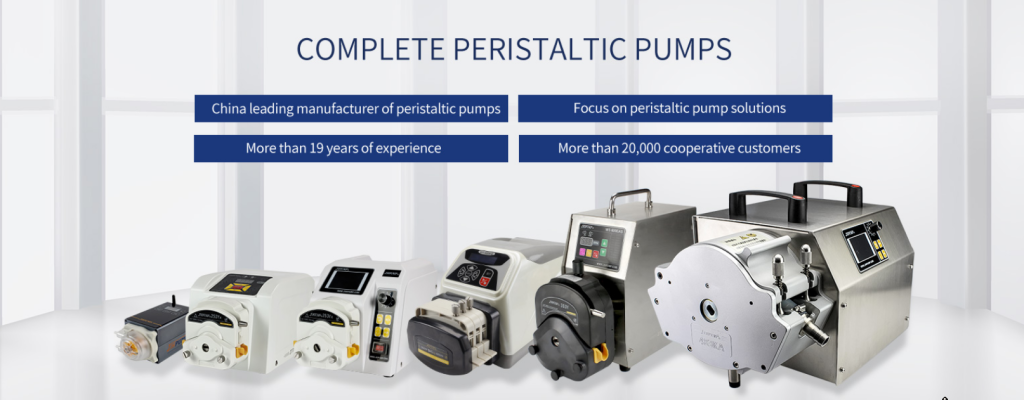
Take JIHPUMP as an example. Around since 2006, the company focuses squarely on OEM solutions for peristaltic pumps. They’ve built over 70 product series and more than 600 models, pump heads, OEM pumps, complete intelligent pump systems. ISO9001, CE, ROHS, and food safety certifications are in place. Over 20,000 customers already use them, in pharma lines, food plants, inkjet printers, environmental monitors.
FAQ
Q: How often do I need to replace the tubing or hose?
A: Depends. Pump speed, pressure, fluid chemistry, abrasives, they all chew up hose life. Gentle lab work? Hundreds of hours. Pumping abrasive mining slurry with a hose pump? Maybe every few weeks. Regular checks and scheduled swaps are standard.
Q: Can one pump head handle multiple fluid streams?
A: Yes. Multi-channel heads let one drive run several lines at once. Analytical instruments and medical devices do this routinely when moving multiple reagents or samples.
Q: Are peristaltic pumps suitable for high-viscosity fluids?
A: Absolutely. The rolling compression creates strong suction. For extremely thick fluids, slow down to let the hose fully rebound and refill. But it works.
Q: What is the maximum particle size a peristaltic pump can handle?
A: Tube pumps want particles under about 25% of the tubing’s inner diameter to avoid clogs or rapid wear. Hose pumps handle larger particles and small solids. That’s why they own slurries and sludges.