
Why Tubing Wall Thickness is the Secret to Micro Peristaltic Pump Longevity?
In the field of fluid processing, the performance of a micro peristaltic pump often depends on the elegant design of its casing or the precision of its stepper motor. However, if you have an in-depth discussion with an experienced application engineer, they will tell you another answer: The real key lies in the pipeline.
Most buyers focus on the inner diameter (ID) to calculate the flow rate, but the two seemingly insignificant yet crucial variables, wall thickness (WT) and outer diameter (OD), determine whether your system can operate for 5,000 hours or break down on the first day. Let’s delve into this and understand why such a difference of a few millimeters can make the difference between a precision instrument and a maintenance equipment.
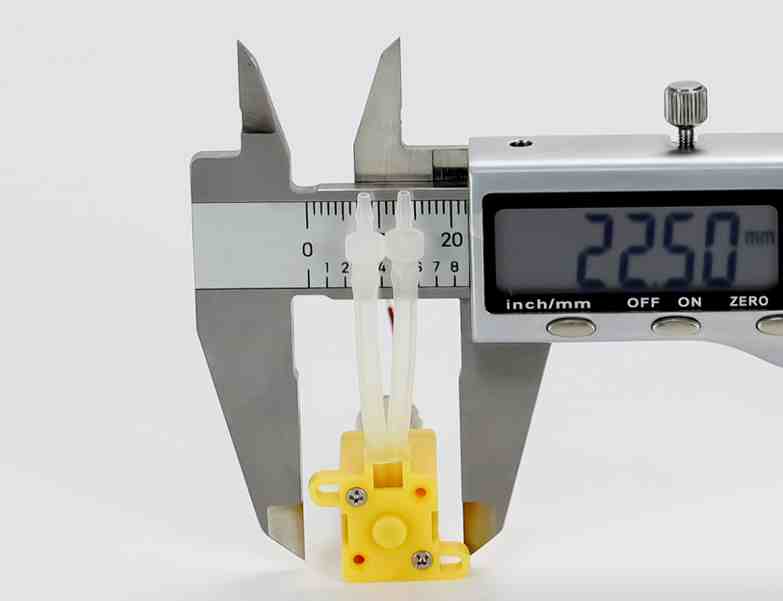
Why Wall Thickness Controls Suction?
Rather than imagining the pump tube as a straw, it is better to think of it as a spring. The working principle of the peristaltic pump is “compression and release”. The rollers flatten the pump tube, and then the tube needs to “spring back” to its original shape. It is this spring-back action that generates the suction force required to draw the liquid into the pump.
The Power of the Thick Wall
The thicker pipe wall is like a powerful spring, capable of providing greater rebound force. If you need to lift liquid from a container 2 meters below the pump, or transport viscous liquid such as glycerol in a syrup-like form, you will need the additional “power” provided by the thick wall. Otherwise, the external air pressure outside the pipe will be greater than the rebound force inside the pipe, causing the pipe to remain in a flattened state.
The “Lazy Tube” Syndrome
Conversely, if the pipe wall is designed too thin relative to the pump head, the pipe will “relax”. During high-speed operation, the rollers move extremely fast, and the thin-walled pipe cannot fully extend before the next roller impacts. This results in a significant drop in flow accuracy – the motor is rotating, but the fluid is not flowing. In the industry, we call this “pipe collapse”, and it is the primary cause of unstable dosing in medical and laboratory equipment.
The Influence of Tubing Outer Diameter (OD) on Motor Load and Longevity
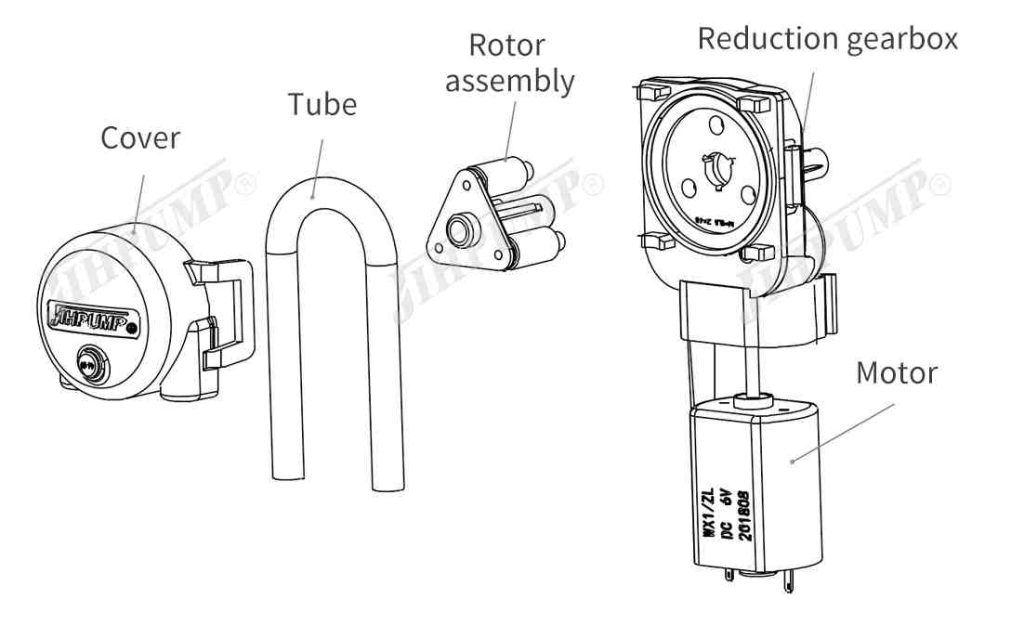
If Wall Thickness is the “engine,” then the Outer Diameter (OD) is the “transmission.” The OD determines the physical fit between the rollers and the pump housing.
When the OD is Too Large: The Friction Trap
Using a tube with an oversized OD is like trying to run a marathon in shoes that are two sizes too small. Because the tube is too “fat” for the gap, the rollers have to crush the material excessively just to move past it. This creates immense frictional torque.
You will notice the symptoms immediately: the motor gets hot enough to burn your hand, the driver chip starts to whine, and the tubing starts to shed tiny plastic flakes (spallation) inside the pump head. Ultimately, you aren’t just wearing out the tube; you are killing the motor.
When the OD is Too Small: The “Tubing Walk”
On the flip side, an undersized OD is equally dangerous. If the tube doesn’t sit snugly against the housing, it lacks “grip.” As the rollers spin, they will slowly drag the tube along with them. This is known as “tubing migration” or “walking.” Eventually, the tube will bunch up at one end, get pinched against the side plate, and burst—usually right when you aren’t looking, leading to a chemical spill or a system shutdown.
Dimension Impact Matrix: Engineering Reference for Tubing Selection
To simplify your selection process, use this matrix to understand how shifting these dimensions impacts the real-world performance of your Micro Peristaltic Pump.
| Technical Change | Suction Lift (Vacuum) | Max Backpressure | Motor Load / Heat | Flow Stability | Failure Mode |
| Thicker Wall | Stronger: Pulls thick fluids easily. | Higher: Resists “ballooning.” | Increases: Requires more torque. | Stable: Faster rebound. | Fatigue cracks at edges. |
| Thinner Wall | Weaker: May stay flat/collapsed. | Lower: Prone to backflow. | Decreases: Easier to spin. | Poor: High pulsation. | Tube collapse / No flow. |
| Oversized OD | No direct impact. | No change. | Extreme: Motor may stall. | Unpredictable. | Motor burnout / Jamming. |
| Undersized OD | No direct impact. | Lower: Internal leaking. | Low: Runs very cool. | Poor: Wandering flow. | Tubing migration / Bursting. |
Material Selection Considerations Beyond Wall Thickness
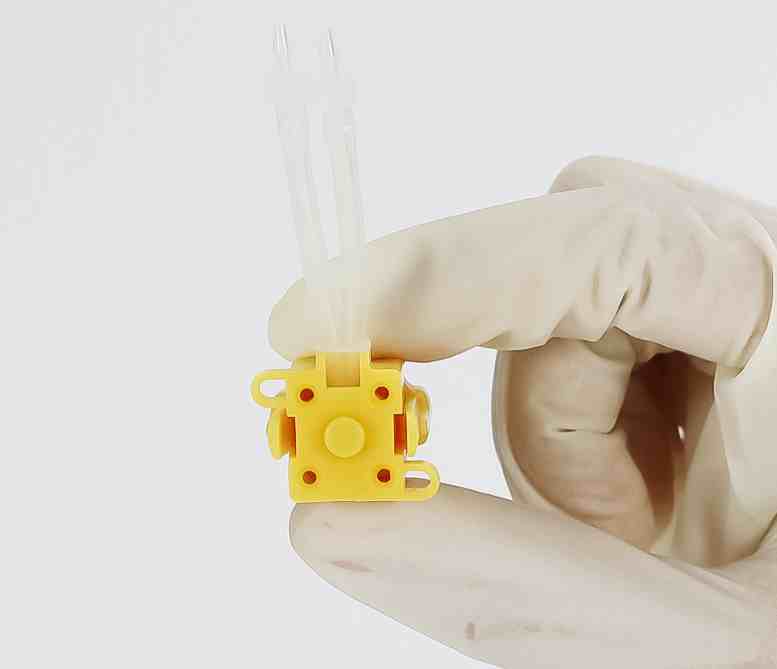
It’s important to remember that “stiffness” is a combination of dimensions and material. For example, a 2.0mm wall made of soft Silicone behaves very differently than a 2.0mm wall made of stiff Viton or Pharmed tubing.
When switching materials, even if the OD and Wall Thickness remain the same, you must perform a “Torque Check.” A stiffer material increases the mechanical resistance just like a thicker wall does. If your motor was already running near its limit with Silicone, switching to a more chemically resistant (but stiffer) material might cause the motor to stall. Always calibrate your pump whenever you change tube batches or materials.
Best Practices for Tubing Maintenance in Micro Peristaltic Pumps
In the world of microfluidics, precision is measured in fractions of a millimeter. We have seen cases where a customer switched to a cheaper tubing supplier whose tolerances were off by just 0.1mm. That tiny difference in wall thickness was enough to change the occlusion (the squeeze) by 10%.
The result? A 15% error in dosing accuracy. In a medical IVD machine or a high-end chemical analyzer, that 15% is the difference between a successful test and a dangerous error.
Choosing the right Micro Peristaltic Pump is about more than just picking a model number from a catalog. It is about creating a “marriage” between the pump head geometry and the tubing dimensions.