
OEM Mini Peristaltic Pumps: What Designers Should Know
Mini peristaltic pumps have become indispensable components in modern OEM designs. These compact fluid handling devices can provide precise and pollution-free fluid delivery, making them ideal choices for applications such as medical equipment, analytical devices, and beverage dispensers. For design engineers, understanding the functions of mini peristaltic pumps, integration precautions, and common defects is the key to successfully developing products.

What Is an OEM Mini Peristaltic Pump?
The OEM mini peristaltic pump is a compact and highly customizable pump, usually integrated into large equipment, which is often imperceptible to users. Unlike general peristaltic pumps, OEM mini peristaltic pumps are designed based on the specific needs of customers, including customized dimensions, motor types, control interfaces, and pump tube materials, etc.
The OEM mini peristaltic pump has the advantages of simple structure, clean operation and convenient maintenance. Since the fluid only comes into contact with the inner wall of the pump pipe, it is particularly suitable for production scenarios that require sterile or pollution-free processes. Among them, the modular design can also flexibly adapt to various special working conditions and space limitations.
How Do Mini Peristaltic Pumps Work?
The mini peristaltic pump is a type of peristaltic pump and also operates based on the peristaltic principle. The rotor with rollers compresses the flexible tube in sequence, pushing the fluid forward while preventing backflow. The fluid only comes into contact with the inner wall of the pipe to ensure a pollution-free channel. This mechanism is reversible, enables bidirectional flow, and can be precisely controlled to achieve precise measurement.
The pulsation provided by the peristaltic pump can be adjusted according to the application conditions. This design also features a self-priming function, allowing it to idle without damage and capable of handling viscous and shear-sensitive fluids. The mini peristaltic pump is compact in size and is highly suitable for confined Spaces and portable devices, especially in mobile or wearable medical technologies.
The following is a more detailed video demonstration of the working principle:
Design Considerations for OEM Integration
Integration of a mini peristaltic pump into an OEM system involves several critical considerations:
a.Flow Rate Requirements
The first consideration in the selection of a mini peristaltic pump is the flow rate needed. The flow rates range from microliters to hundreds of milliliters per minute and are a function of the pump head design and the tubing diameter. In medical dosing, ink jet dispensing, or analytical sampling applications, for example, accurate flow control is extremely critical. Flow rate is also a function of tubing compression ratio and motor RPM, both of which can be optimized.
b.Motor Type Selection
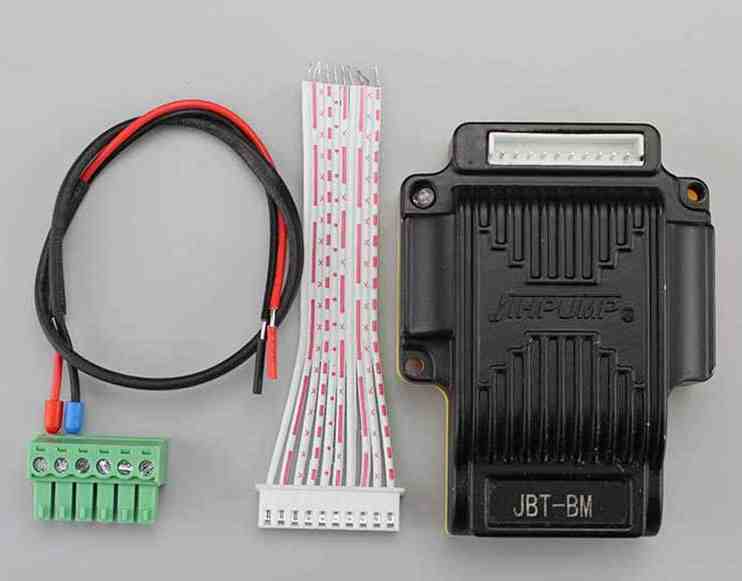
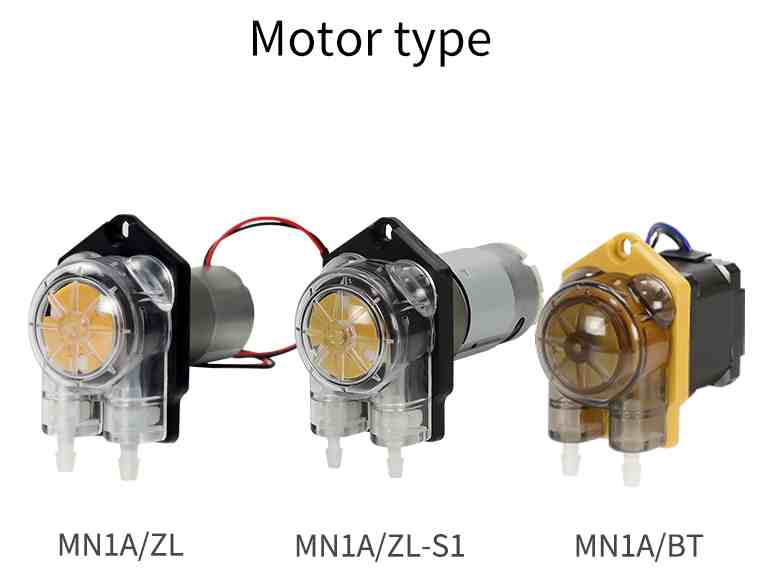
OEM pumps can be equipped with various motors, such as brushed DC, stepper, or brushless DC (BLDC) motors. Stepper motors are employed for highly accurate control and thus are ideal for dosing applications, while BLDC motors are quiet, energy-saving, and enjoy long service life. Brushed DC motors are cheaper and simpler to drive but may wear out earlier. The choice of motor affects performance, noise, control options, and price, and has to be harmonious with the end product’s electronic system architecture.
c.Tubing Compatibility
Tubing is the sole component that comes in contact with fluid, so material selection is critical. Silicone, Tygon, PharMed, Viton, and other specialty materials are available. Chemical compatibility, temperature resistance, and anticipated tube life must all be considered by designers. Tubing diameter also has a direct effect on flow rate and pressure capability. In certain applications, tubing also needs to comply with biocompatibility or food-grade ratings (FDA, USP Class VI).
d.Mounting and Footprint
Space constraints often dictate the physical construction of an OEM pump. Base-mounted, panel-mounted, and bracket-mounted constructions are offered for designers to choose from. Easy access to the pump for replacement of tubing and maintenance should be considered. Orientation and vibration resistance need to be considered as well. Compact-style pump heads, modular housings, and integral mounting holes can simplify the design.
e.Control Interface
A well-matched control interface ensures effortless integration with the host system. Mini peristaltic pumps may be driven by analog voltage, PWM signals, or serial communication (e.g., RS485, UART, I2C). Some applications may require feedback features, such as flow sensors, encoders, or tachometers, for closed-loop control. Integration with embedded controllers or microprocessors must also take into account power supply constraints and EMI issues.
Common OEM Mistakes to Avoid
When integrating a mini peristaltic pump into an OEM design, avoid the following pitfalls:
- Omission of chemical compatibility: Failure to document tubing material can result in leaks, degradation, or contamination.
- Underestimating heat build-up: Enclosed systems do not provide good ventilation and thus are prone to overheating and reduced component lifespan.
- Making the wrong motor choice: Incompatibility of control systems and motor type can result in inefficiency or integration issues.
- Not accounting for maintenance simplicity: The layout must allow for quick replacement of tubing without disassembly.
- Forgetting tubing and roller wear: With the passage of time, both components get worn. Predictive maintenance and replacement intervals must be accounted for in the design.
- Forgetting pump noise or vibration: These affect user comfort, particularly in medical or consumer use.
Real-World OEM Use Cases
Mini peristaltic pumps are successfully integrated across a variety of applications:
Example 1: Use in countertop beverage dispensersCompact pumps are used to dispense syrups or flavor concentrates. The clean, hygienic operation ensures safe beverage handling, while the small footprint fits within limited space. Pumps can be integrated with digital dosing controls and touch interfaces.
Example 2: Integration in automated water sampling systemsEnvironmental monitoring equipment often requires precise, contamination-free fluid handling in remote or rugged locations. Mini peristaltic pumps offer reliable and low-maintenance operation, often powered by solar or battery sources.
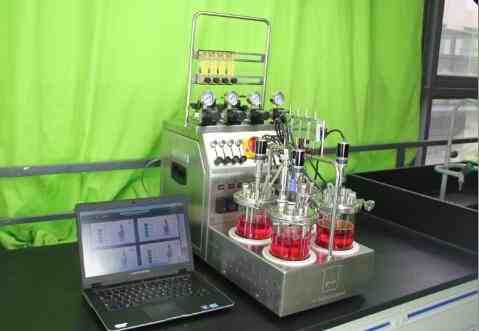
Example 3: Embedded use in laboratory analyzersAnalytical devices benefit from high-precision fluid control. Mini pumps provide exact dosing and sample transfer without cross-contamination, critical for accurate results in clinical diagnostics, DNA analysis, and chemical detection.
Example 4: Wearable or portable medical devicesInfusion pumps, wound irrigation devices, or portable dialysis machines rely on lightweight, low-noise peristaltic pumps that ensure sterility and safety.
Partner with a Reliable OEM Pump Supplier – JIHPUMP
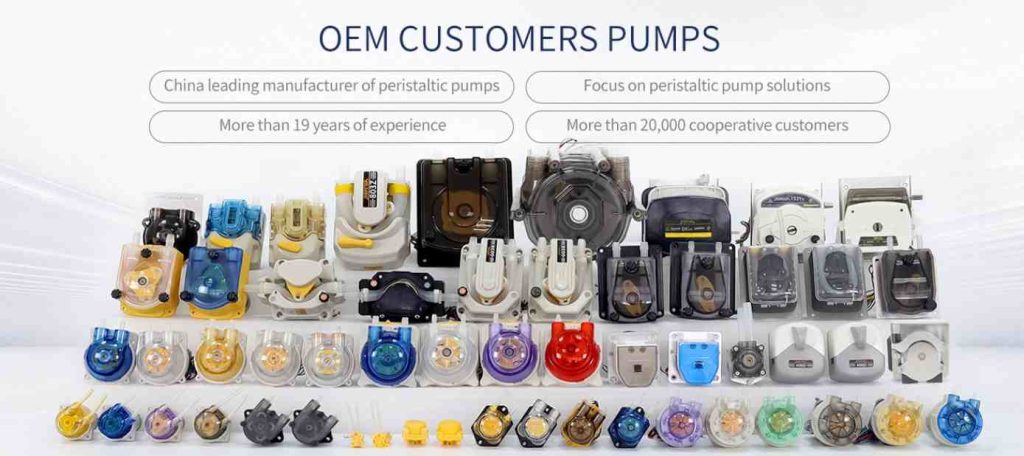
Selecting the right OEM pump partner is just as important as the pump itself. JIHPUMP offers an extensive range of mini peristaltic pumps for OEM usage, including the MN3 and MN4 series. With customizable configurations, reliable quality, and prompt support, JIHPUMP closely partners with engineers to ensure seamless product integration. Services include CAD assistance, prototyping, custom control board design, and technical documentation to streamline development.
No matter what you are designing, a new medical device, lab instrument, or beverage system, JIHPUMP has the skills and adaptability you need. Their deep industry experience reduces development time, cost, and risk.