
Why Use Peristaltic Metering Pumps in Water Treatment?
In modern water treatment systems, accurate and reliable stoichiometry is of vital importance. Whether used for disinfection, pH adjustment or coagulation, continuous metering will directly affect the quality and compliance of the treated water.
Unlike traditional pumps, peristaltic metering pumps have a series of unique advantages – precise flow control, chemical compatibility and low maintenance costs, while ensuring long-term reliability. In this article, we will explore what a metering peristaltic pump is, why it is an ideal choice for water treatment applications, and how to select the right peristaltic pump based on your specific needs.
What Are Peristaltic Metering Pumps?
The peristaltic metering pump is a type of peristaltic pump. It conveys fluid by squeezing the flexible pipe through rotating rollers or sliding boots and then making the pipe rebound. Because this movement simulates the wavy contraction of the intestinal tract, engineers borrowed the term “peristalsis”.
Because the liquid only comes into contact with the inner surface of the pipe, its design is completely different from that of gear pumps or centrifugal pumps. This isolation design keeps corrosive or fragile preparations away from metal parts, thus enabling the pump to have wide chemical compatibility. In addition, due to the absence of seals, valves or other precision hardware, the leakage and failure rates are much lower than those of diaphragm pumps or gear pumps.
Why Are Peristaltic Pumps Ideal for Water Treatment Applications?
The novel design and working principle of peristaltic pumps provide some very interesting reasons why they are so ideally suited to the harsh conditions of water treatment.

High Dosing Accuracy
Chemical dosing requires accuracy. Overdosing is a waste of chemicals and can also lead to environmental compliance problems, while underdosing reduces treatment efficiency. Peristaltic metering pumps provide accurate, repeatable flow rates even at extremely low volumes and are ideally suited to applications like chlorination, flocculation, or pH control.
With programmable control modes (analog, manual, or digital through PLC), the dosing rates can be varied in real time in accordance with flow conditions or sensor signals. This translates to optimum treatment outcomes with minimal wastage of chemicals.
Exceptional Chemical Compatibility
Water treatment encompasses a wide range of chemicals, including those that are corrosive, abrasive, or viscous. The use of standard pumps with internal seals, valves, or wetted metal components can result in corrosion, wear, or fouling, necessitating frequent maintenance and premature failure. Peristaltic pumps completely remove all these problems since the pumped fluid only comes into contact with the flexible tube. The tubing itself may be specially chosen to be compatible with the particular chemical to be dosed. Santoprene, Norprene, Marprene, Tygon, and silicone are a few of the tubing materials available that provide varying degrees of chemical resistance. This “containment” of the chemical in the tube prevents corrosion of pump componentry and fluid contamination, providing long life and reliability even with very aggressive chemicals such as hypochlorite, acids, and polymers.
Low Maintenance and Long Service Life
Water treatment plants tend to run continuously. Breakdown and maintenance can cause serious disruption. Metering peristaltic pumps are almost maintenance-free, having no seals, valves, or diaphragms that are susceptible to wear and clogging.
Worn tubing is easily replaced and needs a minimum of tools or experience. Most models provide for “snap-on” or “quick-change” tubing, which reduces downtime.
Due to this simplicity, peristaltic pumps are well valued in remote or unmanned locations where maintenance access is not easy.
Self-priming and dry-run capable
Any use of water treatment needs pumps to pump fluid from tanks below the pump level or to manage circumstances where the chemical supply can periodically run low. Peristaltic pumps are self-priming by their very nature, so they are able to pump fluid from below pump level without the use of any external priming devices. This makes installation and startup easier. Aside from this, as opposed to most other pumps, peristaltic pumps can be dry-run without sustaining damage for long durations of time. When the chemical is consumed, the pump will simply continue to turn without fluid, with no harm done to the pump mechanism. This is an enormous advantage in automatic systems where continuous monitoring of fluid levels may never be feasible, preventing costly pump failures and downtime.
Where Are Peristaltic Metering Pumps Used in Water Treatment?

Peristaltic metering pumps are used in nearly every aspect of modern water treatment. These are the areas where they excel.
- Chlorination & Disinfection
Every single drop of sodium hypochlorite must be accurate if the water is to be safe. Such pumps convey the volatile, aggressive chemical without leakage or corrosion.
- Coagulant and Flocculant Dosing
PAC (poly-aluminum chloride) and PAM (polyacrylamide) treatment of dirty water calls for accurate amounts. Peristaltic pumps deliver that precision, helping to create fluffier flakes and settling them out.
- pH Adjustment
Operators often adjust for acidity by adding sulfuric acid or caustic soda. Durable tubing allows the same pumps to continuously and safely inject these fluids.
- Sludge Treatment and Dewatering
In heavy sludge pipes they mix in polymer conditioner before cake pressing. Because the pump is flexible, shear-sensitive fluids slide by instead of plugging.
- Industrial Wastewater Recycling
Factory process water is recycled only if doses are exact. Simple rugged peristaltic pumps excel in those automated always-on systems.
How to Select the Right Peristaltic Metering Pump for Water Treatment?
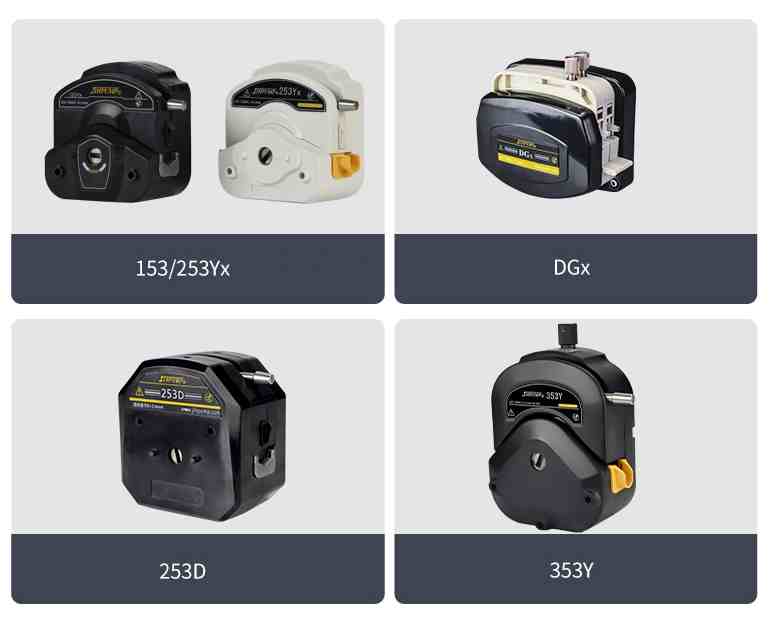
Choosing the optimal peristaltic metering pump involves taking a few important factors into consideration to guarantee that it is suitable for the particular application:
- Flow and pressure requirements: Determine the minimum and maximum flow requirement of the application and discharge pressure needed. Pumps are of various rated flow and pressure ranges, and thus a pump that can comfortably satisfy these needs should be selected. Further, system pressure needs to be considered as well, e.g., pipeline friction loss and back pressure at point of injection.
- Chemical compatibility: This is of the highest importance. Identify the actual chemicals to be pumped and choose pumps with pipe materials that enjoy good chemical compatibility. Refer to the chemical resistance chart from the pump manufacturer. For corrosive chemicals, kindly utilize reinforced pipes for increased durability.
- Accuracy and repeatability: Although most peristaltic pumps are accurate, there are some that also offer finer adjustment and calibration options. If extremely small metrological tolerances are required, please look for pumps with extended control features and precision drive mechanisms.
- Control options: Determine if the pump will be manually controlled, controlled by a local control panel, or part of a more extensive SCADA or PLC system. Seek pumps with suitable input/output capabilities (e.g., 4-20mA, pulse, Modbus). Variable speed drives are necessary for flow control accuracy.
- Environmental conditions: Take into account the operating environment, i.e., temperature, humidity, and presence of dust or corrosive vapor. Ensure that the pump’s IP level of protection is adequate to the place of installation (e.g., outdoors, flushing areas).
- Maintenance and service: Consider the ease of replacing hoses and other parts. Determine if there are readily available spare parts and technical support from the manufacturer.
Conclusion
It is no accident that peristaltic metering pumps are currently the solution of choice for the water treatment industry. It can provide accurate, stable and safe dosing of chemicals for any fluid or processing stream, and is the universal choice of factory operators, engineers and OEM system designers.
Low in maintenance requirement, high in chemical compatibility and better system flexibility, metering peristaltic pumps are highly suitable for modern water treatment facilities, especially for metering usage that demands high efficiency, reliability and cost-effectiveness.
If you are planning to replace your existing dosing system or you are planning a new water treatment process, then the peristaltic stometering pump is certainly an option worth top priority.