
Peristaltic Pump Type: Optimal Choices for Different Applications
Peristaltic pump is a positive displacement pump that transports fluids by means of a rotating rotor that compresses flexible tubing. The rotor, equipped with rollers or shoes, squeezes the tubing, creating a traveling constriction. This constriction propels the fluid forward in a pulsating motion.

What is a Peristaltic Pump?
Peristaltic pumps are versatile fluid transfer devices known for their precise flow rate control, excellent corrosion resistance, low shear stress, simplicity of operation, and ease of maintenance. These attributes make them indispensable in a wide range of applications, including research, pharmaceuticals, chemicals, environmental engineering, beverages, food processing, and printing. In research laboratories, peristaltic pumps are commonly used for tasks such as cell and tissue transfer, specimen destaining, perfusion, liquid chromatography analysis, and the transportation of acidic or alkaline solutions.
Components of a Peristaltic Pump
A peristaltic pump consists of three main components: a peristaltic pump drive, a peristaltic pump head, and a peristaltic pump tube. By controlling the speed of the drive and selecting different flow rate tubes, this type of pump can achieve highly precise fluid flow control.
· Drive Mechanism: This is the power source of the pump. It can be electric, pneumatic, or hydraulic. The drive rotates the rotor within the pump head.
· Pump Head: This houses the rotor, which is equipped with rollers or shoes. As the rotor turns, these rollers compress the tubing, creating a traveling wave of compression that propels the fluid forward.
· Tubing: The flexible tube is the heart of the pump. It comes into direct contact with the fluid being pumped. The choice of tubing material is crucial as it determines factors such as chemical compatibility, temperature resistance, and the purity of the fluid.
Operating Principle of Peristaltic Pumps
Peristaltic pumps operate by compressing a flexible tube, causing the fluid to be propelled forward. Since the fluid only comes into contact with the inner surface of the tubing, there are no dead spots, making cleaning extremely easy and minimizing the risk of residue buildup. This makes them ideal for applications requiring clean fluid transfer. Additionally, peristaltic pumps deliver a fixed volume of fluid with each revolution, enabling highly precise flow rate control through adjustments in speed or timing.
The peristaltic motion of the tubing resembles the human intestinal tract, gently propelling the fluid without causing shear or damage. This characteristic makes peristaltic pumps suitable for handling relatively viscous or particulate fluids, such as fruit juices with pulp. However, it is essential to select the appropriate tubing material to meet specific application requirements.

The operation of a peristaltic pump involves a sequence of steps:
- Suction: As the rotor turns, it compresses the tubing, creating a vacuum in the section behind the roller. This vacuum draws fluid into the pump.
- Transfer: The fluid is trapped in a segment of the tubing and is carried around the rotor.
- Discharge: The fluid is expelled from the tubing as the roller passes over the discharge port.
Types and Applications of Peristaltic Pumps
There are various types of peristaltic pumps, which can be categorized based on flow rate and function, each with its unique characteristics and suitable applications. Let’s delve into the specific features of different types of peristaltic pumps.
Types by Flow Rate
- Small Flow Peristaltic Pumps: These pumps are designed for precise metering of small volumes of fluids. They are commonly used in laboratory applications, medical devices, and analytical instrumentation.
- Medium Flow Peristaltic Pumps: These pumps offer a balance between flow rate and accuracy. They are suitable for a wide range of applications, including chemical processing, food and beverage production, and pharmaceutical manufacturing.
- Large Flow Peristaltic Pumps: These pumps are capable of handling high flow rates and are often used in industrial processes, such as water treatment, mining, and oil and gas.
Types by Function
1. Basic Peristaltic Pump
Application Scenarios: Primarily used for continuous or long-term operation, making it suitable for general laboratory applications.
Features:
· Customizable speed control: Supports various analog and digital signals for precise speed adjustment.
· Flexible operation: Features both manual and external control options.
· Informative display: Provides real-time feedback on pump status.
· Reliable performance: Ensures consistent and reliable operation with power-off memory.
· Adaptable design: Can be customized with additional features to meet specific application requirements.
2. Flow Rate Peristaltic Pump
Application Scenarios: In addition to the basic functions, it also includes flow rate display, calibration, communication, and timing functions. This type of pump can ensure high precision of fluid flow through calibration and can also set distribution parameters to achieve automatic distribution and filling, suitable for laboratory and light industrial environments.
Features:
- Flow rate display: Real-time display of the current flow rate, allowing for easy monitoring and control.
- Flow rate calibration: Enables accurate calibration of the flow rate to ensure precise fluid delivery.
- Timing functions: Allows for precise control of dispensing time and flow rate, enabling automated dispensing and filling processes.
- High precision: Achieves high accuracy in fluid delivery due to flow rate calibration and advanced control algorithms.
- Versatility: Suitable for a wide range of applications due to its flexibility and customizable features.
- User-friendly interface: Intuitive user interface for easy operation and parameter setting.
- Compact design: Space-saving design, ideal for laboratory and benchtop applications.

3. Dispensing Peristaltic Pump
Application Scenarios: Similar to the flow rate type, the dispensing type also has a memory function and can automatically memorize various input parameters and states, making it convenient and quick to use. It is mainly used for timed and quantitative dispensing, such as filling medicine bottles. Suitable for laboratories, production environments, and pharmaceutical fields.
Features:
- Small flow rate liquid output: capable of dispensing microliter flow rates
- Suction function: In the dispensing mode, the pump can reversely rotate for a certain period of time after stopping to prevent liquid dripping
- Operation method: thin-film keys and rotary encoder switch for operation and parameter setting
- Flexible control method: has keyboard control and external interface control methods, convenient for users
- Display function: uses LCD to display all information and parameters
- Full speed function: for quick cleaning and emptying of the tube
- Memory function: automatically memorizes various input parameters and states
- Calibration function: can calibrate flow rate and dispensed liquid volume, improving the accuracy of output liquid
4. Industrial Peristaltic Pump
Application Scenarios: Mainly used in industrial production environments with vibration, high temperature, electromagnetic radiation, humidity, dust, or certain acid-base corrosion, or in the biopharmaceutical field where cleanliness and data recording are required.
Features:
- Large-screen true color LCD graphic display, drivern by brushless motor with strong power;
- Features include flow regulation, timing control, and filling capabilities.
- Supports automatic footswitch recognition, automatic filling, and infrared detection features.
- External control options, including 05V, 010V, 4~20mA, and MODBUS, allow precise control of the pump’s start, stop, reverse rotation, and speed.
- Rotary code switch and touch keypad enable easy control of start, stop, and reverse rotation.
- Compatible with 353Yx peristaltic pump head, made of special engineering plastic pump body can withstand strong corrosion.
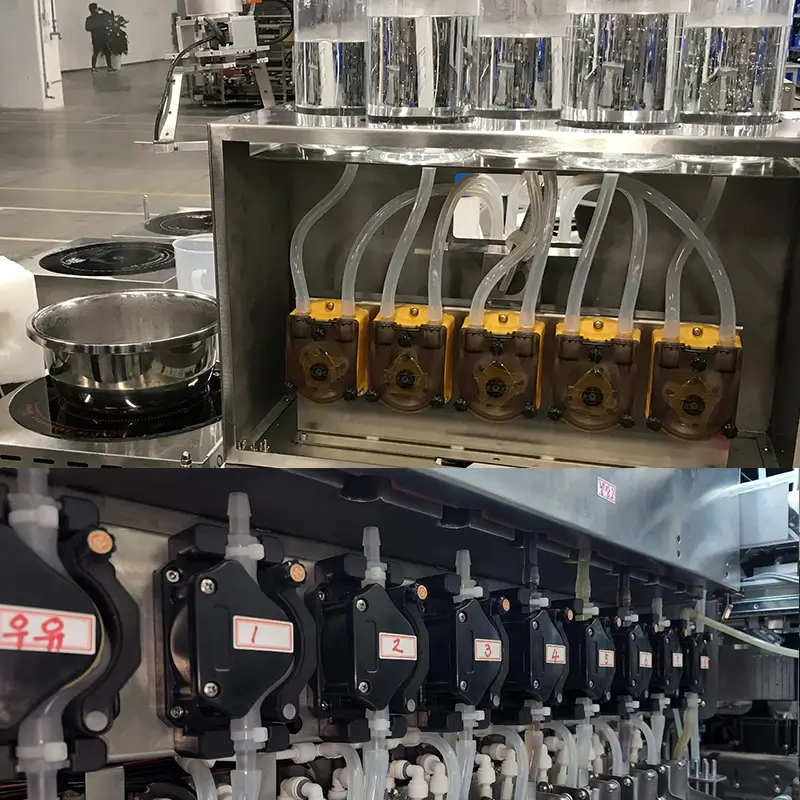
5. Dispensing Peristaltic Pump
Application Scenarios: Graphical interface, modular programming, quickly build a dedicated workflow. Powerful and flexible configuration to easily meet complex and variable fluid transfer needs. Suitable for laboratories, production workshops, and pharmaceutical fields.
In addition, there are also fine classifications such as handheld peristaltic pumps, customized (OEM) peristaltic pumps, etc. If you want to know more about peristaltic pump selection, model parameters, hose (pump tube, silicone tube, etc.) bulk purchase, industry certification, please contact our consultant for detailed consultation.