
What is Used to Dispense a Precise Volume of Liquid?
In fields such as scientific research, medical diagnostics, chemical production, and food formulation, precise liquid volume distribution is crucial for success and safety. Whether it’s a single drop of medication or microliter-level adjustments in an experiment, these seemingly minor actions can significantly impact the accuracy and reliability of the results.
Choosing the right liquid dispensing tool is crucial; it’s not only a reliable tool for precision work but also a safeguard for smooth and error-free processes. What is used to dispense a precise volume of liquid? In this article, we’ll introduce you to the most common and effective liquid dispensing tools and their typical applications.
Part 1. Why is Precise Liquid Dispensing Necessary?
In many industries, precise liquid dispensing is not merely about following protocols or meeting standards, but it is a fundamental element that ensures work quality, personnel safety, and product consistency. Below are some key reasons why accurate liquid dispensing is essential across various fields.
1. Accuracy and Reproducibility of Experimental Data
In scientific research, controlling variables is crucial. Whether in physics, chemistry, or biology experiments, even minor deviations in the volume of samples or reagents can lead to unexpected results or complete failure of the experiment.
Precise liquid dispensing minimizes human error, ensuring high reproducibility and scientific reliability, thus providing solid data support for research conclusions.
2. Dosage Control in Pharmaceuticals and Vaccines
In the medical and pharmaceutical sectors, the accuracy of dosage directly impacts patient health and safety. Insufficient dosage may render treatment ineffective, while overdosing can cause toxic side effects or complications.
Precise liquid dispensing is especially critical in scenarios such as vaccine administration, intravenous infusions, and titration therapies to ensure treatment safety and effectiveness.
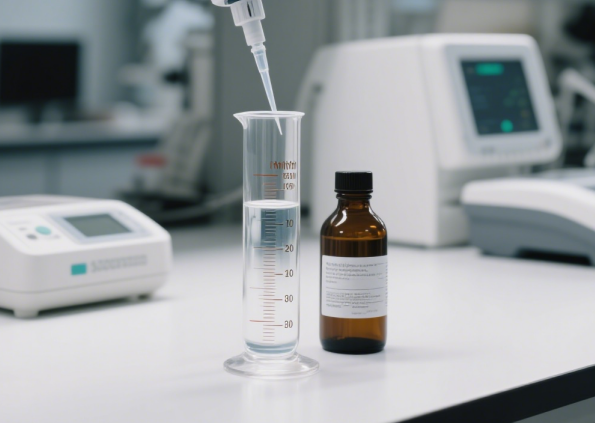
3. Safety and Efficiency in Chemical Reactions
In chemical manufacturing and experimental reactions, the exact proportion of chemicals must be strictly controlled. Adding too much or too little reagent may lead to incomplete reactions, reduced product purity, or even dangerous situations like overheating, explosions, or toxic gas leaks.
Precise liquid dispensing greatly enhances reaction control predictability and efficiency, ensuring product quality and operational safety.
4. Standardization and Consistency in Food and Beverage Production
In food formulation, beverage mixing, and flavoring processes, the proportion of liquid ingredients affects taste, color, aroma, and stability.
For example, fluctuations in the amount of syrup, flavorings, or acidity regulators can cause significant variations in taste, negatively impacting consumer experience. High-precision dispensing systems help achieve industrial-scale production standardization and product consistency.
5. Process Optimization in Automated Industries
In automated production lines and smart manufacturing, the precise supply of liquid materials such as lubricants, coolants, adhesives, and solvents not only affects product performance but also the efficient use of raw materials and cost control.
Accurate liquid dispensing enables energy saving, waste reduction, increased production efficiency, and higher yield rates, making it a key factor in modern industrial development toward efficiency and sustainability.
Part 2. Common Precision Liquid Dispensers
In the field of precise liquid dispensing, various tools play crucial roles depending on different needs and applications. Below is a detailed introduction to several common and widely used precise liquid dispensing tools, their features, and applications.
1. Pipette
The pipette is the most basic and common precise liquid dispensing tool in laboratories, designed for aspirating and transferring small volumes of liquid. Based on usage and precision requirements, pipettes come in several types:
- Manual Pipettes: Simple structure, flexible operation, economical and practical, suitable for general laboratory liquid transfer needs.
- Electronic Pipettes: Equipped with motorized aspiration and dispensing, ideal for high-frequency, high-precision liquid dispensing tasks, reducing operator fatigue significantly.
- Micropipettes: Can accurately control volumes at the microliter (μL) level, commonly used in genomics, cell culture, and molecular biology where extremely small volumes are required.
Advantages: Flexible operation, high measurement accuracy, suitable for a wide range of volumes.
Applications: Scientific research, medical testing, pharmaceutical development, and other fields requiring precise liquid handling.
2. Burette
The burette is a glass instrument specifically designed for titration in chemical analysis. By finely adjusting the valve, liquid flows drop by drop, enabling extremely precise addition and volume control.
Advantages: Fine droplet control, suitable for small volume changes, ideal for determining reaction endpoints.
Applications: Chemical quantitative analysis, titration experiments, reaction ratio control requiring high-precision liquid volume.

3. Volumetric Flask
Although volumetric flasks are not used to dispense liquid directly, they are essential for preparing solutions of accurate volume. Designed to prepare solutions at fixed volumes, they ensure solution concentration accuracy and stability.
Advantages: High volume accuracy, ideal for preparing standard solutions and providing volume benchmarks.
Applications: Standard solution preparation, sample dilution, and experimental formulation.
4. Peristaltic Pump
A peristaltic pump works by rollers compressing flexible tubing, causing liquid to flow at a stable and controllable rate. Its non-contact delivery greatly reduces contamination and cross-infection risks, making it suitable for automated continuous dispensing.
Advantages:
- Non-contact transport avoids direct liquid contact with pump parts, minimizing contamination;
- Can operate continuously with strong stability;
- Adjustable flow rate with minimal error;
- Capable of pumping viscous, corrosive, or particulate-containing liquids.
Applications: Medical devices, pharmaceutical production, biotechnology, food and beverage filling, and chemical liquid transport.

JIHPump’s Peristaltic Pump Dispenser
If you’re looking for a liquid dispensing device that combines precision with durability, JIHPump’s peristaltic pump dispensers are the ideal solution. It specializes in high-performance fluid dispensing systems that meet the needs of various industries. Its pumps offer:
- Accurate and controllable flow rates, ideal for dispensing volumes from microliters to liters.
- Non-contact fluid transfer that prevents contamination and makes them perfect for sensitive liquids.
- Integration with automated systems, suitable for industrial and medical production lines.
- Customizable tubing and interface options, tailored to meet specific industry needs.
JIHPump’s peristaltic pumps are widely used in laboratory dispensing, chemical titration, food dosing, pharmaceutical preparation, and environmental sampling, empowering clients to achieve efficient and highly precise fluid control.
5. Syringes & Dispensers
Syringes and dispensers are commonly used for quick, small-volume liquid injections, especially in medical and industrial dispensing fields. Syringes are portable and easy to operate, while automatic dispensers are suitable for high-efficiency dispensing on automated production lines.
Advantages: Simple operation, fast usage, some are disposable to reduce cross-contamination risk.
Applications: Medical injections, precise reagent dispensing, electronic glue dispensing, micro-volume liquid injections.

6. Volumetric/Gravimetric Dispensers
These industrial-grade devices combine automatic weighing or volume measurement technology to precisely control liquid dispensing volumes. They are typically used in automated production lines for large-scale, continuous, and traceable liquid dispensing.
Advantages:
- Suitable for large-scale industrial automation;
- Support data recording and traceability for quality management;
- High accuracy and stability, reducing material waste.
Applications: Liquid packaging in manufacturing, automated batching systems, precise liquid control in chemical and food industries.
Part 3. How to Choose the Right Precision Liquid Dispensers?
The most suitable liquid dispensing device to use is highly dependent on your actual application needs. In order to make a good choice, consider the following key points:
1.Identify the Desired Volume Range
The first step is to determine the volume range you need to dispense. Whether microliters, milliliters, or liters, varying volumes call for varying tools. To microliter-level volumes, micropipettes are the best option, but pumps or automatic dispensers are more suitable for greater quantities.
2.Consider the Liquid’s Properties
Second, think about the viscosity and corrosiveness of the fluid. Viscous or corrosive fluids can be dispensed by corrosion-proof equipment, e.g., peristaltic pumps with special tubing, to keep dispensing steady and protect the device. For ordinary watery liquids, standard dispensers will work.
3.Evaluate Precision Requirements
Precision is more critical for volume-error-sensitive applications such as drug dosage or chemical reaction. It needs accurate instruments to control errors in acceptable amounts. For less severe applications, less complex and cheaper instruments can be chosen.
4.Determine Operation Mode
Consider whether hand or automated operation is most suitable to your needs. Hand dispensing excels in low-volume or isolated applications, whereas automation provides maximum efficiency, reproducibility, and elimination of human error for high-throughput applications.
5.Scale Cost and Permanence
Finally, balance cost versus duration of the tool. One-time-use dispensers reduce risk of contamination but may be more costly over the long term. Long-term, reusable tools are designed for heavy-duty service, optimizing cost and performance.

Summary: Choosing the Right Liquid Dispensing Tool Makes All the Difference
Different scenarios require different precision liquid dispensing tools. From manual pipettes to automated peristaltic pumps and industrial-grade control systems, each tool plays a vital role. Understanding their features and selecting the most suitable solution ensures accuracy, stability, and efficiency in research, industry, or medical applications.