
When Should You Choose a High Precision Peristaltic?
Peristaltic pumps are one of the most valued devices, especially in transferring delicate fluids. Their broad application spans over pharmaceutical and biotechnological enterprises due to their cleanliness in handling liquids without risk of contamination. However, for applications requiring extremely precise flow rates or repeatable micro dosing such as certain medical applications, not all peristaltic pumps will serve equally. This is the domain for high precision peristaltic pumps.
The main goal of this article is to explain what constitutes a high-precision peristaltic pump, when it is prudent to acquire one, and how deeply your process should be analyzed before investing in such technology.
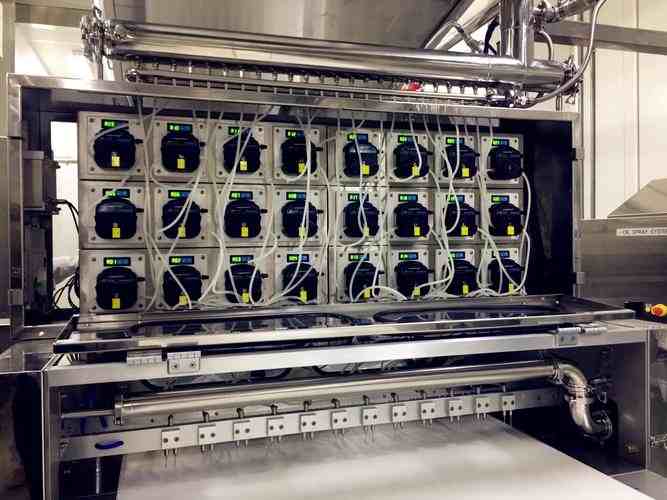
What Defines a High Precision Peristaltic Pump?
Like any other peristaltic pumps, a precision peristaltic pump is designed to transfer fluids; however it differs through a systematic design that enhances dosing repeatability and control resolution for tasks with higher complexity. General-purpose pumps might be suitable for basic fluid-moving activities but in cases requiring flow accuracy, high-end models are needed.
Key characteristics of high precision Peristaltic Pumps include:
- Closed loop control systems example: stepper motor with an encoder
- Superb oversealing of tube clamp and keds reduces variability
- Fluid delivery at low speeds without fluctuation increases or pulsation.
- With mechanical encoders, electronic speed controllers grant accurate measurement and achieve maximum flow rate target temperature
- Dosing sustained repeatability even after prolonged periods of operation cycles with minimal drift adjustable parameter preset.
- Command input received resultable output enables programmable set points via digital telecommand; assisted machined rotary/ linear reciprocated axes.
These features guarantee that even in very small amounts, fluids can be dispensed repeatedly and consistently which is critical in many laboratory, medical and industrial applications.
Key Scenarios Where You Need a High Precision Pump
Not every application needs this level of accuracy—but for some, it’s absolutely essential. Let’s look at the key scenarios where high precision peristaltic pumps are not just beneficial, but often required.
Micro Dosing Applications
Microdosing is the dispensing of specific, tiny amounts of liquid, sometimes even in the microliter or nanoliter range. In these applications, even a minor mistake can make great differences in results.
Consistency in dispensing minute amount of liquids such as reagents is critical for verification and efficiency in experiments in fields like drug discovery, microfluidics, and chemical synthesis.
The integration of stepper motor control alongside multi-roller heads enhances high-precision pumps, ensuring every rotation dispenses a predetermined micro-volume with negligible variabilities which guarantees robust process fidelity.
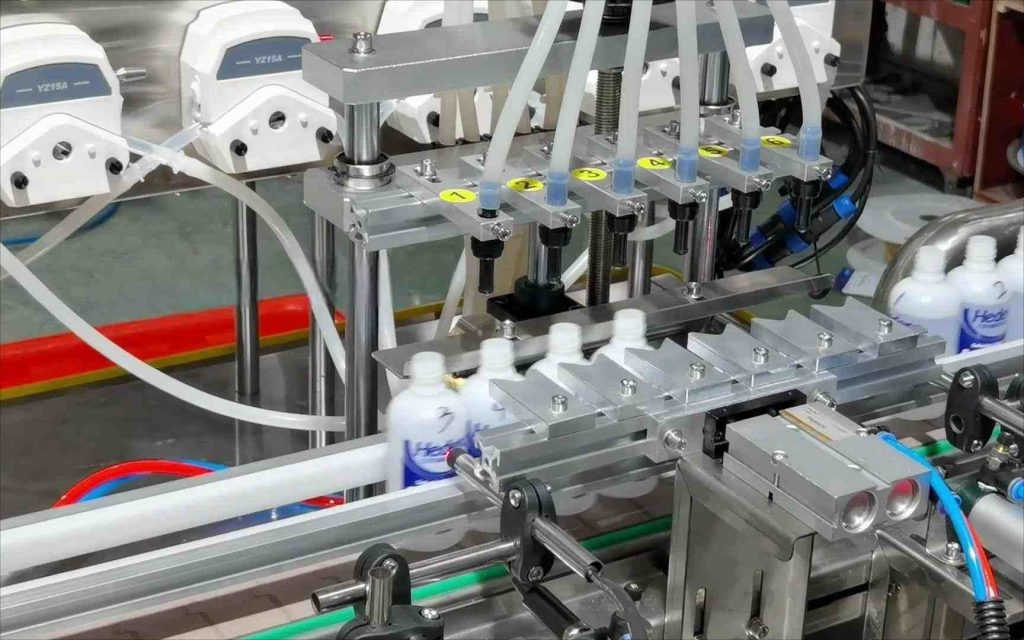
Pharmaceutical and Biotech Processes
In biopharmaceutical manufacturing, maintaining sterility and delivering drugs at controlled intervals is vital. They undergo:
- Filling vials or syringes to exact pre-defined volumes.
- Transferring culture media and buffer solutions.
- Gently and slowly pumping cells in a low shear environment to maintain viability.
Timely, batch-dosing with no contamination, regulatory compliance, precision fluid control—something a standard pump can rarely deliver reliably over time.
Laboratory Analysis and Instrumentation
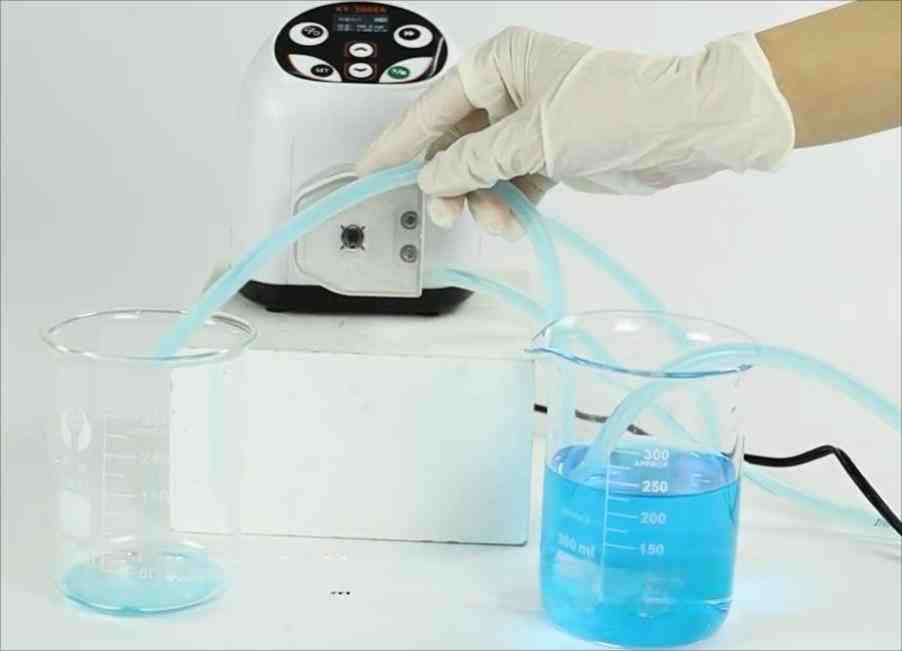
Modern chromatographic and spectroscopic techniques, as well as automated sample preparation methods, rely on modern analytical instruments which depend on accurate dispensing of reagents, samples, and buffers for reliable data generation.
Why Precision Matters: With techniques like HPLC and AAS, the results obtained are highly dependent on how accurately the fluidics are controlled. Apart from stability in the flow rate of fluids, peristaltic pumps can introduce baseline noise to a chromatogram that results in peak broadening or even shifting as a result of inaccurate quantitative analysis.
High-Precision Advantage: The use of high-precision chromatography pumps eliminates problems associated with baseline noise due to unstable fluid delivery by providing exact volume deliveries overcoming pulses during transport. These devices are best suited for use in fully automated laboratory systems designed for unattended operation.”
Food & Beverage Flavoring or Additive Injection
In the production of food and beverages, flavors, colors or preservatives must be injected in small amounts and with consistent precision. Overdose may ruin the taste or color, while under-dosing may compromise safety or shelf life.
A precision pump guarantees:
- Uniformity of every batch
- No loss of ingredients
- Compliance with regulatory limits for dosing
Some advanced beverage dispensers integrate high precision peristaltic pumps which enable on-demand micro-dosing of flavors and carbonation.
Medical Devices and Diagnostic Equipment
The medical field requires astonishing accuracy with machines such as dialysis, infusion pumps, or blood analyzers. For safety reasons, administering fluids to patients needs to be delivered in exact dosages, often within a range of microliters.
High precision peristaltic pumps offer:
- Fluid paths that are sterile and give a non-contact path through the pump
- Different patient and application total require programmable dosing
- Reduced need for maintenance and increased reliability over time minimal active upkeep required
Why Standard Peristaltic Pumps Fall Short in These Situations
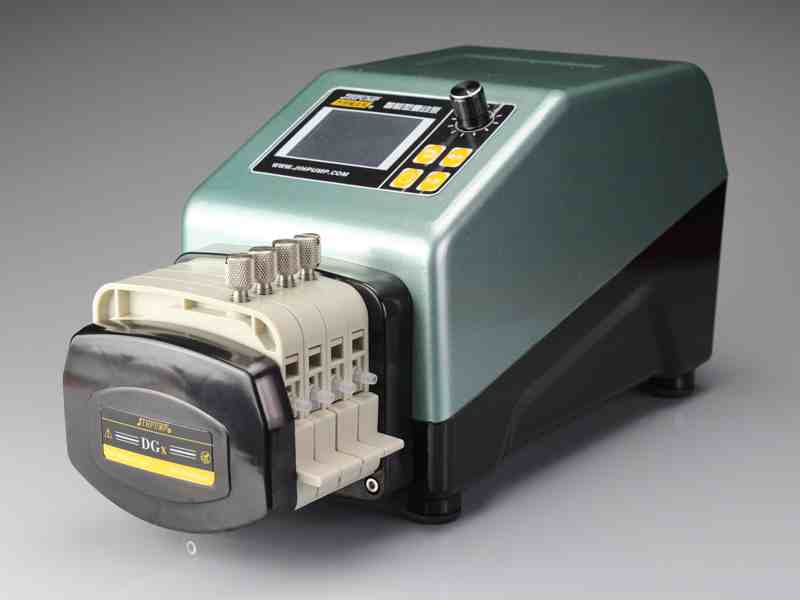
Considering universal fluid transfer, peristaltic pumps have proven effective because of their simplicity. However, they tend to be overly simplistic for more sophisticated life science and medical applications. These shortcomings show up most in the following limitations:
- Pulsating Flow: Possibly the biggest issue with these simple pumps is flow pulsation. Standard pumps with few rollers tend to suffer from this greatly. The rhythmic increase and decrease in flow rate will damage any application that depends on ultra-precise steady-state flows.
- Lower Accuracy and Repeatability: Increase shot volume customization features become very problematic. This is a result of increased motor control simplicity as well deeper manufacture tolerances leading to broader belts being used on standard pumps by default.Most medical use cases would require accuracy within the microliter range, something impossible to achieve with these clogging-free systems dubbed volumetric injectors composed mostly of tubes.
- Limited automation and Advanced Control Features: As systems requiring complex automation often rely on advanced mathematical or flow logic programming therefore classified under highly specific contour definable dynamic programmable step-wise interchangeable setting based controls shape The grade-inflection speed adjusters present allow for basic task completion without exceeding initial specifications range-covering functioning.
- Tubing Wear and Inconsistency: While tubing wear is a factor for all peristaltic pumps, the consistent occlusion and high-quality materials of high-precision models are designed to minimize this and maintain performance over a longer period.
Do You Really Need a High Precision Peristaltic Pump?
To understand if a high precision pump is suitable for an investment consider the following questions:
- Do I need very small—or precisely controlled—volumes to be distributed?
- Is repeatability critical to my process?
- Will the pump be deployed in automated or controlled scenarios such as pharma, lab, or food industry?
- Am I working with expensive, sensitive, or hazardous materials in liquid form?
- Are there processes where minimized pulsation is needed?
If you answered yes to any of these, a high precision peristaltic pump is not a luxury—it’s a necessity.
If you’re unsure whether your project requires a high precision model or which pump best fits your needs. Feel free to contact JIHPUMP for a personalized recommendation and let us support your process with the right solution.
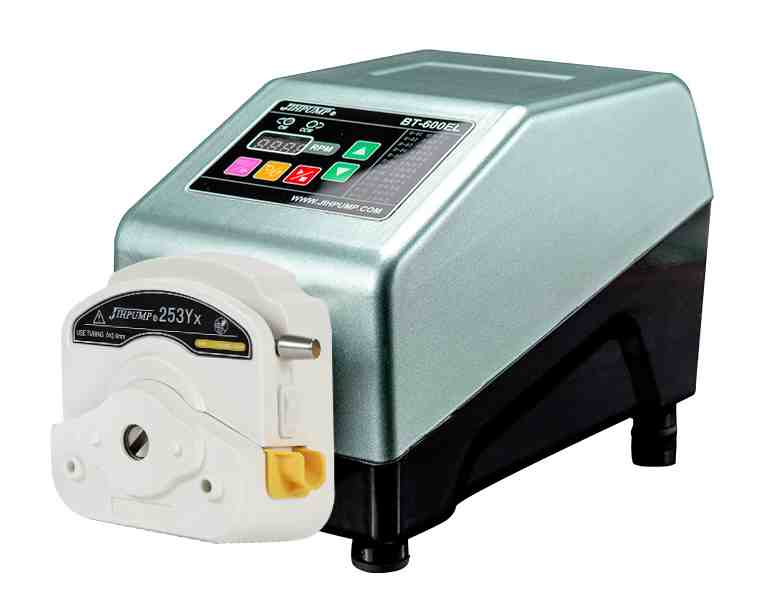
Final Thoughts
An application’s requirements will determine whether you need a standard or high precision peristaltic pump. For general-purpose fluid transfer, standard pumps are more affordable and cost-efficient, but lack the stable flow, repeatability and accuracy provided by high precision models. In scientific research, pharmaceutical production, and sophisticated industrial operations, these high-precision Peristaltic Pumps give unparalleled accuracy. With thorough understanding of the above discussion regarding choices and balancing standards criteria vs benchmarks requirements for accuracy and detailing wonder prompts, one can reach ideal decisions on choosing left them requires them.