
Complete Guide to Acid Pumps: Professional Solutions for Corrosive Liquid Handling
In industries such as chemicals, water treatment, electroplating, mining and metallurgy, pharmaceuticals, and laboratories, the safe transfer of acidic liquids is always a high-risk and highly demanding task. With an appropriate acid pump, pipeline corrosion, equipment leakage, and the potential harm of personnel could be entirely avoided.
In this post, we take you through the professional information of acid pumps from principles of operation and kinds through to application scenarios, selection criteria, and advantages of use in transferring acid fluids.
Part 1. What is an Acid Pump?
A acid pump can be described as a kind of pump designed to transport various types of acids as well as other chemicals that are corrosive. The media that is transferred by these pumps could be extremely destructive, and they’re specifically designed to handle such media in a safe and efficient manner to ensure a constant flow of fluid without danger of harm to the equipment or the users themselves.
Amongst typical applications for acid pumps are the transferring of substances like:
- Hydrochloric acid (HCl)
- Sulfuric acid (H₂SO₄)
- Nitric acid (HNO₃)
- Organic acids (e.g., acetic acid, formic acid)
- Acidic electroplating solutions and pickling agents
- Acidic wastewater or process liquids containing corrosive components
These pumps usually have corrosion-resistant materials, leak-proof construction, and chemical-compatible designs to put up with these harsh fluids. The core value they offer in application includes:
- High resistance to corrosion.
- Reliable, leak-free operation
- Improved safety for both equipment and personnel
- Longer service life under demanding chemical environments
This makes them indispensable in those industries where safety on handling chemicals is of utmost importance.
Part 2. 6 Common Types of Acid Pumps
There are various pump types used for acid and corrosive liquid handling on the market today, and here we will introduce them and their main types, along with their working mechanisms and advantages and limitations, typical applications and selection/maintenance tips to help you choose which pump best satisfies a given task.
1. Peristaltic Acid Pump
How it Works
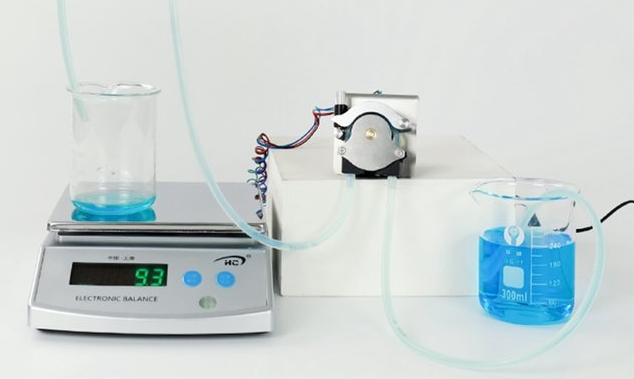
A rotating roller or shoe compresses a flexible tube (pump hose) and forces fluid through it by means of peristaltic action, so only its surface touches fluid in its path through the tube, never the housing or moving parts of the pump itself.
Advantages
- Complete isolation of process fluid from pump internals → ideal for highly corrosive acids.
- True leak-free operation (no shaft seals) → excellent safety for hazardous chemicals.
- Gentle, low-shear pumping — suitable for shear-sensitive liquids and slurries.
- Wide range of flow control-from trace dosing to moderate flows-and good for intermittent operation.
- Easy maintenance: a worn tube is simply replaced; minimal downtime.
- Handles entrained gas and solids better than many positive-displacement pumps.
- Tolerant of viscosity and back-pressure changes within tube limits.
Limitations
- Tube wear is the main consumable — frequent replacement when pumping strong oxidizing acids or abrasive fluids.
- Maximum pressure and flow are limited compared with large centrifugal systems.
- Accuracy of metering is related to tube condition and pump speed; recalibration may be required periodically.
Typical applications
Acid dosing in water treatment, electroplating acid addition, lab acid dispensing, acid waste sampling, small-scale pickling and neutralization lines.

2. Diaphragm Acid Pump Diaphragm (Metering / Air-Operated Double Diaphragm — AODD)
How it Works
A flexible diaphragm driven mechanically or pneumatically displaces liquid in a chamber; check valves direct flow. In metering versions, the diaphragm movement is precisely controlled to achieve accurate dosing.
Advantages
- Good chemical isolation when diaphragm and valves use corrosion-resistant materials.
- Able to handle viscous or particle-laden acidic fluids.
- Self-priming and can run dry for short periods.
- AODD versions can be used in explosive atmospheres (with proper air supply/explosion-proof design).
- High suction lift compared with some other positive displacement pumps.
Limitations
- Diaphragms and check valves are wear parts and must be replaced periodically.
- Pulsating flow is inherent; may require pulsation dampening for sensitive processes.
- Mechanical or pneumatic driving system increases the system complexity vs. a simple peristaltic pump.
Typical applications
Continuous acid dosing into process lines, chemical transfer applications requiring a moderate level of accuracy and robustness; slurry-like acidic solutions. Remote installations, powered by compressed air.
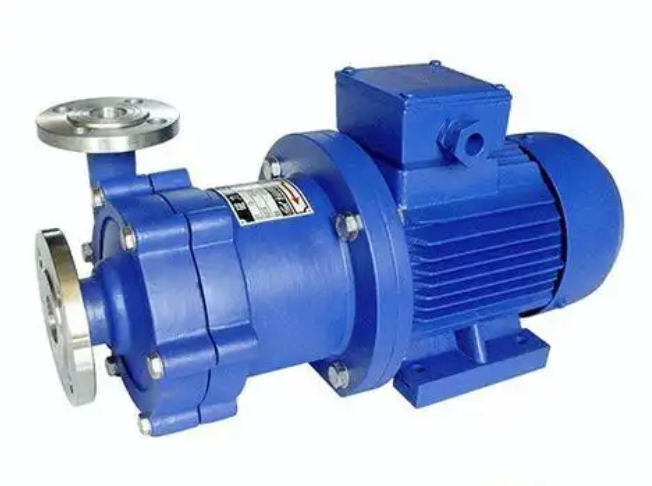
3. Magnetic Drive Acid Pump (Magnetic Drive Centrifugal / Sealless Pump)
How it Works
A magnetically coupled impeller transmits torque from an external drive to an internal rotor without a shaft penetrating the casing, with no shaft seal. Fluid is contained by the shell.
Advantages
- No shaft seal → essentially zero risk of leakage when appropriately selected and maintained.
- Suitable for continuous, high-flow transfer of corrosive liquids.
- Available in corrosion-resistant alloy, polymer or lined constructions, such as PTFE-lined, Hastelloy and Duplex.
- Compact, familiar centrifugal pump footprint — easy to integrate with existing piping
Limitations
- Limited to moderate pressures; magnetic coupling strength constrains maximum torque/size — very large flows may be impractical.
- Magnetic couplings can overheat if the impeller is jammed, or if the fluid is highly viscous; care is needed in selection.
- The initial cost is more than simple centrifugal pumps; containment materials add cost.
- Unless specifically designed, not suitable for heavily solids-laden slurries.
Typical applications
Plant-wide acid transfer, reclaim / return lines, circuits where environmental regulations prohibit leakage, and intermediate storage transfer of concentrated acids.
4. Centrifugal Acid Pump (Conventional Centrifugal Pumps for Acids)
How it Works
The impeller imparts kinetic energy to the fluid while the casing converts velocity to pressure. In the case of acids, pumps are made with corrosion-resistant metals or lined with non-metallic materials.
Advantages
- Efficient for high-flow, low-to-moderate-pressure acid transfer.
- Lower cost per unit flow than many positive-displacement pumps at larger scales.
- Simple operation and wide availability; many sizes and standards.
Limitations
- Requires properly selected shaft seals (mechanical seals) or alternative sealing strategies — seals are a potential leak point
- Wetted components must be carefully selected for corrosion resistance (metals, coatings, linings).
- Performance may be sensitive to changes in fluid viscosity and vapor content (cavitation risk).
- Not suitable for precise low-flow metering without additional control equipment.
Typical applications
Bulk conveyance of dilute acids, circulation in pickling baths (with compatible materials), HVAC chemical feed lines, and high-volume neutralization circuits.
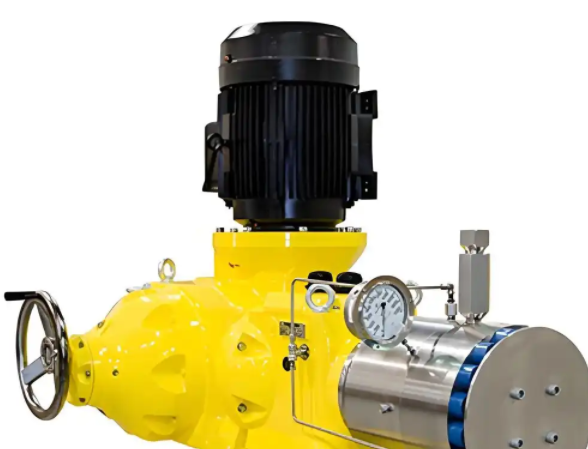
5. Metering Pump (Plunger/Diaphragm Metering Pumps)
How it Works
Positive-displacement pumps-plunger or diaphragm-types provide a definite volume for each stroke. Stroke length and frequency are varied to provide precise flow control.
Advantages
- High dosing accuracy and repeatability — ideal for pH control, corrosion inhibitors, or any precise chemical addition.
- Can create high pressures to inject into pressurized systems such as boiler feed and high-pressure process lines.
- Wide turndown ratio: small to moderate flows can be metered accurately.
Limitations
- Wetted parts-plungers, diaphragms, seals-are consumables and must be matched to the acid chemistry.
- Higher mechanical complexity and maintenance than peristaltic pumps for simple tasks.
- Some designs may leak if seals fail — selection of seal/diaphragm materials is critical.
Typical applications
pH adjustment and acid dosing in water/wastewater plants, boiler water treatment, process chemical blending, and precise neutralization of acid streams.
6. Peroxide/High-Oxidizer & Slurry-Specific Pumps
While not a separate generic category above, the pump selection for the handling of strong oxidizers (e.g., hot concentrated nitric acid, chromic acid) or acidic slurries must take into consideration:
- Resistance to oxidation of materials (using special alloys or linings of PTFE/graphite)
- Erosion from solids (consider progressive cavity pumps or heavy-duty diaphragm/piston designs).
- Compatibility of elastomers (many common elastomers degrade rapidly with oxidizers).
Always consult chemical compatibility data and vendor guidance regarding such special cases.
Part 3. Key Characteristics of a High-Quality Acid Pump
When transferring highly corrosive acidic liquids, a high-quality acid pump is important not only for efficiency in transfer applications but also for system safety, longevity of equipment, and overall maintenance costs. The following section details the characteristics that should be found in a premium acid pump to help you select the one fitting your specific application.
- Excellent Corrosion Resistance
A proper choice of the pump seal and body materials is vital, based upon the type of acid concentration, temperature, and type. The most widely used corrosion-resistant substances include:
PTFE/PFA: Highly resistive to the most powerful acid and oxidizing agents, with an excellent chemical inertness. Commonly used for linings or wetted surfaces.
PVDF is resistant to alkalis, acids as well as high temperature. It is recommended for use with moderate concentration acids and several organic solvents.
Hastelloy, Titanium, other high-performance metals: For high temperatures and high-concentration or for strongly acid oxidizing.
Elastomers Viton, EPDM, etc. are used in diaphragms, pumps or seals. They must be chosen by examining the compatibility charts for chemical. For example, do not use certain elastomers in strong oxidizing acids.
PEEK, ceramics, and engineering materials: applied to applications where improved wear and corrosion resistance is required.
Material selection recommendation: Start with a chemical compatibility chart, then consider temperature, concentration, exposure time, and cost. Conduct small-scale corrosion tests when necessary.
- Construction without Leaks
Leakage has serious consequences in terms of personnel safety and equipment integrity. Some key design considerations include:
Seal-less/Non-penetrating constructions (e.g., peristaltic pumps, magnetic-drive pumps): Physically isolate the liquid from external mechanical components—among the most reliable “zero-leakage” solutions.
Dual-seal/buffer chamber designs allow higher levels of safety for mechanical seal pumps by directing any leakage into a monitored or buffered zone.
Material and machining precision: The precision of the sealing surfaces and the mating surfaces of flanges directly impacts long-term sealing performance.
Leak detection and alarm interfaces are recommended for high-risk conditions to offer early warnings, guide drainage, or automatically shut down.
Practical advice: In applications with stringent safety requirements, seal-less designs or pumps with secondary protection combined with leakage monitoring are preferred.
- Stable and Controlled Flow Output
Process control is reliant on stable transfer and accurate dosing:
Metering accuracy: Often critical in control of pH, chemical formulation, or reaction control; pumps selected should have adjustable stroke/frequency, closed-loop control, or flow feedback.
Turndown ratio: Good pumps can be used to provide a large adjustment range, particularly during routine operations that fluctuate.
Pulsation control: Certain Positive displacement pumps as well as peristaltic pumps produce pulsation. You can use buffers or flow stabilizers in the event that downstream stability is needed.
Control and integration capability: Compatibility with both analogue/digital signals, viz. 4–20 mA, 0–10 V, Modbus, etc., allows integration with PLC/DCS systems for automated regulation.
Recommendation: Select pumps whose accuracy capabilities match the process requirements. Provide systems with adequate monitoring and feedback loops.
- Resistance to Corrosive Vapors and Temperature
Liquid acids also tend to produce harmful fumes or require high temperatures. A fitting pump for acids should manage:
Vapor resistance / anti-cavitation design: Sealing materials and valves must resist acidic vapors for a long time; possibly ventilation or recovery of condensation should be implemented.
Resistance to high temperatures: In applications involving hot acids like sulfuric acid, the material resistance must be maintained together with mechanical strength at high temperatures. Tubing, diaphragms, and elastomers must provide this thermal performance.
Resistance to oxidation and scaling: Certain oxidizing acids result in the oxidation of the surface or embrittlement. In places where this may occur, oxidation-resistance materials should be employed along with protective linings.
Recommended guidelines: Indicate working temperature and its exposure to vapors and then choose the materials and protection means according to these specifications.
- Easy Maintenance and Long Service Life
Maintenance difficulty directly affects operating costs and downtime.
Wear parts that are easily replaced: Items like peristaltic pump tubing, diaphragms in diaphragm pumps, or seal kits in metering pumps should be designed for quick replacement on site.
Modular design: It allows for quick repair or replacement of parts, thus minimizing downtime.
Availability of spare parts and technical support: Choose manufacturers that can guarantee reliable supplies with strong service capabilities, ensuring timely replacements of parts.
Service life & TCO: Besides the initial cost, take into consideration replacement frequency, maintenance labor costs, losses due to downtime, chemical loss, and costs due to safety compliance.
Recommendation: Emphasize total cost of ownership, ease of maintenance. Practice preventive maintenance and maintain inventory of vital consumables.
Part 4. Common Applications for Acid Pumps
Acid pumps are widely used in industries that require the safe transfer or precise dosing of corrosive liquids. Key application areas include:
- Chemical production lines: Transferring acids as well as reagents and other destructive intermediates using continuous or batch processes.
- Electroplating and treatment of metal surfaces: Our team has vast experience in managing plating acids, rinse water and pickling solutions in terms of precision dosing and resistance to corrosion. These are two crucial aspects to consider when electroplating or other metal surface treatments.
- Treatment of wastewater and neutralization: By adding acids to adjust pH as well as coagulation or neutralization alkaline effluents.
- Mining and extraction of metals: For processing ore and metal recovery processes, moving acidic leachates, picking baths or process streams are essential.
- Systems for acid dosing in laboratories: High-precision, small-volume delivery of acids for research and titration, or for analysis workflows.
- Electrolytes and batteries are produced: The safe handling of sulfuric acid as well as other aggressive chemicals that are used in lead-acid and lithium battery production is crucial.
- Food, paper and other related processes using acid: Acid delivery products assist in the bleaching of pulp processing, food processing, industries that require cleaning.
- Pharmaceutical production: Transporting acidic reagents or pH-adjusting chemicals under strict contamination control.
Practical note: For applications involving low flow rates, precise metering, highly corrosive liquids, or a requirement for zero contamination, peristaltic pumps are often the first choice due to their leak-free, chemically isolated, and easily maintainable design. Their ability to handle small doses accurately, resist corrosion, and operate safely in hazardous environments makes them highly suitable across these diverse industries.
| Industry / Application | Typical Acid / Corrosive Liquid | Recommended Pump Type | Key Advantages |
| Chemical Production | Strong acids, reagents, corrosive intermediates | Diaphragm / Magnetic Drive / Peristaltic | Safe transfer, corrosion resistance, stable flow, adjustable dosing |
| Electroplating & Metal Surface Treatment | Sulfuric acid, hydrochloric acid, pickling solutions | Peristaltic / Diaphragm | Precise dosing, leak-free, corrosion-resistant, suitable for plating baths |
| Water Treatment & Wastewater Neutralization | Hydrochloric acid, sulfuric acid, acidic effluents | Peristaltic / Metering Pump | Accurate pH control, small to moderate flow, chemical isolation |
| Mining & Metal Extraction | Acidic leachates, pickling baths | Magnetic Drive / Diaphragm | High corrosion resistance, safe bulk transfer, long service life |
| Laboratory Acid Dosing | Acetic acid, nitric acid, hydrochloric acid | Peristaltic | High precision, low flow metering, leak-free, easy maintenance |
| Battery & Electrolyte Manufacturing | Sulfuric acid, battery electrolytes | Peristaltic / Diaphragm | Zero contamination, accurate dosing, chemical isolation, corrosion resistance |
| Paper & Food Processing | Acetic acid, citric acid, other process acids | Peristaltic / Metering | Small flow dosing, chemical compatibility, safe operation |
| Pharmaceutical Production | Acidic reagents, pH adjustment chemicals | Peristaltic / Metering / Diaphragm | Precision dosing, contamination-free, easy cleaning, corrosion-resistant |
Part 5. How to Choose the Right Acid Pump?
Finding an efficient acid pump takes careful evaluation of many factors in order to ensure safe and cost-effective operation. The most important considerations are:
1. Type and Concentration of Acidic Substances
Different acids cause different levels of corrosion, which affect the choice of materials.
- Concentrated sulfuric acid: It requires materials that are able to withstand high temperatures and strong oxidation. Examples include PTFE, PFA or high alloy metals, such as stainless steel.
- Concentrated hydrochloric acid: For handling concentrated hydrochloric acids, liner pumps or corrosion-resistant plastics are the best choice of substances to stop corrosion.
- Organic acids: may require PVDF or compatible elastomers, based on the temperature and concentration.
Tip: Always refer to compatibility charts for chemical compatibility and consider the temperature and exposure time before buying chemicals or operating equipment.
2. Avoidance of Flow and Pressure Requirements
- Choose the appropriate flow rate (low medium, medium or high) and pressure for the system.
- Pumps with positive displacement (peristaltic diaphragm, diaphragm and meters) are specifically designed to ensure precise dosing of low to medium flow conditions.
- Magnetic drive or centrifugal pumps can effectively handle large quantities, low viscosity acidic liquids, with limitations on compatibility with materials.
3. Transfer vs Precise Metering
Transfer applications: Focus on high corrosion resistance and large flow capacity. Magnetic drive or diaphragm pumps are often used.
Precise metering / dosing: Requires accurate, low-flow control. Peristaltic pumps excel in this scenario due to:
- Leak-free, chemically isolated flow path
- Adjustable stroke/frequency for precise dosing
- Minimal contamination risk
4. Temperature and Viscosity
- Material designed to resist high-temperature acids require both mechanical strength and chemical stability.
- Viscous liquids require pumps capable of accommodating variable viscosity without degrading flow stability or accuracy.
5. Safety Requirements and Allowable Leakage Allowance
- Leakage from hazardous acids must never occur, since any release would put lives in peril.
- Seal-free pumps (peristaltic or magnetic drive) offer maximum safety by physically isolating liquid from moving parts and isolating it from contamination.
- Pumps equipped with secondary containment or double seals may be appropriate for moderately risky applications.
6. Maintenance Costs and Difficulties (PDF)
- Consider ease of maintenance, availability of spare parts and replacement frequency when choosing an air filter system.
- Peristaltic pumps: Tubing replacement is easy and fast.
- Diaphragm pumps: Periodic replacement of their diaphragm.
- Assess total cost of ownership (TCO): this includes downtime, chemical loss, labor expenses and preventive maintenance costs.
Practical Recommendation: For optimal reliability, operational safety, and cost efficiency, it is advisable to choose the pump type according to acid type, flow rate, precision requirements, temperature requirements, safety precautions, maintenance needs and frequency of inspection.
Part 6. Why Are More Users Choosing Peristaltic Pumps as Acid Pumps?
Peristaltic pumps provide significant benefits when dealing with acidic liquids:
- Absolute fluid isolation: To stop corrosion, the body of the pump does not come into the direct vicinity of liquid.
- Truly leak-free: A leak-free system that guarantees the highest level of security for equipment and personnel.
- Dry run and self-priming capability: Ensures flexibility in a variety of operating conditions.
- Stable flow, and accurate dosing: Allowing precise dosing even in low flow rates.
- Low maintenance: Simple maintenance replacing the tubing will restore pump performance.
- Use with dangerous or corrosive acids: Dependable in harsh laboratories and industries.
Due to these advantages These advantages, peristaltic pumps have been able to become among the top reliable kinds of acid pumps utilized in the modern world of applications like water and chemical treatment, and lab applications.
Part 7. What Can We Offer as a Professional Peristaltic Pump Manufacturer?
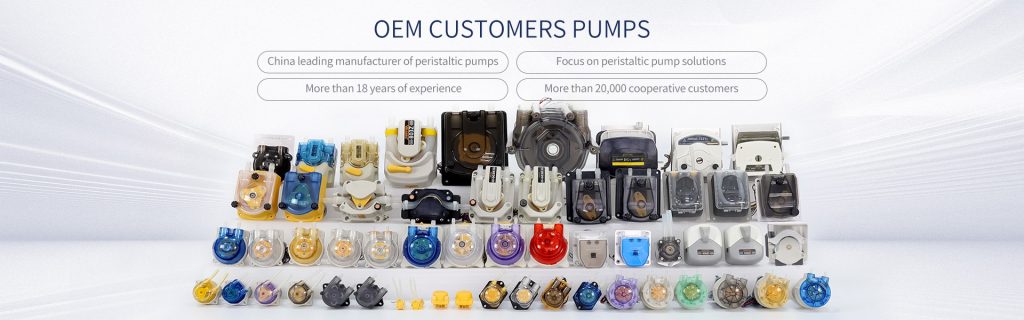
As an experienced peristaltic pump manufacturer, JIHPump specialize in providing solutions for handling acidic and corrosive liquids, including:
- A wide range of acid-resistant pump tubing materials
- A full range of peristaltic pumps suitable for acid transfer and dosing
- Coverage for laboratory, low-flow, and medium-flow applications
- Customized recommendations based on acid type, concentration, and process requirements
- Strong factory production and bulk supply capabilities
- Pumps that are stable, durable, structurally reliable, and low-maintenance
Our peristaltic acid pumps have been widely applied across dozens of industries, including chemical plants, water treatment facilities, laboratories, mining, and pharmaceutical production, and have been proven reliable by long-term customer use.
Wrap Up
Acid pumps play an indispensable role in modern industry, serving as core equipment for the safe, precise, and leak-free transfer of acidic liquids. In highly corrosive and high-risk acid environments, selecting the right pump type is critical.
Peristaltic pumps with their leak-free design with corrosion resistance, simple maintenance, and a high level of safety are becoming increasingly the preferred choice for large numbers of companies.
If you’re in search of an efficient equipment to transfer acid as well as precise dosing, or handling media that is corrosive, our peristaltic pump is an expert, reliable and affordable option.