
How Does a Multiple Head Peristaltic Pump Work?
Accuracy, flexibility, and contamination-free operation are more essential in today’s fluid handling applications. Peristaltic pumps have proven to be among the most reliable pumping technologies to meet these demands, particularly in pharmaceuticals, food and beverages, laboratory, and industrial procedures. Of these, the multiple head peristaltic pump—is significant for its ability to transfer multiple fluid streams in parallel or individually.
This article examines how head peristaltic pumps are multiplicity, their parts, advantages, and diverse applications of multi-head peristaltic pumps to help you fully understand how these innovative systems work.

What Is a Multiple Head Peristaltic Pump and How Is It Different from Single-Head Pumps?
A multiple head peristaltic pump is a peristaltic pumping system consisting of two or more heads. A rotor, rollers, and tubing in each head create peristaltic action to propel the fluid. Single-head pumps produce one stream of fluid, whereas a multiple head system can be used on several fluid lines at a time. They can be operated at the same rate (synchronous) or separately, depending on the drive system.
The main difference lies in the efficiency and functional flexibility. While single-head pumps are optimal for simple transfer functions, multi-head configurations offer higher rates of throughput and can maintain multi-channel dosing, concurrent sampling, and parallel fluid delivery with precise flow rate control.
How Multiple Heads Operate Together
Multiple head peristaltic pumps can function in two primary modes:

Synchronized Operation: All pump heads operate at the same speed, driven by a common motor or shaft. This configuration is ideal for applications requiring equal flow rates across multiple channels.
Independent Operation: Each pump head is controlled by a separate motor or electronic control system. This allows different flow rates, start/stop timing, and even different fluids for each channel.
These pumps are especially valuable in automated systems, where fluid delivery requires exact timing and synchronization or customized dosing for each line.
Internal Configuration and Key Components of a Multiple Head Peristaltic Pump
Understanding the internal configuration of a multiple head peristaltic pump is crucial to appreciating its functionality and robust design. While designs can vary between manufacturers and models, several key components are universally present:·
Pump Heads: They consist of a rotor with rollers or shoes compressing flexible tubing to drive the fluid. Heads may be set side by side or stacked.

Tubing: Tubes must be chemically resistant and flexible, and appropriate for the fluid type. They are generally constructed from silicone, Tygon, and Viton.
Drive Mechanism: Stepper, servo, or DC motors control the motion of the rollers. Synchronized systems would have one motor, whereas independent systems would possess multiple motors.
Control Unit: Advanced systems would have touchscreen displays, PLC control integration, and programmable parameters like speed, direction, and timing.
The modularity of today’s multiple head peristaltic pumps allows easy head replacement or addition, making them ideal for scaling operations.
Advantages of Using Multiple Head Peristaltic Pumps
The novel design and operational characteristics of multi-head peristaltic pumps yield a very compelling collection of advantages over single-head pumps and other pumping technology:
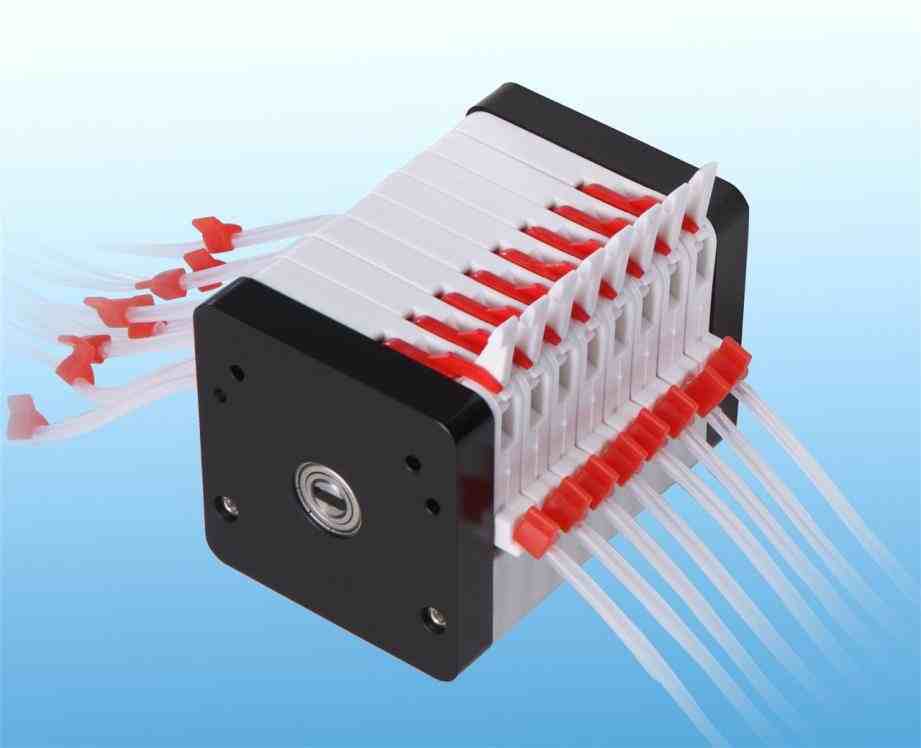
- Multi-Channel Pumping in Parallel: The most compelling advantage, enabling the simultaneous transfer of multiple fluids. This is invaluable in applications requiring precise mixing, dilution, or the concurrent delivery of different reagents.
- Preventing Cross-Contamination: Because there is a separate dedicated tubing for every fluid stream, there is zero chance of cross-contamination between the channels or between the pump system and the fluid. This is especially important in sterile use, with aggressive chemicals, or in delicate biological samples.
- High Reproducibility and Accuracy: Peristaltic pumps possess volumetric accuracy. With a multi-head setup, such accuracy is propagated in multiple channels, resulting in accurate and reproducible dispensing or transferring on all fluid paths.
- Versatility in flow rates: Since different internal diameters of tubing are placed on each head, a single multi-head pump is capable of delivering drastically different flow rates through all channels at the same time. This versatility is hard to achieve in other pumps.
- Maintenance Ease and Tubing Replacement: Replacement of the tubing is usually extremely simple and quick, minimizing downtime. Since the tubing is the only wetted part, cleaning regularly is simply a question of flushing tubes or replacing them.
- Chemical Compatibility: The variety of available tubing materials ensures compatibility with almost any fluid, ranging from highly corrosive acids to delicate biological media.
- Space Economy: Having a number of pumping channels integrated into one unit often translates into a lower footprint than with a group of single-head pumps, freeing up precious bench space or cabinet space.
Where Are Multiple Head Peristaltic Pumps Commonly Used?
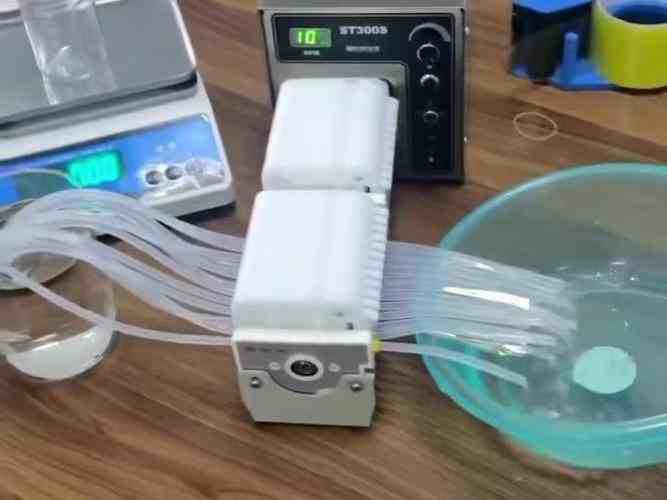
The versatility and unique advantages of multi-head peristaltic pumps have been progressively used in a wide range of industries and scientific disciplines. Some of the widespread application areas are:
- Pharmaceuticals and Biotechnology: In filling, dosing, and sampling of sensitive or sterilized liquids.
- Food and Beverage: Used for flavor and additive dosing, syrup transfer, and sanitary liquid handling.
- Laboratory and Research: For accurate reagent dispensing and multi-sample analysis.
- Water Treatment and Environmental Monitoring: Used for multi-point water sampling and chemical injection.
- Industrial Automation: Integrated into OEM systems for dependable fluid distribution on many lines.
Due to their modularity and performance, many world-class firms now rely on solutions from top China peristaltic pump head makers.
Upgrade Your Fluid Control with a Reliable Multi-Head Peristaltic Pump System
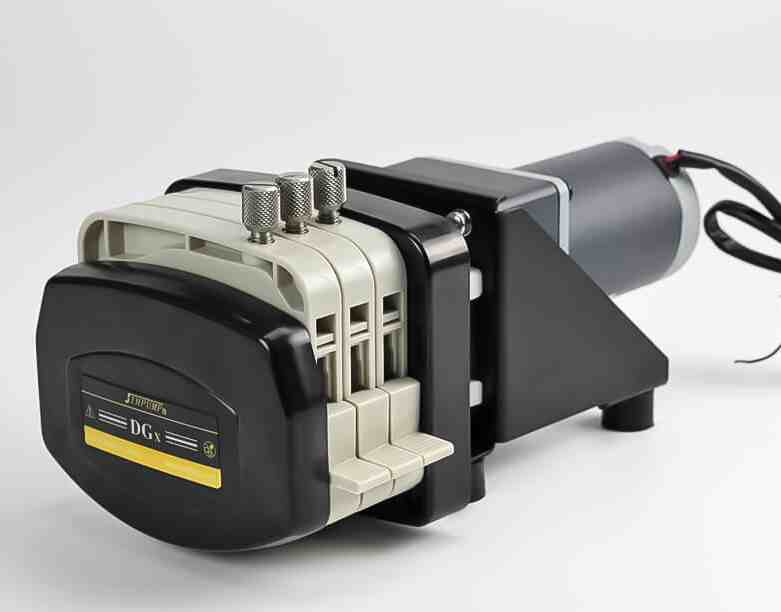
If your operations require multiple streams of fluid delivery—whether identical or variable—a multi-head peristaltic pump is an ideal solution.
At JIHPUMP, we specialize in delivering high-precision, customizable peristaltic pumping systems that meet the evolving needs of modern industries. Our pumps are engineered for performance, durability, and ease of integration. Whether you need a lab-scale setup or an industrial-grade system, JIHPUMP has a solution to optimize your process.
FAQ About Multiple Head Peristaltic Pumps
Q1: Is it possible that each head can be used to circulate a different fluid?
A: Yes, provided the pump has independent control, it is possible for each head to be set for dissimilar fluids and flow rates.
Q2: What is the largest number of heads in multi-head systems?
A: Depending on the design, systems can range from 2 to 8 heads or more. JIHPUMP provides scalable solutions to fit customers’ needs.
Q3: Is it difficult to replace tubing in a multi-head pump?
A: No. Tubing replacement is simple, and our modular design means minimal downtime.
Q4: Which tubing materials are supported?
A: Stock materials are silicone, Tygon, Santoprene, and Viton—selected on the basis of chemical compatibility.
Q5: Do you provide OEM solutions that can be incorporated into other equipment?
A: Yes. JIHPUMP provides compact, OEM-compatible modules suitable for incorporation within automated systems and laboratory equipment.