
Peristaltic Metering Pump Brushless DC Options: Why Engineers Switch
As anyone familiar with fluid handling knows, not all pumps are equal. One model that’s been attracting design engineers’ interest recently is the peristaltic metering pump brushless DC system, which combines precision delivery of peristaltic pumps and long life efficiency of brushless DC motors for maximum benefit.
And honestly? More and more people are making the switch.
As a specialized precision alternative to a standard industrial peristaltic pump, this brushless DC version brings a lot to the table. In traditional industrial production and medical device development, a lot of engineers have stuck with conventional brushed motors or standard AC motors. It’s what they know. It’s what’s worked—well, sort of. But BLDC motors are quickly becoming the go-to drive solution for precision dosing systems, and for good reason.
Let’s break down why this matters, using real-world manufacturing experience from the fluid control space. We’ll look at what makes BLDC different, why it performs better, and what that means for your next project.
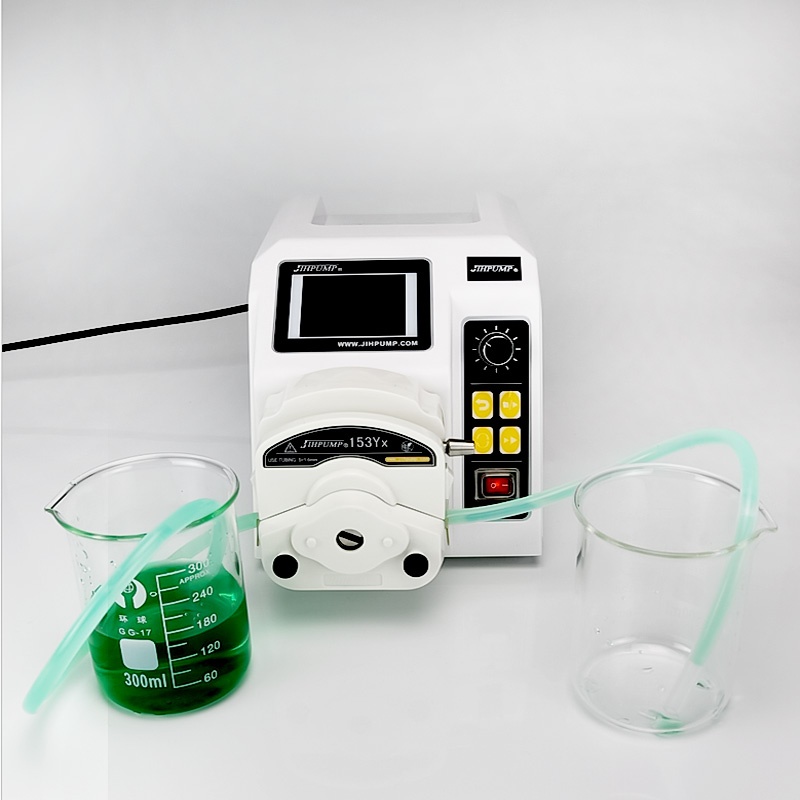
What Is a Brushless DC Peristaltic Metering Pump?
Brushless DC peristaltic metering pumps do exactly as their name implies: they use positive displacement pumps driven by brushless DC motors to move fluid in precisely measured amounts forward. Their motor turns rollers that squeeze a flexible tube, moving fluid along precisely timed channels.
However, to fully appreciate why an upgrade matters we must examine what’s happening within the motor under real operating conditions – not simply on paper.
No Brush Wear and Reduced Electrical Sparking Risk
Here’s the thing about traditional motors. They rely on carbon brushes. Imagine these brushes as sliding contacts that transfer current inside a motor. Each time it spins, these contacts rub against the commutator – similar to repeatedly dragging your sole across concrete pavement – until something gives. Eventually something’s bound to wear out.
Physical friction creates wear particles and electrical sparks. Over time, you must open up the motor and replace brushes – which may seem like routine maintenance but still represents downtime for you and your motor.
With a BLDC motor, there are no carbon brushes at all. Period. The motor uses an electronic commutation system to control the magnetic field. No physical contact, no brush dust, no sparking from brush friction. That means less maintenance hassle right out of the box.
Now, does that completely eliminate spark risk in hazardous environments? Not entirely. You still need to consider the overall protection rating and safety certifications of the full equipment. But from the motor side, the risk drops significantly.
Less Heat Means Tighter Internal Spaces
We should be honest about friction. BLDC motors still have bearings. There’s still a rotating shaft. So there’s still some mechanical friction. But compared to brushed motors? The heat generation is way lower.
And that matters more than you might think.
In real-world OEM integrations, engineers are constantly trying to stuff pumps into tight, sealed enclosures. Think benchtop clinical chemistry analyzers. Or automated dosing machines. When space is tight and ventilation is minimal, heat becomes a real enemy. Too much heat can cook nearby circuit boards or throw off sensitive measurements.
Because BLDC motors run cooler, they solve that problem without needing bulky heatsinks or active cooling fans. That gives designers more flexibility in layout and keeps the system reliable over long shifts.
Why Use Brushless DC Motors in Peristaltic Metering Pumps?
Let’s get into the practical reasons. Why would you choose BLDC over other motor types for chemical metering and fluid transfer? Here are the big ones.
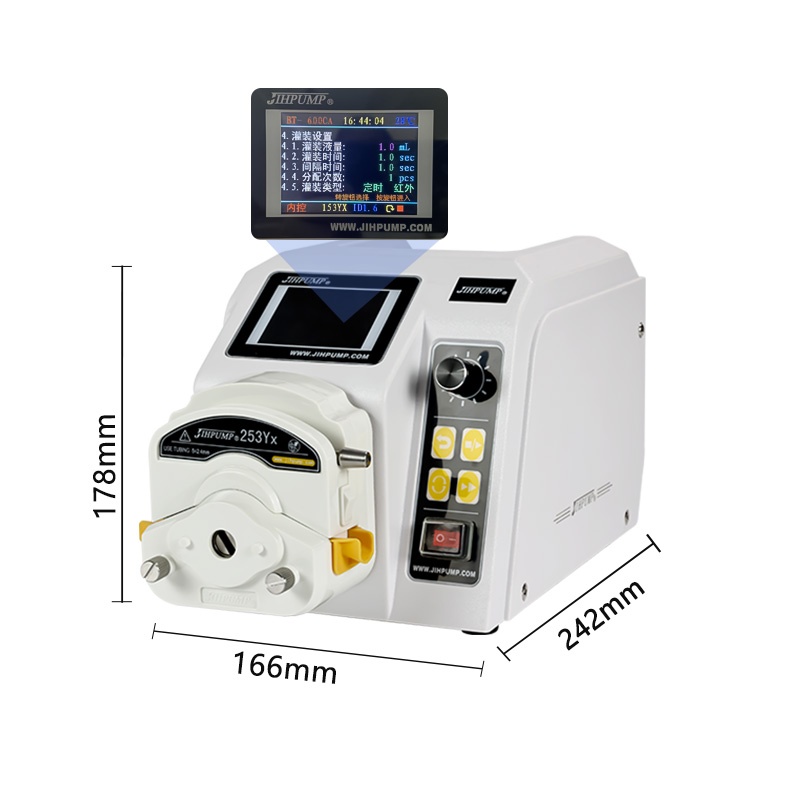
Higher Pumping Accuracy and Stable Flow Control
In precision dosing, the turn-down ratio matters a lot. That’s the range between maximum and minimum flow that the system can handle. Traditional AC motors often get choppy at low speeds. You know that shuddering feeling when an old car idles rough? Same idea. The motor speed wobbles, torque fluctuates, and the flow rate goes up and down.
BLDC motors handle low speeds with grace. They deliver smooth torque even when running slowly. Pair that with the right pump head, tubing, and control system, and you get highly repeatable small-volume dispensing. That means consistent results, batch after batch.
Longer Service Life with Less Maintenance
Nobody likes downtime. It’s expensive. It disrupts production schedules. It makes maintenance crews grumpy.
With a BLDC-driven pump, you eliminate the routine brush replacement cycle. That alone saves hours over the life of the equipment. The total cost of ownership drops, sometimes quite significantly.
Now, you still need to keep an eye on the peristaltic tubing. That’s the consumable part. But modern quick-load pump heads make tube changes fast, like swapping out a pen refill. So instead of tearing apart a motor, you just snap in fresh tubing and get back to work. That’s a workflow improvement you can actually feel.
Higher Energy Efficiency and Lower Operating Cost
BLDC motors waste less energy. No brush friction. Less resistive loss from the windings. Depending on the design and operating conditions, many brushless DC motors achieve over 80% efficiency.
Now, multiply that across a factory floor with dozens of dosing pumps running around the clock. Those efficiency gains add up. We’re talking real money saved on electricity bills over a year. It’s not just good engineering; it’s good business.
Lower Noise and Less Heat Generation
Have you ever stood next to a brushed motor running at full speed? There’s that distinctive screech-scrape sound from the brushes. BLDC motors don’t do that. They run quietly. Typically under 50 decibels.
In medical labs, hospital diagnostic departments, or even office environments with automated fluid dispensing, that quiet operation is a big deal. It reduces noise fatigue and keeps the workspace comfortable for everyone.
Applications of BLDC Peristaltic Metering Pumps
So where are these pumps actually being used? Pretty much anywhere that demands precision, reliability, and low maintenance.
Chemical Dosing Systems
Electroplating, textile printing and cleaning applications often involve dealing with highly aggressive chemicals like strong acids or alkalis. A peristaltic design keeps fluid contained within its tubing; no part of the pump mechanism comes into contact with these harsh substances; when combined with BLDC closed-loop control technology for corrosion resistance and precise dosing – an impressive combination.
Water Treatment
Drinking water purification, swimming pool chemistry control and industrial wastewater treatment systems all run continuously, so their pumps must keep pace. BLDC motors ensure constant speed over long periods, guaranteeing consistent injection of disinfectants such as sodium hypochlorite or pH adjustment chemicals into these systems. No drift. No surprises.
Laboratory and Diagnostic Equipment
Clinical chemistry analyzers, reagent dispensers, sample transfer systems—these require fine precision. BLDC peristaltic pumps deliver highly repeatable small-volume dispensing over extended runs with precision, with minimal noise or heat production for interference-free diagnostic readings.
Industrial OEM Systems
As a core fluid handling component, these pumps get embedded into all kinds of commercial automation equipment. Consider commercial dishwashers, floor scrubbers or beverage dispensers: their pumps receive commands from a central control board to dose cleaning agents or concentrates exactly when requested by users.
Brushless DC vs. Other Pump Motors
Let’s make this comparison really clear. Here’s how the different motor types stack up against each other, and more importantly, what that means for your pump performance.
| Motor Feature | Brushless DC (BLDC) | Traditional Brushed DC | Standard AC Motor | Real Impact on Pump Performance |
| Speed Control | Excellent | Medium | Narrow (often needs VFD) | Smoother, more consistent dosing accuracy |
| Maintenance | Very low | High, requires regular brush changes | Low | Big reduction in downtime and labor costs |
| Service Lifetime | Very long | Short | Long | Fewer core component replacements |
| Physical Size | Compact | Compact | Bulkier | Fits different installation spaces more easily |
| OEM Integration | Excellent | Medium | Limited | Easier modular embedding and thermal management |
This table tells the story pretty clearly. BLDC wins on speed control, maintenance, lifetime, and integration flexibility.
How BLDC Motor Improves Peristaltic Pump Performance
Let’s get down to the physics. In a peristaltic pump, motor speed directly determines flow. Here’s the simple chain:
Motor speed → Roller speed → Tube compression frequency → Final Flow Rate
With a regular motor, when the system encounters changes in back pressure or fluid viscosity, the motor speed can sag. The rollers slow down, compression frequency drops, and flow becomes inconsistent.
Industrial BLDC motors often employ closed-loop speed control. Sensors (Hall sensors or encoders) provide real-time feedback to the drive, and when an extra resistance is detected by the controller it adjusts current flow accordingly to maintain speed; that way the pump always pushes fluid at its preset rate regardless of pressure variations.
This closed-loop approach reduces flow pulsation. You know how peristaltic pumps naturally have that pulsing rhythm as rollers alternately compress the tube? The BLDC control smooths that out significantly. The result is better repeatability. Every dose matches the last one, with far less variation.
How to Choose a Brushless DC Peristaltic Metering Pump
When you’re evaluating or purchasing a BLDC peristaltic metering pump, here’s a practical six-step framework. Follow this order to make a smart decision.
Flow rate range. Start with your minimum and maximum flow requirements. This will determine the pump size and motor capacity.
Pump head and tubing selection. The number of rollers affects pulsation. Tube size and wall thickness affect flow per revolution and stability. Choose carefully based on your accuracy needs.
Chemical compatibility. This is the heart of the selection process. The fluid you’re pumping determines the tubing material. Silicone, fluororubber, or high-grade wear-resistant tubes each have different resistance properties. The tube material directly influences how long the pump head will last.
Pressure requirements. Consider both the internal pressure rating and system back pressure. This tells you how much torque you need from the BLDC motor and whether thick-walled tubing is necessary.
Control interface and signal type. Check what your main control board supports. Is it PWM (digital pulse width modulation), analog voltage (0-5V or 0-10V), or RS485 industrial protocol? Match that with the built-in driver of the brushless pump.
Duty cycle. Will this pump run 24/7 continuously, or does it start and stop frequently? BLDC motors handle both scenarios reliably.
Why OEMs Choose BLDC Peristaltic Metering Pumps
Here’s something that often gets overlooked: for equipment manufacturers, the pump isn’t just a standalone component. It has to fit into a larger machine. And that machine has its own layout, power supply, and control architecture.
That’s why standard off-the-shelf pumps rarely check every box. OEMs frequently need custom solutions. That could mean a specific supply voltage (12V or 24V). It could mean a particular control signal interface (PWM, RS485, or something else). It might require a special mounting design with unique brackets or cutouts.
All of this supports a compact design inside the machine, while ensuring good heat dissipation. Because BLDC pumps run cooler and smaller, these integration challenges become easier to address.
OEM projects requiring custom BLDC peristaltic pump solutions should partner with an experienced manufacturer like JIHPUMP for efficiency in development cycles and long-term stability of fluid systems. A company such as this offers comprehensive customization options such as motor drive boards, roller adjustments, housing specialization and mounting configuration. A skilled technical team also ensures timely execution.
Summary: Peristaltic Metering Pump Brushless DC Options
Let’s wrap this up.
If your equipment demands low maintenance, high control precision, and compact modular integration, investing in a quality peristaltic metering pump brushless dc system is a forward-looking choice. It’s not just about upgrading the motor. It’s about embracing closed-loop speed correction, eliminating brush replacement hassles, and tapping into proven OEM expertise.
More and more manufacturers are moving away from traditional fluid handling approaches. They’re adopting these brushless, closed-loop precision dosing solutions to eliminate maintenance headaches and achieve true intelligent fluid automation. And honestly? that’s where the industry is headed.
So if you’re designing the next generation of equipment, it’s worth taking a serious look at BLDC peristaltic metering pumps. The performance gains are real. The operational savings add up. And the reliability speaks for itself.