
[Guide] Peristaltic Pump Head: Types, Uses and Benefits
The pump head is the most important part of a peristaltic pump that drives the liquid from the tube. From labs to medical applications and industrial manufacturing, the pump head is a flat necessity. Choosing the right pump head not just ensures the precision of the flow but also prolongs the life of the pump and makes the operations more efficient. Whether you want to learn more or are looking for a peristaltic pump head, this article will provide you with the answers you need.
Part 1. What is a Peristaltic Pump Head?
The peristaltic pump head is the main component of the peristaltic pump system, directly in contact with the tubing to allow the movement of fluid. Its main function is mechanically compressing and relaxing the tubing in a continuous cycle, pushing the liquid inside the tube.
The head of the pump typically consists of rollers, compression shoes, or cams that translate or rotate in a specific direction inside the head to create the “peristaltic” motion that provides a stable and controlled flow.

A peristaltic pump head outweighs traditional designs like centrifugal or piston pumps in important ways:
- Simple Design: The pump head has no complex valves or seals and is simple to maintain and less prone to failure.
- Contamination-Free Fluid Handling: Liquid only contacts the tubing, and not the metallic or mechanical parts of the pump, making it suitable for use with high-purity or sensitive fluids.
- Precise Flow Control: Through pump speed or tubing diameter adjustment, the pump head can deliver precise fluid dosing, which is suitable for use in laboratory, medical, or industrial applications.
- Flexibility: It is able to process corrosive, viscous, or particle-laden fluids without clogging or damaging the pump.
Part 2. Types of Peristaltic Pump Head
Depending on the different requirements for their applications, peristaltic pump heads are categorized into different types that vary in terms of flow rate, pressure, and maintenance.
1. Roller Pump Head
Roller pump heads employ sets of rollers that pressurize the tubing continuously, pushing fluid from the inlet to the outlet. This system is most appropriate for high-flow industrial applications, such as chemical plants, wastewater treatment, and large water circulation systems.
Roller pump heads can continuously operate with stable flow and improved wear resistance. They are applicable for low to medium viscosity fluids, but when dispensing fluid with particles, wear-resistance or corrosion-resistance tubing materials must be employed. Flow rate and pressure performance may further be optimized by varying the number of rollers or by the speed of rotation.
2. Tube Pump Head
Tube pump heads are best suited for where control of flow is required accurately, such as laboratory reagent dispensing, medical equipment, and chemical analysis instruments. Tube pump heads provide stable, controllable liquid flow and minimal pulsation with adjustable roller numbers and speed. This ensures accuracy in experiments.
Traditionally constructed using flexible tubing that is compatible with many chemicals and solvents, tube pump heads work superbly in conditions of low flow or low pressure and can be used for continuous long-term operation.
3. Single-Roller Pump Head
Single-roller pump heads squeeze tubing between a single roller and are best used for low-flow, low-pressure liquid supply applications, such as small lab equipment, educational devices, or low-demand simple jobs. They are simpler in construction and low in cost, requiring little installation and upkeep.
But since there are fewer points of compression, tubing wears faster, and flow becomes variable. Single-roller constructions are not generally ideal for long, high-flow continuous operation.
4. Multi-Roller Pump Head
Several rollers compress the tubing alternately in multi-roller pump heads, exerting force more evenly and reducing tubing wear, extending the life of the pump head. They are suitable for medium to high flow rates and higher-pressure liquid transfer, i.e., chemical process lines, pharmaceutical solution dispensing, or food processing liquid handling.
Multi-rollers provide stable flow with reduced pulsation and noise. More structurally complex and slightly more expensive than single-roller designs, they are more reliable in industry.
5. Gear Pump Head
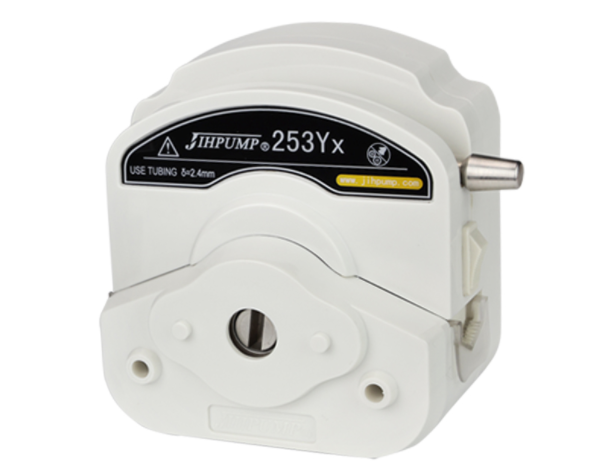
Gear pump heads push fluids through gear meshing and can be applied to high-pressure, low-flow systems such as precision metering systems, industrial equipment, or reaction assemblies in laboratories. Gear pump heads provide pressure stability and minimal pulsation flow, which is optimum for pressure-sensitive or high-precision applications.
Gear pump heads are not utilized to manage liquids containing particles or abrasives, and materials selection is typically in terms of corrosive-resistant materials or high-strength alloys to support different liquids.
6. Clamp Pump Head
Clamp pump heads transport liquids by clamping onto the tubing that is easily replaced, hence maintenance is extremely convenient. They are extensively used in the food processing, laboratory, and medical sectors, especially in processes that require ongoing tubing replacement or frequent handling of liquids.
Clamp pump heads are simple to use and service with low contamination risk. However, they have low pressure capacity and flow rate and hence are not suitable for high-pressure, high-flow industrial processes.
7. Multichannel Pump Head
Multichannel pump heads can push multiple channels of tubing in parallel to enable parallel liquid transfer. They have extensive applications in laboratory automation, drug production, chemical analysis, and high-throughput liquid handling.
Multichannel pump heads increase the efficiency of operations, save time and space, and are ideally suited for batch processing. Although they are complicated in design, they are ideally suited for applications requiring effective delivery of multi-liquid or precise mixing of different solutions.
Part 3. How to Determine the Head of a Peristaltic Pump?
Selecting the correct peristaltic pump head is crucial for maintaining stable, precise liquid delivery and extending the life of the pump. While choosing a pump head, there are several important considerations:
Flow Rate Requirements
First, determine the flow volume and rate of liquid to be pumped. Different types of pump heads support different flow capacities: roller pump heads for industrial high-flow applications and single-roller or tube pump heads for low-flow, precision-controlled conditions.
The use of a pump head that will support the necessary flow ensures efficient, stable liquid delivery and protects against overloading or tubing failure before time.
Tubing Material and Chemical Compatibility
Other pump heads may require special tubing materials, such as silicone, fluororubber, or polyurethane. In selecting tubing, consider the chemical nature, corrosiveness, and temperature of the fluid.
For acidic, alkaline, or hot liquids, apply corrosion-proof and heat-proof tubing to allow long-term stable operation and minimum maintenance frequency.
Application Scenario
The operating conditions generally dictate the precision and robustness required by the pump head:
- Medical or Laboratory Use: Low pulsation and high accuracy are needed to deliver the correct dispensing of reagents or medication.
- Food and Beverage Industry: Pump heads must be easily cleanable with quick tubing replacement ability to prevent cross-contamination.
- Industrial Applications: Wear resistance and continuous running ability is the priority, which is suitable for high-pressure and high-flow liquid transfer.
Durability and Maintenance Costs
Good pump heads are more costly to buy up front but last longer and require less maintenance. Pump heads with multiple rollers, for example, substantially reduce tubing wear, yielding longer life for the pumps.
Choosing a heavy-duty, low-maintenance pump head not only lowers long-term operating costs but also ensures system reliability and predictable performance.
Other Considerations
Pressure Requirements: High-pressure use demands high-pressure or gear-type pump heads.
Multi-Liquid Transfer: For simultaneous pumping of multiple liquids, a multichannel pump head is desirable.
Ease of Tubing Replacement: When repeated replacement of the tubing is required, for instance, in laboratory or food processing usage, a clamp-style pump head is more convenient.
With careful selection of flow rate, tubing material, application environment, and durability, users can select the best-performing peristaltic pump head for efficient, stable, and long-term reliable liquid transfer.
Part 4. Peristaltic Pump Head Maintenance Instructions
In order for peristaltic pump heads to be long-lasting and stably operate for an extended period, strict and regular maintenance is essential. The following are some of the most critical maintenance guidelines:
1. Regularly check the tubing for wear
Most used and simplest component of a peristaltic pump head is tubing. It cracks, ages, or loses its elasticity over time. Regular checks need to be done on the tubing, and worn-out or damaged tubing should be replaced in advance to prevent leakage or pump breakdown. In cases of heavy pressure or heavy wear application, apply wear-resistant and corrosion-resistant tubing and decrease inspection periods.
2. Proper Tubing and Roller Installation
When mounting rollers and tubing, always consult the manufacturer’s manual. Ensure the tubing is properly aligned and rollers are in contact evenly. Misaligned rollers and tubing can generate unstable flow, uneven wear, or internal pump head component damage. Check the installation carefully every time tubing is replaced or the pump head is opened.
3. Keep Pump Head Clean and Lubricated
During operation, liquid waste or trash can be trapped in the pump head, which will affect roller motion and pump life. Cleaning of the pump head periodically and proper lubrication of the roller bearings are recommended. Choose lubricants compatible with materials used in the pump head as well as the pumped liquids, to prevent contamination or corrosion.
4. Be Conscious of Chemical Compatibility
When working with corrosive or specialty fluids, ensure the tubing material is chemically compatible with the fluid. Incompatible tubing accelerates aging, causes leakage, or ruins the pump head. For corrosive fluids, employ specialized corrosion-resistant tubing and perform inspections more often.
5. Create a Maintenance Schedule
Based on the operating frequency of the pump head, liquids handled, and operational conditions, develop a scientific maintenance schedule. This should include periods of tubing replacement, cleaning processes, and periods of lubrication. Good maintenance planning not only extends the life of the pump head but also guarantees smooth operation, higher efficiency, and accurate liquid flow.
Final Thoughts
The choice of an ideal peristaltic pump head is critical in order to ensure accurate, stable delivery of fluids and maximize the life of your pump. Whether a tube pump head, roller pump head, or single-roller versus multi-roller construction, each is suited for particular applications where there are certain advantages for each.
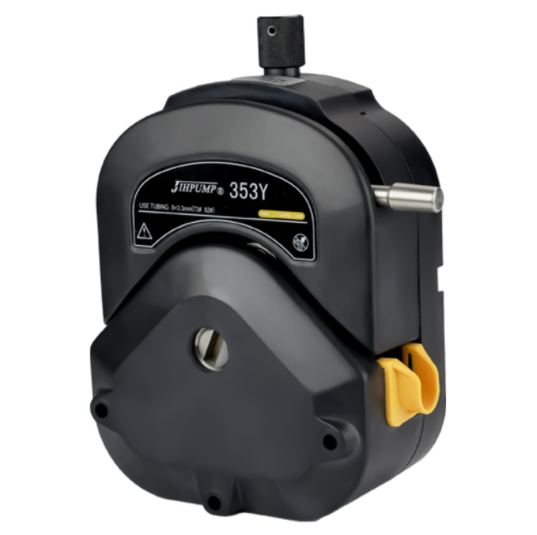
As a professional peristaltic pump factory, JIHPump provides premium peristaltic pumps and peristaltic pump heads for industrial, laboratory, and medical applications. Our solutions are renowned for their high accuracy, material durability, and compatibility with various tubing materials and flow structures, rendering the customer’s fluid transfer solutions efficient and trustworthy. If you require trustworthy peristaltic pumps or pump heads, JIHPump is your one-stop solution.