
How to Reduce Peristaltic Pump Pulsation During Operation? 4 Methods
In the field of fluid transfer, peristaltic pumps are widely used in industries such as chemical, pharmaceutical, food, and laboratory applications due to their contact-free conveying, corrosion resistance, and ease of maintenance. However, during operation, peristaltic pumps often generate a significant issue, pulsation. This article will explore the causes of pulsation in peristaltic pumps, their impact on systems, and common solutions.
What is Pulsation in a Peristaltic Pump?
A peristaltic pump pushes liquid through a tube by compressing a flexible hose with rollers or shoes. This mechanical squeezing inherently causes a discontinuous flow, manifested as periodic fluctuations in the pump’s outlet pressure and flow rate. This phenomenon is known as pump pulsation. The frequency of pulsation is related to the pump’s speed, the number of rollers, and the tube diameter, while the amplitude is influenced by factors such as fluid viscosity and pipeline resistance.
Causes of Peristaltic Pump Pulsation
A peristaltic pump transfers fluid by alternately compressing and releasing the pump tubing via rotating rollers. Negative pressure generated by the tubing’s rebound draws fluid into the pump head, where it accumulates between two rollers to form a “liquid pillow” or pumping chamber. At the moment the rollers release the tubing, backflow occurs due to the tubing’s rebound, resulting in momentary flow interruption.
Since the compression from rotating rollers is intermittent, the fluid is not discharged continuously but in pulses. This is the pulsation phenomenon.
How to Reduce Peristaltic Pump Pulsation?
Peristaltic pumps are generally used in applications insensitive to pulsation. How can we achieve smooth, low-pulsation flow when required? Below are common methods to reduce peristaltic pump pulsation:
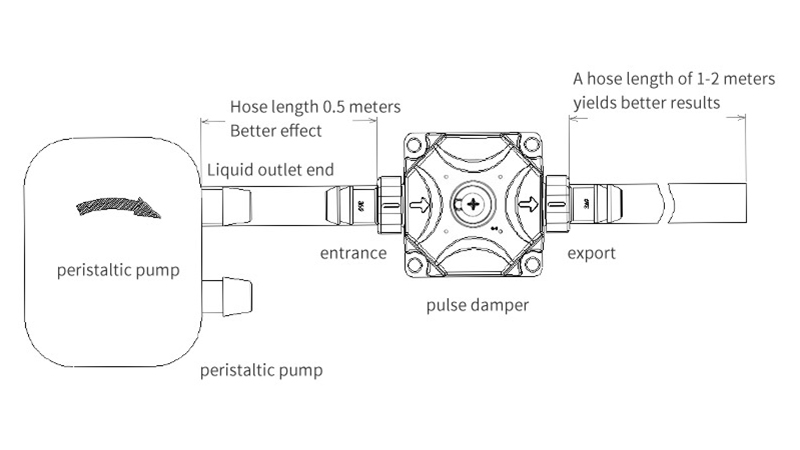
1. Install a pulse damper
This is the most common and effective method in peristaltic pump applications. It works by using an elastic diaphragm and air compression to absorb pulsation.
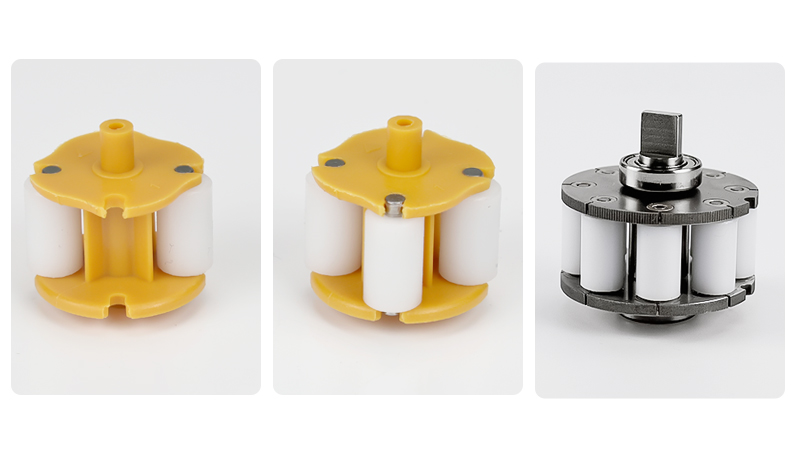
2. Increase the number of rollers
A greater number of rollers increases the pulsation frequency. The reduced roller spacing shortens the rebound amplitude of the tubing, thereby decreasing pulsation amplitude. Note that, with the same pump head, more rollers within a unit time reduce tubing rebound and will lower the pump’s flow rate.
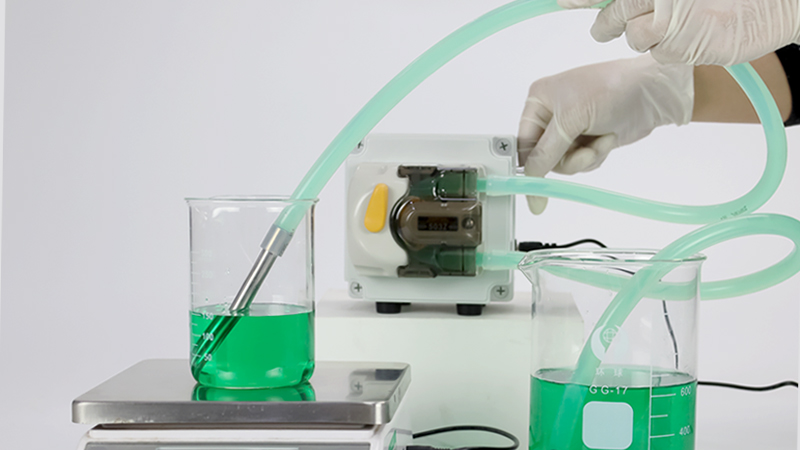
3. Increase the motor speed of the peristaltic pump
Increasing the motor speed raises the pulsation frequency and reduces the interval between pulsation amplitudes. For the same pump head, a higher motor speed leads to a linear increase in flow rate per unit time. If you want to keep the original flow rate (constant flow with higher speed), you can use tubing with a smaller inner diameter after increasing the speed. This meets the flow requirement while reducing pulsation.
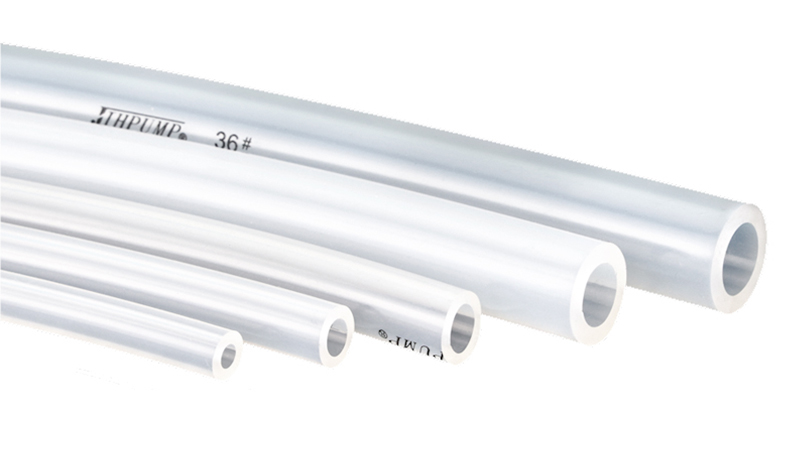
4. Properly adjust the outlet tubing size
- Reduce the diameter of the pump outlet tubing: at a constant flow rate, a smaller tubing diameter increases fluid velocity and back suction resistance, which reduces flow fluctuation.
- Or enlarge the outlet: a larger outlet disperses fluid impact and further smooths the discharge.
A single method may not achieve ideal pulsation reduction in some applications. In such cases, the above methods can be combined.For example, for high-flow applications (2 L/min and above), you can use a smaller inner diameter tubing at high speed, plus a pulse damper at the outlet. This combination will greatly reduce pulsation.
Final Thoughts
Peristaltic pumps are favored for their simple structure, leak-free operation, and ease of maintenance, yet pulsation remains a common challenge during their use. Understanding the causes of pulsation, assessing its impact on the system, and implementing appropriate mitigation measures can significantly enhance pump performance and longevity. For processes that require high-precision fluid delivery, choosing multi-roller pumps, installing pulsation dampeners, or optimizing pipeline design are key strategies to reduce pulsation and ensure system stability.
By gaining a deep understanding of peristaltic pump pulsation, engineers and users can anticipate potential risks during both the design and operation stages, achieving efficient and stable fluid transfer.