
The Peristaltic Pump Calibration Handbook: Solving Dosing Deviations
The peristaltic pump filling machine, as an important equipment in modern manufacturing, its performance directly affects the quality of products and production efficiency. Among them, filling accuracy is a key indicator for evaluating performance and is worthy of in-depth discussion.
High-precision filling machines can effectively reduce the production of defective products, save raw materials, and improve product quality. To enhance filling accuracy, it is necessary to optimize from multiple aspects such as filling system errors and random errors. This manual aims to bridge the gap between mechanical theory and practical operation, providing you with a systematic approach to help you master calibration techniques and ensure that every drop of liquid is precisely measured.
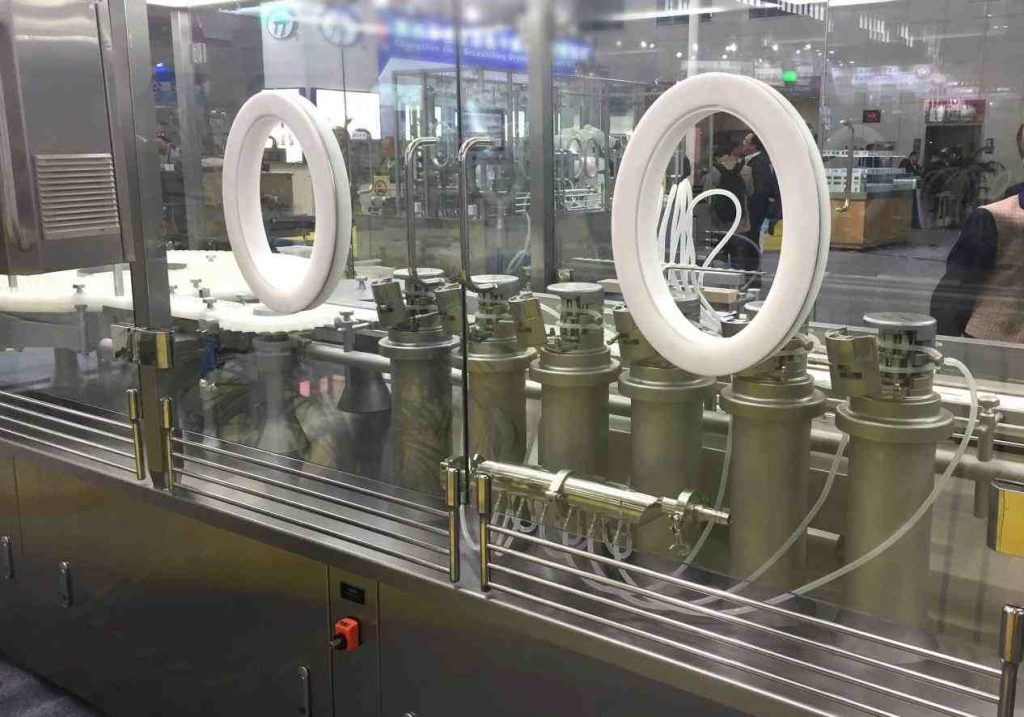
Why Is My Filling Volume Drifting?
To address the issue of flow deviation, one must first understand its physical cause. In a peristaltic pump system, the pump does not “calculate” the liquid flow volume; instead, it calculates the motor speed. Any factor that alters the volume of liquid discharged each time the pump rotates will cause the flow to drift.
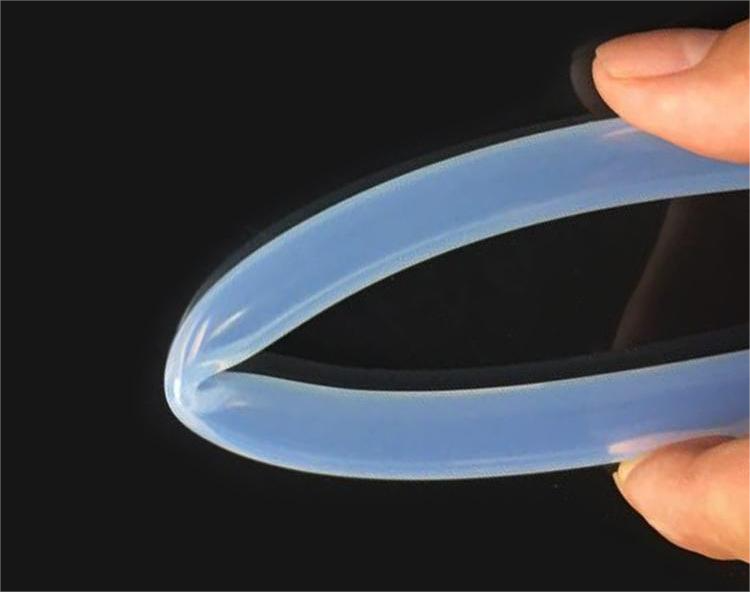
- Pipeline fatigue: This is the primary cause of flow deviation. The working principle of the peristaltic pump pipeline is “elastic recovery”, which means the pipeline’s ability to return to its original shape after being compressed. After thousands of cycles, the material loses this “memory”. The inner diameter will slightly change, the pipe wall becomes thinner, and as a result, the flow gradually decreases.
- Siphon effect and head: If the storage tank is located 2 meters above the pump at the beginning of the shift, and 10 centimeters above the pump at the end of the shift, then the change in inlet pressure (head) will cause the flow rate to decrease.
- Viscosity and temperature: The “viscosity” of a liquid changes with temperature. A low working environment temperature will cause the product’s viscosity to increase, resulting in greater friction and potentially slowing down the filling speed compared to a higher temperature environment.
Related Articles: What Are the Key Factors Influencing Peristaltic Pump Filling Precision?
Standard Operating Procedure (SOP): Five-Step Calibration Protocol
To achieve accuracy, a rigorous and repeatable process is required. Please follow the following five-step procedure to reset the machine’s accuracy:
Step 1: The “Warm-Up” Run
Do not use brand-new piping to calibrate the chiller. Run the pump for 10 to 15 minutes. This will allow the piping to reach a mechanical equilibrium state and be “stably” aligned with the pump head. At the same time, it will also ensure that the motor reaches a stable operating temperature.
Step 2: Hydraulic Priming
The influence of air on accuracy is significant. Ensure that there are no micro-bubbles in the entire fluid path from the feed needle to the distribution nozzle. Even tiny bubbles can act as a “buffer”, and their compression and expansion can cause unstable dosing.
Step 3: Gravimetric Multi-Point Sampling

Do not rely solely on a single test. Fill at least 10 containers with the target speed. Weigh each sample using a high-precision analytical balance. To convert the weight (m) to volume (V), use the density (ρ) of the specific liquid:
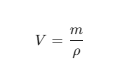
Note: Never assume 1g = 1ml unless you are filling pure water at 4 ℃.
Step 4: Calculate the Deviation
Calculate the average volume of 10 samples. The deviation calculation is as follows:
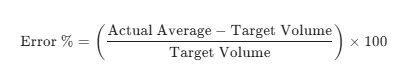
Step 5: PLC Coefficient Adjustment
Input the actual average value into the PLC calibration screen of the machine. The controller will calculate the new K coefficient (the number of pulses per milliliter). Run the “Verify Filling” process three more times to confirm that the adjustment is effective.
Pro Tips for Achieving Ultra-High Precision Dosing
After mastering the basic knowledge, by applying these engineering “techniques”, the accuracy can be improved from ±1% to ±0.5% or even higher.
- “Small-bore” strategy: If you are filling 5 milliliters of liquid, do not use a hose with an inner diameter of 6.4 millimeters. Use the smallest inner diameter hose that meets your production speed requirements. A smaller hose can reduce the “pulsation” volume, which means that the proportion of the “last drop” of liquid in the total filling volume is smaller.
- Optimize back-suction (anti-dripping): Most modern machines have a “back-suction” or “reverse” angle. This causes the liquid to be sucked back a few millimeters at the end of the filling cycle to prevent dripping. If the angle is too large, it may draw in air into the nozzle, thereby affecting the next filling. Set it to the minimum value required to prevent dripping.
- Sink the feed pipe to the bottom: Make sure the feed pipe is securely fixed at the bottom of the liquid storage tank. If it “floats” or moves, it will cause turbulence and draw in air, resulting in unstable dosing.
Preventive Maintenance: Ensuring Long-term Accuracy Retention
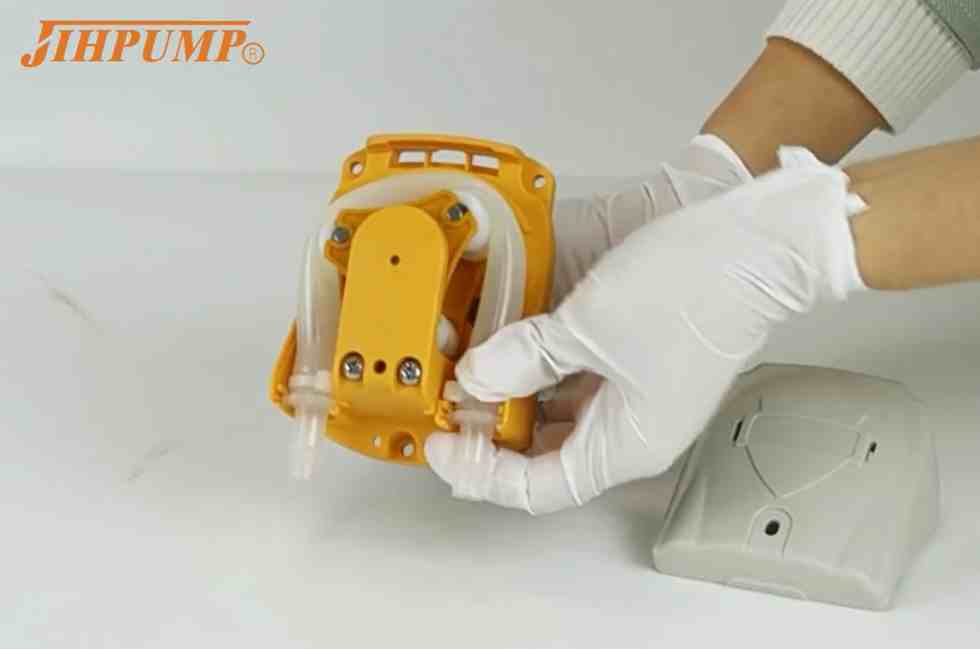
Precision is not a one-time event; it is a state of maintenance.
- Tubing Life-Cycle Log: Don’t wait for a tube to burst to change it. Track the “pump hours.” Most pharmaceutical-grade TPE tubing has a predictable “linear precision life.” Replace it at 80% of its rated life to stay ahead of the drift curve.
- Consistent Occlusion: Ensure the pump head rollers are clean and free of debris. A tiny crystallized drop of product on a roller creates a “bump” that changes the squeeze (occlusion) on the tube, causing a pulse in the flow.
- Environmental Control: If possible, keep your filling room temperature-controlled. Consistent ambient temperature equals consistent liquid viscosity, which equals consistent flow.
Precision is More Than Just a Setting
People often mistakenly believe that the low accuracy of the peristaltic pump filling machine is due to “software failure” or “poor motor quality”. In fact, the accuracy depends on the entire system: the elasticity of the hose, the physical properties of the liquid, and the diligence of the operator.
Viewing calibration as a routine process rather than a cumbersome troubleshooting task can transform the production line from a headache-inducing problem to an efficient model.