
How to Choose Transfer Pumps for Water?
Industrial, agricultural, household, and even laboratory processes cannot function without the transfer of water. Water transfer pump plays an important role in making this happen. Whether siphoning pure water from a reservoir or precisely dispensing chemically-altered liquids to a pinpoint, the proper water transfer pump delivers when it comes to efficiency and safety.
In this post, we will guide you through an entire understanding of transfer pumps for water, from definition to types and application scenarios, so that you can make the proper equipment choice for your applications. Let’s begin.
Part 1. What is a Water Transfer Pump?
A water transfer pump, so designated, is a specialized type of pump that is used to move water from one location to another. Either electric or mechanical energy powers the pump.
The pump draws water in through the chamber and then forces it out an outlet, enabling quick and consistent liquid transfer. A water transfer pump is capable of doing a wide variety of work and is used in all types of environments such as:
- Irrigation systems for farming – providing water from wells, rivers, or reservoirs to crops for irrigation.
- Industrial cooling – circulating water in cooling towers or equipment to enable efficient operating temperatures.
- Dosing or fluid transfer in laboratories – precisely providing small volumes of water or chemical solutions in laboratory applications.
- Drainage from residential homes or building sites – removing rainwater, floodwaters, or wastewater from basements, pools, or building sites.

Part 2. Most Frequently Used Transfer Pumps for Water
On actual uses, there are some types of water transfer pumps that are easily available in the market. Each has a principle of operation, advantages, and suggested applications. The most frequently used types are as follows:
1. Centrifugal Pump
Centrifugal pump is among the most widely used water transfer pump types, especially employed to handle vast amounts of low-viscosity liquids. The design of the pump is quite straightforward and basically involves an impeller, pump case, motor, and bearings, which are simple to manufacture and maintain.
By rotating the impeller at high speeds, centrifugal force is generated to draw liquid to the pump center and discharge it outward, thereby ensuring continuous and effective fluid transfer.
Due to its high efficiency, low price, and wide range of applications, centrifugal pumps have emerged as the first choice in agriculture irrigation, industrial cooling, and municipal water supply.
Common Applications
- Agricultural irrigation systems
- Industrial cooling circulation
- Municipal water supply and fire protection systems
Benefits
- Simple structure, easy maintenance
- High efficiency, suitable for high flow rates
- Compared to relatively low cost
Limitations
- Inability to handle high-viscosity or particle-contaminated liquids
- Sensitive to fluid contamination
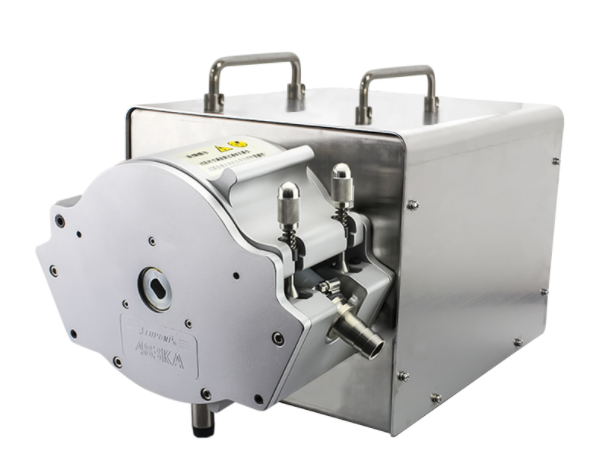
2. Peristaltic Water Pump
Peristaltic water pump pushes liquid by mechanically compressing a flexible tube with rolling cylinders, the liquid only coming into contact with the inner tube wall, completely isolated from the pump mechanism to avoid contamination and leakage.
It is applied in pumping corrosive, high-viscosity, or high-cleanup fluids, usually utilized in the pharmaceuticals, food processing, and chemical dosing operations where accuracy and cleanliness are of utmost importance. The mini size and low maintenance render it an ideal device for precise fluid transfer.
Common Applications
- Pharmaceutical and laboratory dosing
- Production of food and beverages
- Chemical precision dosing
Benefits
- Fluid is isolated from mechanical parts, preventing contamination
- Suitable for corrosive and viscous fluids
- Easy tube replacement and maintenance
Limitations
- Low flow rate, unsuitable for large-scale transfer
- Tubing is worn out and requires frequent replacement
3. Submersible Pump
The submersible pump is uniquely designed to be fully immersed in liquid, with the pump and motor united and sealed to prevent water entry. It uses an impeller to suction the liquid directly from the underwater and push it to the surface or higher levels.
This type of pump is used for deep well extraction, drainage, and sewage treatment. Flexible installation and quietness in operation make submersible pumps typical uses where extended underwater use or limited space is required.
Common Applications
- Groundwater pumping
- Construction dewatering
- Sewage treatment systems
Benefits
- Easy installation with no suction pipes
- Low noise during operation
- Ability to undergo long-duration submerged mode of operation
Limitations
- Increased complexity of maintenance
- High demands for electrical sealing
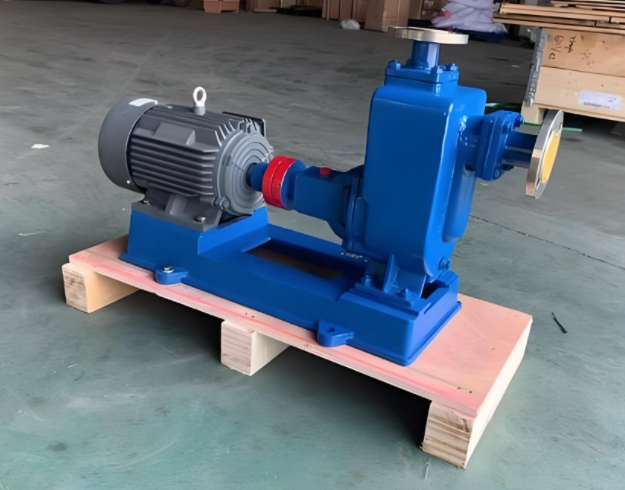
4. Self-Priming Pump
The self-priming pump has an inbuilt water reservoir tank and self-priming structure, which allows it to automatically push out air from the suction hose and start pumping without having to be manually primed.
The self-priming pump is best suited for repeat starts and mobile applications, which are normally experienced in farm watering, gardening sprinkling, and emergency drain. Self-priming pumps are easy to manipulate and quick to start, hence suitable for mobile water supply and emergency drain applications.
Common Applications
- Mobile garden irrigation
- Agricultural sprinkler systems
- Emergency drainage and portable pumping units
Benefits
- No hand priming necessary, simple operation
- Rapid recovery after repeated starts and stops
- Works with portable and outdoor applications
Limitations
- Lower efficiency compared to centrifugal pumps
- Limited suction lift, use not suggested for deep wells or great distances
Part 3. How to Choose the Right Water Transfer Pump?
Selection of the suitable water transfer pump is very much based on your application needs and operating conditions. To select an appropriate one, consider the following crucial factors:
1. Type of Fluid Being Transferred
Clean or Low-Corrosive Water: Centrifugal pumps are suited to most general water transfer jobs since they are economical and efficient. They can handle clean water and slightly corrosive materials and are therefore well-suited for a wide range of standard applications.
Corrosive Liquids or High Hygiene Levels: Chemical solutions, pharmaceutical liquids, or food-grade water are best handled by peristaltic pumps. As the fluid comes into contact only with the pump tubing and remains unrestricted from exposure to mechanical parts, peristaltic pumps do not have any contamination and leakage.
2. Flow Rate and Head Requirements
High Head and High Flow Rates: Centrifugal and submersible pumps carry out high-volume continuous operation with ease and are appropriate for long-distance or raised transfer needs.
Low Flow with Controlled Precision: Where high precision dosing, viscous liquids, or special liquid management is required, peristaltic pumps deliver controlled and constant flow accuracy.
3. Installation Environment and Conditions
Deep Liquids or Submerged Operation: Submersible pumps are made in a way to be operated fully submerged, hence ideal for deep wells, underground water reservoirs, or any submerged environment.
Compact or Portable Equipment: Since peristaltic pumps are small and easy to operate, they are most relevant for laboratory applications or portable small units where flexibility is essential.
4. Hygiene and Safety Standards
For applications that have rigorous hygiene standards, e.g., medical, laboratory, or food processing, peristaltic pumps are the choice because they provide contamination-free, no-contact pumping action and are very easy to clean.
Part 4. What’s the Best Ideal Solution for Precise Liquid Transfer?
Among the numerous transfer pump varieties, if you need accurate and safe handling of liquids, as a professional peristaltic pump manufacturer, we fully understand the extremely high need for accuracy and safety in fluid transfer in the market. Peristaltic pumps possess unparalleled advantages in certain niche applications over all other pumps:
Why Use a Peristaltic Pump for the Transfer of “Specialty Liquids”?
- Leak-Free Design: The fluid passes through the tubing alone without touching the pump body, preventing contamination and cross-reactions.
- High Hygiene Standards: Best suited for food & beverage, pharmaceutical, and laboratory uses.
- Excellent Chemical Compatibility: Ideal for handling acids, alkalis, aqueous solutions, and solutions with particles or complex media.
- Easy Maintenance: Only the tubing needs replacement, maintaining operations easy and reducing maintenance costs.
- Precise and Flexible: Wide flow adjustment capability, best suited for uses where high accuracy in the delivery of fluids is required.
If you want a safe and precise water transfer pump, a peristaltic pump is an extremely cost-effective option.

Final Thoughts
With increased diversification of fluid handling applications, a water transfer pump is no longer a one-trick pony, it’s become an essential piece of equipment in industries for effective fluid management. Especially with high-precision delivery or specialty media uses, peristaltic pumps are gaining popularity because of their advantages in contamination-free, leak-free, highly controlled operation.
Should you require a reliable, multi-purpose and hygienic water transfer pump, don’t hesitate to contact JIHPump. We are a skilled professional peristaltic pump factory with deep experience and prepared to provide you with professional product recommendations and customized fluid transfer solutions.