
Types of Food Processing Pumps: Which Type to Choose?
In modern food industries, liquid handling is far more than just “moving stuff from point A to point B.” Efficient, safe, and precise fluid transfer directly affects product quality, taste, and production efficiency. Food processing pumps are the unsung heroes behind the scenes, quietly ensuring the smooth production of dairy products, juices, sauces, beverages, and syrups.
In this post, we will take you on a deep dive into the world of these pumps, covering types, applications, special requirements, and selection tips, while highlighting how peristaltic pumps have become star devices in the food industry, keeping production lines running smoother, safer, and more reliably.
What Are Food Processing Pumps?
These food processing pumps are specific machinery that can handle different fluids and semi-fluids, moving them from one processing stage to another in the food business.
Whether it is handling milk in a dairy food processing plant or handling fruit purees in a juice food processing plant, these food processing pumps have been essential in ensuring smooth food production. In a sense, these food processing pumps form the backbone of food processing these days.
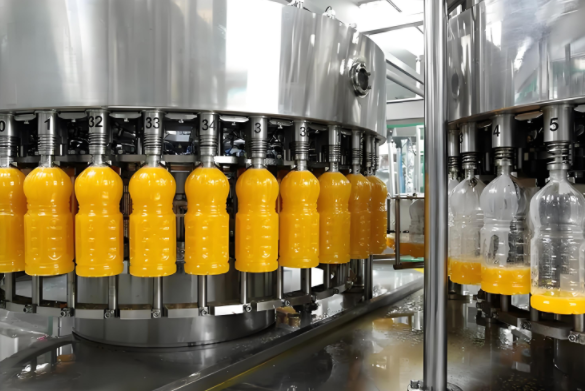
5 Common Types of Pumps Used in Food Processing
In the present processing of food products, different kinds of pumps take an essential position in the transport of liquids. From low-viscosity liquids to high-viscosity pastes, as well as sensitive fruit pieces to precise additive quantities, each of the pumps possesses its own area of specialization. The most common types of food processing pumps include the following:
1. Centrifugal Pump
The centrifugal pump is a food processing pump that uses a rotating impeller to generate centrifugal force, moving liquids efficiently. Often regarded as the “power engine” of production lines, it is ideal for continuous, high-volume transfer of low-viscosity liquids. From transporting milk in dairy production to moving clarified juice in beverage plants, centrifugal pumps ensure smooth, stable operations.
Features and Principle
The core of a centrifugal pump lies in its impeller. Liquid enters the center of the impeller and is flung outward toward the pump outlet, creating continuous flow. Key features include:
- High Flow Rate: Suitable for large-scale production, meeting daily factory throughput needs.
- Simple Structure: Easy to clean and maintain, minimizing downtime.
- Continuous Operation: Capable of long, uninterrupted runs, keeping production lines steady.
Applications
- Dairy plants: Transporting milk from storage tanks to pasteurization units.
- Juice production: Moving clarified juice to mixing or filling stages.
- Other low-viscosity liquids: Mineral water, whey, flavored water, etc.
Practical Limitations
Cannot provide precise dosing, unsuitable for small amounts of enzymes or flavorings. Limited ability to handle fruit pulp or particulate liquids; may crush solid components. And high shear force may damage sensitive liquids.
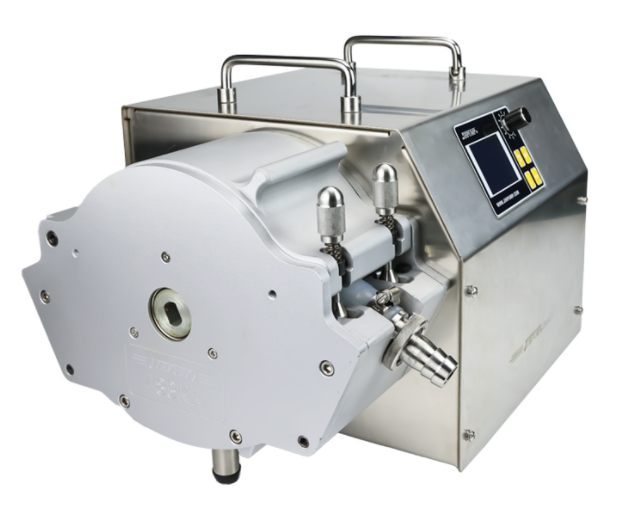
2. Peristaltic Pump
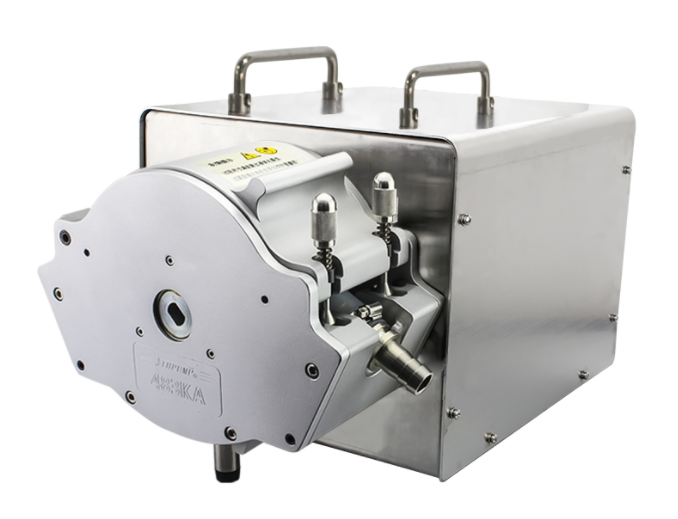
Food grade peristaltic pumps move liquids by compressing flexible tubing, ensuring that liquid only contacts the pump tube. Combining hygiene, safety, and precise dosing, they are the “star equipment” for mid-to-low flow, high-sanitation food processing applications.
Features and Principle
- Liquid Only Contacts Tube: Reduces risk of contamination.
- Precise Dosing: Stable delivery of micro-ingredients like enzymes, flavorings, or vitamins.
- Low Shear: Protects fruit pieces, gels, and fragile liquids.
- High Adaptability: Can handle high-viscosity and particle-containing liquids.
Applications
- Fruit juice, dairy, and sauce production.
- Precise dosing of enzymes, vitamins, and flavor additives.
- High-hygiene processes requiring gentle liquid handling.
Practical Limitations
- Best for medium- to low-flow rates; unsuitable for high-volume operations.
- Tubing is a wear component and requires regular replacement, increasing maintenance costs.
3. Gear Pump
Gear pumps transport liquid by meshing gears, making them ideal for stable, continuous delivery of medium- to high-viscosity liquids. In the food industry, they are widely used for chocolate, syrup, and thick sauces.
Features and Principle
Gear pumps work by trapping liquid between gear teeth and moving it from the pump inlet to the outlet, providing smooth, low-pulsation flow:
- Stable Flow: Ensures uniform transport, preventing material stagnation or separation.
- Suitable for High-Viscosity Liquids: Even thick chocolate paste can be smoothly delivered.
- Ease of Operation: Simple installation and adjustment for routine plant use.
Applications
- Chocolate Production: Moving molten chocolate from cooking vats to molding or filling lines.
- Syrup or Honey Processing: Continuous, uniform transfer to mixing or packaging units.
- Sauce Production: Transporting thick condiments or flavorings.
Practical Limitations
- Sensitive to solids, which may cause gear wear or clogging.
- Sealing and cleaning require careful management to avoid food contamination.
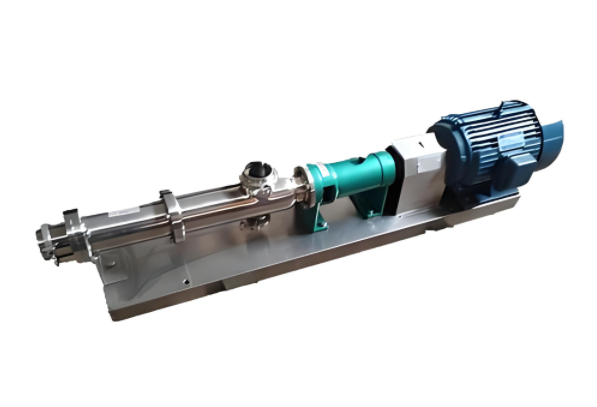
4. Screw Pump
Screw pumps use a rotating screw to gently move liquid along the pump chamber, allowing smooth transfer of high-viscosity or particle-laden liquids. They excel at preserving the integrity of fruit pulp, sauces, and gels, making them the preferred choice for high-viscosity food applications.
Features and Principle
- Liquid is transported along the helical cavity as the screw rotates:
- Low Shear Design: Protects fragile components like fruit pieces and gel structures.
- High Adaptability: Handles high-viscosity liquids and liquids with solids.
- Smooth Flow: Minimal pulsation ensures continuous material movement.
Applications
- Jam and fruit puree production: Transferring from mixing tanks to filling machines.
- Sauce production: Moving condiments or thick soups.
- High-viscosity foods: Mayonnaise, thick sauces, or pulpy liquids.
Practical Limitations
- Complex structure, higher maintenance costs.
- Requires careful installation and operation; not suitable for temporary or frequently moved setups.
5. Diaphragm Pump
Diaphragm pumps operate through the reciprocating motion of a flexible diaphragm, allowing liquid to be drawn in and discharged without contacting mechanical components. They are ideal for corrosive liquids or precise dosing applications.
Features and Principle
The diaphragm’s back-and-forth movement creates suction and discharge:
- Leak-Free Operation: Liquid is isolated from moving parts, ensuring high sanitary safety.
- Dry Running Capability: Can operate even when the chamber is empty.
- Precise Dosing: Ideal for small amounts of enzymes or flavorings.
Applications
- Acidic additives or enzyme solutions.
- Micro-dosing of flavors, vitamins, or active ingredients.
- High-hygiene production lines requiring accurate liquid handling.
Practical Limitations
- Limited flow rate, unsuitable for high-volume continuous transfer.
- Can generate significant noise; may require soundproofing or remote placement.
Key Requirements for Food Processing Pumps
When selecting a suitable pump for food processing, it is important to consider not only flow rate and pressure but also the following special requirements.
1. Hygienic Design
In the food processing industry, the first factor to consider when selecting a pump is its hygienic design. The material used should be food-grade according to either the FDA or the EU.
The pump design must ensure that it is easy to disassemble so that cleaning is achieved, thus supporting CIP and SIP. This not only reduces costs through fewer labor hours required in cleaning, but it is more effective in preventing cross-contamination.
2. Low Shear and Gentle Handling
In various food products, the materials used may include small pieces of fruits, gels, or sensitive ingredients. Low-shear pumps operate with the aim of pumping liquids while being gentle.
These pumps handle the liquids in such a way that the components of the materials are not damaged. This ensures the quality of the products’ texture by using pumps like peristaltic pumps and screw pumps.
3. Accurate Dosing
Today, food manufacturing may involve adding correct proportions of additives, flavorings, enzymes, and many other ingredients to obtain the right mix. The accuracy of the pump dosage depends directly on the product consistency and taste.
Therefore, high-precision pumps can rely on small supplies of liquid, ensuring standardized and repeatable batches in the manufacture of quality food products.
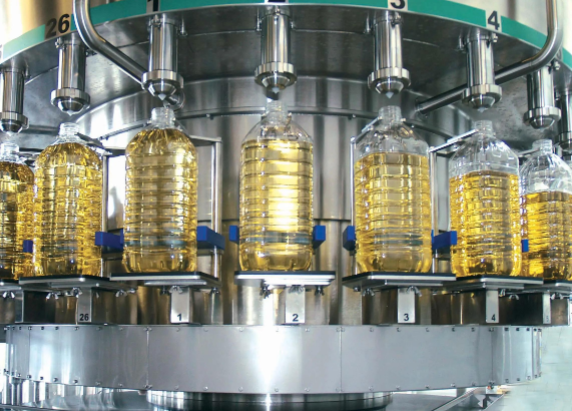
4. Resistance to Corrosion and Wear
Food liquids can be acidic, contain sugar or salt, or have particulate matter in them that would tax the robustness of a pump. With materials that resist corrosion and wear in such liquids, pumps can operate over long periods on liquids with high acidity, sugar content, or particulate matter, thus increasing service life and reducing maintenance. Food-grade stainless steel pump bodies and heavy-duty tubing are common remedies in such situations.
5. Ease of Maintenance and Operational Stability
Food manufacturing requires production lines that must work highly efficiently around the clock. Pumps that can be easily taken apart for cleaning significantly reduce any setbacks.
Designs focused on simplicity and ease of maintenance enable fast inspection, part replacement, or cleaning of piping systems to ensure the continuous flow of production. Pump reliability and stability with no unexpected shutdowns or fluctuating flow patterns create constant performance under safe conditions on the line.
Advantages of Peristaltic Pumps in Food Processing
In the process of food processing and production, peristaltic pumps are increasingly used because of their unique principle of operation. Instead of the traditional pumps used for the transportation of liquids, peristaltic pumps are appropriate for the transportation of liquids due to the compression of the tubing used.
Hygienic and Safe
The liquid comes into contact only with the tubing around the pump, avoiding the possibility of using seals, thus making it a safe way of conveying liquids, especially for processes with high sanitary standards, as in the case of dairy products, juice, or sauce.
Accurate Dosing
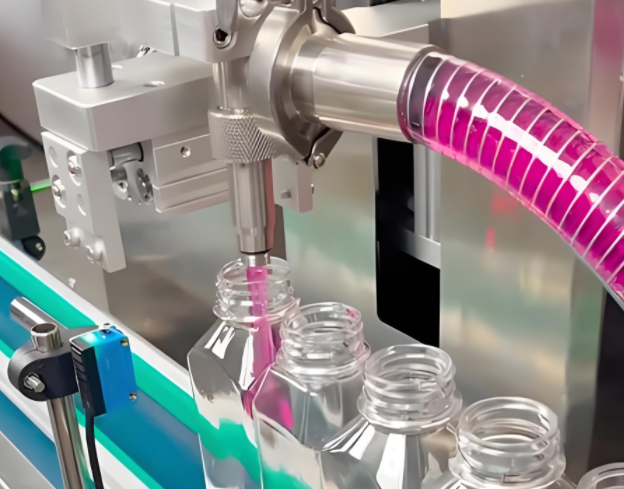
Peristaltic pumps can accurately deliver micro-ingredients, flavors, enzymes, or vitamin solutions. Even in small-batch, high-value production, they maintain formula consistency and ingredient stability.
Gentle Handling
The reduced shear also maintains safe conditions for sensitive products like fruit pieces, gel, etc. For example, during juice production, peristaltic pumps can transport the pieces of fruits without damaging their pulp material. Similarly, in sauce or fruit purees, it maintains the material structure and prevents separation or breakage of material.
Versatility for Various Fluids
These pumps are able to transport various liquids, both thick liquids as well as the ones with particles or which are prone to breaking. Therefore, the peristaltic pumps are very effective for use with dairy products, juice drinks, sauce drinks, as well as functional drinks.
Ease of Maintenance
This simple pump design and easy replacement of tubing help in reducing the maintenance costs. During continuous processes of production, or even in systems where cleaning is required frequently, it is possible to remove these tubes easily.
Practical Application Examples
Juice processing: The transportation of fruit particles in an intact state.
Dairy production: Proper addition of enzymes or vitamin solutions without affecting taste or nutritional content.
Processing of sauce or fruit purees: The smooth transfer of such high-viscosity liquids without breaking or separation.
Such factors as high standards of hygiene, precision in dosage, and gentle pumping are qualities that make peristaltic pumps suitable for contemporary food processing, particularly of high-end products.
How to Choose the Right Food Processing Pump
The choice of pumps is not only vital to the smooth processing of food products, but their selection is also likely to affect the quality of food. When selecting the best pump, certain vital factors need to be considered when selecting the pump. The prime factors to consider during pump selection include:
Flow Requirements
Determine the pump’s rated flow based on the production line speed and process requirements. High-speed, continuous production lines require high-flow pumps, while intermittent dosing or small-batch production may require medium- to low-flow pumps with precise control. Correct flow selection ensures smooth production, avoids liquid stagnation, and prevents splashing or overflow.
Liquid Properties
Different liquids require different pumps:
Viscosity: High-viscosity liquids, like sauces or fruit purees, require low-shear pumps that are powerful in their conveying ability, such as screw pumps or gear pumps.
Particle Content: Liquids with fruit pieces or nuts must be moved with gentle pumps, such as peristaltic or screw pumps, since the integrity of the material should not be compromised.
Corrosiveness: The acidity or the alkaline nature of liquids calls for corrosion-resistant materials of pump construction, such as food-grade stainless steel or acid-resistant tubing.
Hygiene Requirements
Application considerations include whether or not the pump is to meet food-grade standards and support CIP or SIP cleaning. High-hygiene processes, such as in dairy or juice production, require pumps that have a structure which is easy to dismantle and clean. This facility minimizes possible conditions of cross-contamination.
Operating Mode: Selection of pump, based on specific process needs:
Continuous Transfer: Suitable for large volume, continuous production lines.
Intermittent Dosing: this is useful for adding enzymes, flavorings, and tiny ingredients when the addition of a precise amount is important.
Maintenance Requirements
Pump maintainability requires careful evaluation. The replacement period, as well as costs like tubing or any of the components of the pump, cleaning, as well as disassembly, also play a part.
A simple-to-maintain pump ensures greater production efficiencies. In many processes, such as those that require an accurate metering action with a high level of handling care, peristaltic pumps frequently emerge as the natural choice. Take the case of fruit juice production.
The peristaltic pump can shift fruit cubes with the pulp unbroken. Take the case of dairy or functional beverage manufacturing. The peristaltic pump can precisely add flavor or vitamins.
Industry Trends in Food Processing Pumps
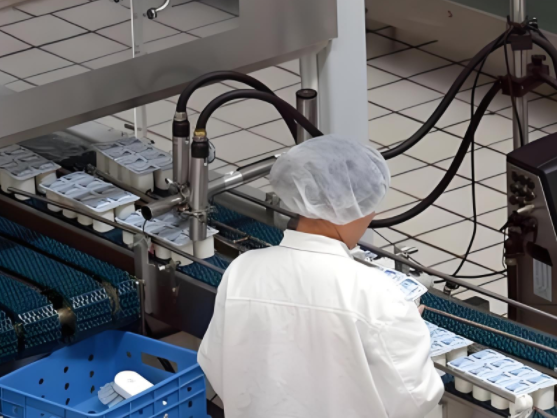
As the food industry raises its standards for hygiene, safety, and automation, food processing pumps are evolving toward greater automation, intelligence, and modularity. Modern pumps are increasingly integrated with production lines, dosing systems, and control systems, enabling precise control, micro-dosing, and real-time monitoring to ensure product quality and formula consistency.
At the same time, modular designs and easy-to-maintain structures reduce cleaning time and downtime costs, while sustainable materials and environmentally friendly designs meet the demands of green production and sustainability. These trends have also driven the wider adoption of peristaltic pumps in food processing, making them an ideal choice for high-hygiene, precise, and gentle liquid handling.
Wrap Up
Food processing pumps are key equipment for ensuring safe, efficient, and precise food production. For applications requiring high hygiene, safety, low shear, and accurate dosing, peristaltic pumps are undoubtedly an ideal solution. Choosing an experienced peristaltic pump manufacturer can ensure long-term, stable operation in food processing, providing reliable support for the production line.