How Deep Can A Peristaltic Pump Pull Water?
In the industrial liquid transfer industry, peristaltic pumps are utilized in a wide range of applications, such as water treatment, chemical processing, biopharmaceuticals, and food laboratories due to the qualities of contamination-free pumping, low maintenance, and high self-priming.
But in practical application, one basic question often arises: how deep can a peristaltic pump pull water?
Today, we will provide you with a clear description of peristaltic pump suction capacity, their main factors of influence, and optimal methods for improving their suction ability, so that you can choose a proper pump for your applications.
Part 1. Why is Pump Suction Lift Important?
In most real-world applications, a pump must lift liquid from lower than the pump itself, for example, from ground-level storage tanks, barrel bottoms, or deep pits. In such cases, the pump suction lift (the maximum vertical height it can pull liquid from below) is a critical performance characteristic.
When the suction ability is poor, a host of operating maladies are possible:
- Dry running: Pump operation without liquid causes tubing wear and reduces lifespan.
- Air lock: Air in the tubing prevents free flow of liquid, especially during startup.
- Flow interruption: Inconsistent or unstable flow, affecting process accuracy and efficiency.
For use in continuous and assured fluid transfer applications, especially in precision or automated applications, the maximum suction lift of a peristaltic pump is an important fact to know.
It ensures that the selected pump will handle the elevation difference efficiently and remain stable, efficient to operate in the long run. Correct design of the suction lift also minimizes maintenance and prevents costly downtime for flow issues.
Part 2. How Does a Peristaltic Pump Work?
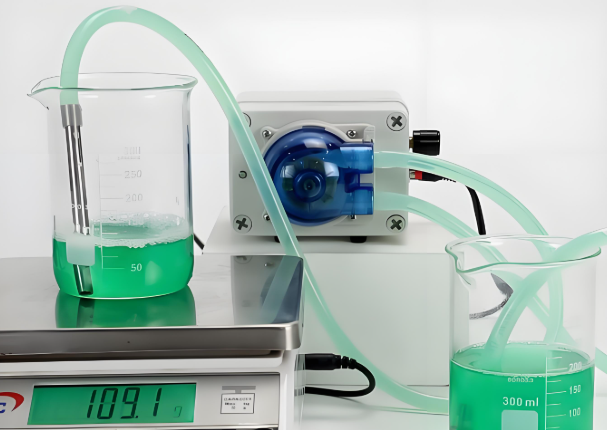
A peristaltic pump works by using rotating rollers to pressurize a flexible tube, advancing liquid in a pulsed flow. As the rollers move forward, they push and release the tubing, creating a vacuum that suckers more fluid. Since only the inner tube touches the liquid, it stays contamination-free, ideal for sanitary use.
Key most important features of peristaltic pumps are:
- Good self-priming and dry-run capability
- Easy maintenance and tube replacement
- Special care of corrosive or shear-sensitive fluids
They are therefore especially well-recommended for clean, precise, and low-maintenance fluid transfer operations.
Part 3. How Deep Can a Peristaltic Pump Really Push?
Now, the key question, and the core focus of this post, is: how deep can a peristaltic pump actually lift water?
As found from experiments and real-world industry experience:
The standard vertical suction lift of standard peristaltic pumps is normally 5 to 9 meters (approximately 16 to 30 feet). In some cases, with optimized design and tubing, the overall suction lift can be up to 8 to 9 meters.
The major limitation on this vacuum depth is atmospheric pressure. Under normal atmospheric pressure at sea level, the highest theoretical vacuum lift of any pump is about 10.3 meters (34 feet). This is because suction relies on atmospheric pressure pushing fluid into the pump upon the creation of a vacuum.
However, under real applications, peristaltic pumps also have other limitations such as:
- Resistance of tube flexibility and elasticity, which reduce effective suction capacity
- Pump head and tube friction losses and minor leaks
- Characteristics of the fluid and temperature, affecting flow and vapor pressure
These practical factors lead to peristaltic pumps actually only achieving a small proportion of the theoretical maximum suction lift. An understanding of these factors is helpful in making proper pump selection and system design to permit safe and effective operation.
Part 4. Significant Factors Affecting Peristaltic Pump Suction Lift
Several considerations affect how far down a peristaltic pump can successfully pull liquid:
Tube Material and Inner Diameter
The tubing’s inner diameter has a direct influence on flow resistance. Increasing the diameter lowers resistance, enabling stronger suction and more flow. Yet, if the diameter is excessively large, it can impede dosing accuracy and pump performance.
Pump Head Speed and Motor Torque
A motor with higher torque can be able to have more suction power, especially when pumping viscous or heavy liquids. Speed of pump head rotation being raised will increase flow but ruin suction efficiency if the motor’s torque is low.
Tubing Length and Layout
Increased tubing length and sharper bends result in higher friction losses, leading to higher suction pressure drop. Reducing tubing length and eliminating sharp bends can ensure better suction performance.
Liquid Viscosity and Temperature
Low-viscosity liquids like water offer less resistance and create more suction lift. High-viscosity liquids like oils, syrups, or slurry, however, offer more resistance flow and reduce the effective suction height.
Temperature also affects viscosity, with higher temperatures having a tendency to lower viscosity, possibly increasing suction.
Ambient Pressure (Altitude)
With increasing altitude, atmospheric pressure goes down. At greater heights where air pressure is less, the highest possible suction lift automatically reduces, restricting the pump to suck liquid from deep sources.
Part 5. Comparing Suction Lift of Peristaltic Pumps vs Other Pump Types
When selecting a pump for a specific application, information on the performance of different types of pumps under suction lift is necessary. Though performance in suction lift may vary significantly from one pump to another, fluid type and rate of flow and operating conditions also influence the best choice.
The suction lift capabilities and typical applications of peristaltic pumps are compared below with those of some other common pump types:
| Pump Type | Suction Lift Capability | Typical Applications |
| Peristaltic Pump | 5 to 9 meters | Small flow rates; clean or corrosive fluids |
| Centrifugal Pump | Less than 5 meters | Requires priming; weaker suction capability |
| Plunger / Diaphragm Pump | Over 10 meters | High-pressure and high suction lift needs |
From such a comparison, it’s clear that although peristaltic pumps may not have the highest suction lift, they have high adaptability, corrosion resistance, and hygienic configuration, which contribute to them being more of an option for most medium suction lift applications.
They offer a good compromise between performance and maintenance when dealing with sensitive or aggressive fluids.
Part 6. Applications That Require High Suction Lift
Certain applications and processes necessitate peristaltic pumps with higher suction lift capacities due to their process requirement:
- Drawing liquid from the bottom of ground-level storage tanks or barrels to high-level process vessels or reactors
- Laboratories where small fluid volumes of reagent need to be sucked with precise accuracy from bottles or containers
- Chemical plants extracting corrosive or hazardous solutions from underground storage tanks
- Food processing applications involving suction of thick fluids like syrups, jams, or sauces from vessel bottoms
For such applications, reliable suction lift is essential to ensure smooth, continuous, and contamination-free fluid transfer.

Part 7. How to Improve Suction Performance of Peristaltic Pumps
Optimize suction lift and overall peristaltic pump efficiency by making the following practical suggestions:
- Keep suction tubing brief and direct and apply as little bends and fittings as necessary
This reduces pressure loss and frictional loss along the suction line.
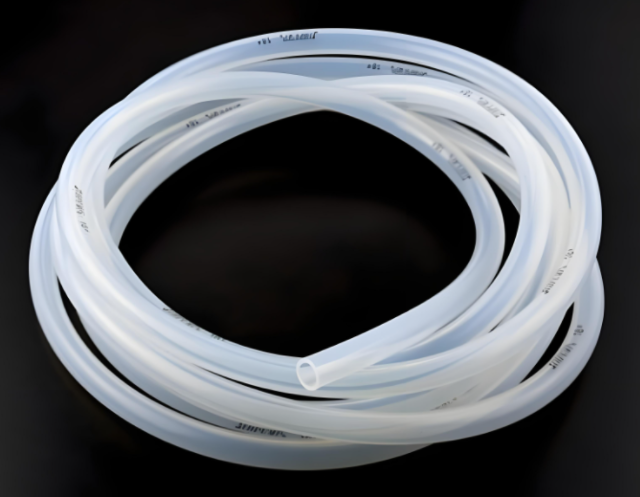
- Utilize good-quality, flexible, elastic, and pressure-tight tubing
Tygon tubing or silicone tubing offers more resistance and less collapse tendency, and more suction.
- Perform priming before operation or install check valves to prevent backflow
Priming eliminates air gaps and completely saturates the tube with liquid, which is critical in maintaining suction.
- For heavy suction requirements, consider additional solutions such as vacuum boosters or multi-pump configurations
These products provide extra negative pressure support or higher flow capacity to manage complex suction lifts.
Optimizing these factors can significantly enhance the suction performance and reliability of your peristaltic pump system, providing consistent performance under adverse conditions.
Conclusion: Select the Appropriate Peristaltic Pump Suction Mechanism for Maximum Benefit
Peristaltic pumps may not be as efficient at suction lift as some other pumps; however, their stability, tightness, and ease of operation make them perfect for many day-to-day applications.
By accurately calculating your suction lift requirements and choosing an appropriate model and configuration for peristaltic pumps, you can achieve remarkable performance for water treatment, chemical pumping applications, biolab applications, and beyond.
If you need multi-channel peristaltic pump systems with high suction lift and precise fluid delivery, contact JIHPump peristaltic pump manufacturer today! We offer customized solutions for your different liquid transfer needs.