
How to Control Flow Rate of Water Pump? 7 Ways
In most industrial, agricultural, and laboratory applications, controlling the flow rate of water pumps is crucially necessary. Unmeasurable high and low flow rates not only affect system performance, but may even lead to equipment breakdown or operation instability. Therefore, being aware of the effective control of flow rate of water pump is essential to system reliability as well as improvement in operational efficiency.
Here, in this article, we will discuss different methods on how to control flow rate of water pump. And also explain why peristaltic pumps are particularly good at using high-precision flow control.
Part 1. Why is It Important to Control the Flow Rate of a Water Pump?
The pump is the central part of any liquid transfer system, and controlling its flow rate is essential to attaining the highest system performance. The reasons below are the primary ones:
Energy Efficiency: Efficient flow control prevents unnecessary energy consumption through preventing the pump from operating at high loads for extended periods. This not only conserves electricity bills but also operational costs.
Precision in Industrial Operations: In industries such as pharmaceuticals, chemicals, and food processing, fluid delivery is required to be controlled with great precision. Precise flow ensures product homogeneity, safety compliance, and improved quality output.
Safety in Systems: Flow rate regulation allows for improved control over liquid pressure and speed. This reduces the likelihood of pipeline burst, leakage, or equipment malfunction, thus improving system reliability and safety.
Flexibility to Differing Conditions: In uses such as irrigation, air conditioning, or manufacturing lines, flow requirements can fluctuate seasonally or year-round process phases. A controllable pump system can respond easily to such variations, providing even and efficient operation.

Part 2. Common Methods for Controlling the Flow Rate of a Water Pump
To understand how to control flow rate of water pump, it is important to research the most widely used techniques. Each technique comes with advantages, disadvantages, and optimal-use scenarios.
Way 1. Outlet Valve Control
This is the simplest and most widely used method. By installing a manual or automatic valve at outlet of the pump, you can restrict the flow path, thereby reducing the flow rate.
Advantages:
- Low cost
- Simple to install and operate
- No changes required to the pump or motor
Disadvantages:
- Low efficiency — energy is wasted as the pump still works at full capacity
- Increased pressure at the pump outlet can lead to higher wear and tear
- Not suitable for precise flow control in sensitive applications
Way 2. Variable Frequency Drive (VFD) / Speed Control
This method involves adjusting the pump’s motor speed using a variable frequency drive. By reducing motor RPM, the pump’s output flow rate and head pressure can be precisely controlled.
Advantages:
- Excellent energy savings, especially in variable demand systems
- Smooth and continuous flow control
- Extends pump lifespan by reducing mechanical stress
- Ideal for automated, industrial applications
Disadvantages:
- Higher initial investment in VFD equipment
- Requires electrical and control system integration
- May not be cost-effective for small-scale or intermittent systems
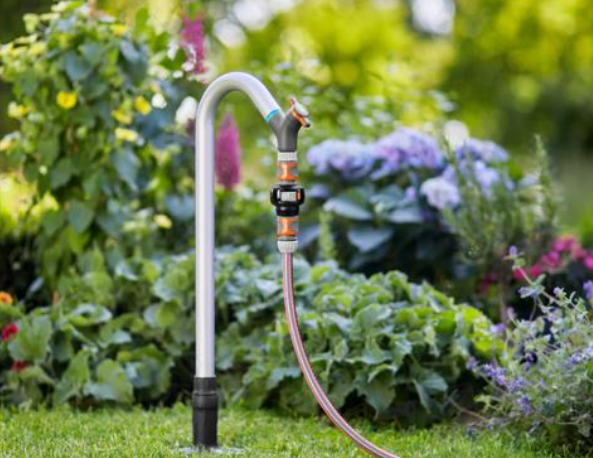
Way 3. Bypass Loop (Recirculation Control)
In a bypass system, a portion of the pumped liquid is diverted back to the reservoir or suction side of the pump through a secondary line. This method is common in systems with constant-speed pumps and fixed flow requirements.
Advantages:
- Simple to implement with minimal system modification
- Maintains pump operation under varying process demands
Disadvantages:
- Wastes energy by pumping more fluid than needed
- Inefficient for applications that require tight flow accuracy
- May cause unnecessary wear on the pump due to continuous high-capacity operation
Way 4. Intermittent Operation (On/Off Control)
The pump is turned on and off periodically to achieve an average flow rate over time. This is often used in batch processes, irrigation systems, or tank-filling applications.
Advantages:
- Very simple control strategy
- No need for advanced control systems
- Low equipment cost
Disadvantages:
- Frequent starts and stops can reduce pump lifespan
- Poor control accuracy and slow response to real-time demand
- Not suitable for continuous-flow processes

Way 5. Throttle Valve at Inlet (Not Recommended)
Some users consider installing a valve at the suction side of the pump to limit flow. However, this is not recommended due to potential risks.
Advantages:
- Simple in theory
Disadvantages:
- Can cause cavitation and damage to the pump
- Reduces pump efficiency
- Increases maintenance needs
Way 6. Multi-Speed Motor or Step Control
Some systems use motors with multiple speed settings (e.g., two-speed motors) to switch between predefined flow levels.
Advantages:
- Cheaper than VFD in some scenarios
- Simple control logic
Disadvantages:
- Limited flexibility — only fixed speeds available
- May not meet precise flow control requirements
- Still requires some electrical integration
Way 7. Use Precision Pumps (e.g., Peristaltic Pumps)
In applications requiring precise dosing or constant flow rates, using pumps specifically designed to meter accurately such as peristaltic pumps may be the most efficient approach.
Advantages:
- High accuracy and repeatability
- Flow rate easily adjustable via tubing size or speed
- No valves or seals in the flow path — ideal for sterile or corrosive media
- Excellent for laboratory, pharmaceutical, and chemical processes
Disadvantages:
- Tubing wear requires regular replacement

Part 3. Pumps Best Suited to Accurate Flow Control: Speed-Controlled Peristaltic Pumps
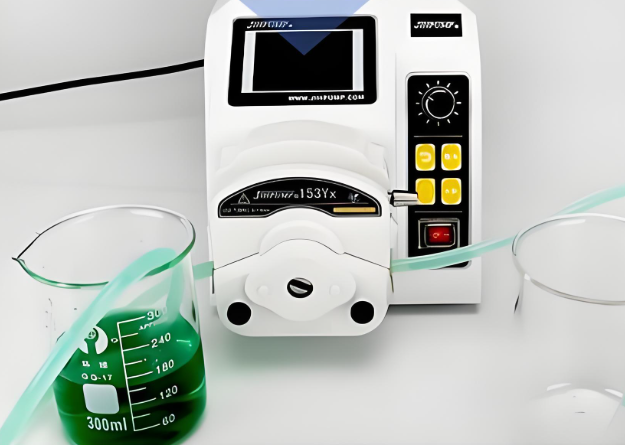
Chemical dosing, laboratory analyses, medical therapy and fine chemical processing require precise flow regulation; traditional means (e.g. bypasses or valves) cannot usually offer this level of accuracy or cleanliness; for these instances peristaltic pumps offer the ideal design and control features to provide reliable flow regulation solutions.
Why Peristaltic Pumps excel at Flow Rate Control:
1. Linear Flow Control through Speed Adjustment
Peristaltic pumps regulate flow through adjusting the motor speed, and in a linear peristaltic pump, the rotational speed is directly proportional to the flow rate. This linear relationship allows users to achieve precise and repeatable control.
Whether you need microfluidic-level dosing or continuous low-flow delivery, a linear peristaltic pump ensures consistent accuracy and predictable performance.
2. No Valves or Bypass Systems Are Needed
Unlike centrifugal pumps requiring external devices for control, peristaltic pumps do not require valves, pressure regulators, or recirculation loops. The fluid is contained entirely in a rubber tube under pressure from rollers, thus motor speed controls flow completely. This minimizes dead zones, backflow, and unnecessary system complexity.
3. Appropriate for Sterile and Cross-Contamination-Sensitive Applications
The inner surface of the tubing is the only one to come in contact with the fluid, leaving the motor and pump head completely isolated. This makes peristaltic pumps extremely well suited to sterile applications (pharmaceutical production or biotech analysis), and also to processes requiring constant change of the fluid.
4. Smooth Integration with Automation Systems
Current peristaltic pumps allow for digital communication interfaces such as PLC, RS485, analog 0–10V/4–20mA, and Modbus. This allows integration into automated systems in order to control flow in real time, remote monitoring, or batch applications. For industrial users, this means more efficiency and less human intervention.
5. Ideal for Problem Fluids
Due to their soft pumping and tubing isolation, peristaltic pumps are able to process:
- Corrosive fluids (acids, bases, disinfectants)
- Viscous liquids (gels, slurries, pastes)
- Shear-sensitive materials (cell cultures, emulsions)
Inability to make contact between the pump mechanism and liquid ensures long-term reliability and safe operation, even in hostile conditions.
As a trusted peristaltic pump manufacturer, JIHPump provides the complete range of products, low-flow lab pumps up to high-flow, multi-channel industrial pumps, and provide custom-made intelligent fluid control solutions tailored to your needs.
Part 4. How to Choose the Right Flow Control Method
The selection of appropriate flow control strategy depends on specific application requirements such as flow range, control accuracy, fluid properties, and degree of automation.
Below is a convenient guide to help match control methods and pump types with different applications:
| Application Scenario | Recommended Control Method | Recommended Pump Type |
| Industrial Water Supply | VFD Speed Control + Valve Adjustment | Centrifugal Pump |
| Pharmaceutical Production | PLC Integration + Electronic Speed Control | Peristaltic Pump |
| Agricultural Irrigation | Manual Valve + Timed Operation | Screw Pump, Peristaltic Pump |
| Chemical Dosing | Metering Pump + Closed-loop Feedback | Peristaltic Pump |
If your application requires flexibility, accuracy and security, integrating peristaltic pumps with intelligent control systems (such as PLCs or digital interfaces ) has become one of the most widely utilized solutions across various industries.
Final Thoughts
Controlling the flow rate of a water pump is more than an engineering issue; it will have a profound impact on its efficiency and reliability as a system. From manual valves to variable frequency drives and bypass piping to PLC-based automation systems, each solution offers advantages.
Peristaltic pumps provide unparalleled accuracy, safety, and user friendliness, making them the optimal choice for applications requiring high flow accuracy while mitigating contamination risks.
If you need a peristaltic pump solution with precise flow control capabilities, feel free to reach out the JIHPump technical team for samples and tailored advice.