
Peristaltic Pump Controllers: How to Choose the Right Drive for Your Application
In precision fluid handling, people love to call the pump head the heart of the system. The tubing gets labeled as the arteries. That’s a nice way to picture it. But here is the thing. Without a capable brain pulling the strings, you are really just looking at a pile of parts, not a working instrument. That brain is the peristaltic pump controller.
Maybe you are automating a titration setup in a lab. Maybe you are managing chemical dosing at a water plant. Or maybe you are deep in the design phase of a new medical diagnostic device. In every one of those cases, the controller calls the shots. It decides how accurate your fluid transfer is going to be. It determines how repeatable your results are. And it plays a huge role in how reliable the whole setup stays over the long haul. This guide walks you through the mechanics and electronics behind these peristaltic pump controllers and lays out a clear path for picking the right drive.
What is a Peristaltic Pump Controller & How Does It Work?
Let’s strip it down. A peristaltic pump controller is basically an electronic logic unit. Its whole job revolves around managing the power that gets sent to the motor. It takes whatever command you give it, say a target flow rate in mL per minute or a specific dispense volume, and then it translates that wish into precise motor action.
The Engineering Logic Behind Fluid Movement
So, how does it actually move fluid? The controller manages the electrical side of things. If you are running a stepper motor, it governs the pulses. If it is a DC peristaltic pump motor, it adjusts the voltage and frequency. By timing the compression and release of that flexible tubing just right, the controller creates a steady, predictable flow.
Modern digital controllers lean heavily on microprocessors. They use something called S-curve acceleration profiles. This is not just marketing fluff. It is a real technical advantage. By smoothly easing the rotation speed up and down, the controller sidesteps the whole “water hammer” problem. If you let that hydraulic shock run wild, it beats up the delicate tubing fibers and sends liquid splashing out of open containers. Smooth ramps fix that.
Peristaltic Pump Controller vs. Driver vs. Motor: What’s the Difference?
In a lot of technical discussions, these three terms get used interchangeably. It happens all the time. But if you are the engineer responsible for wiring it all up, or you are the one signing off on the system integration, it helps to know exactly where the boundaries are.
Motor: This is the muscle. It is the physical chunk of metal that spins. You have got stepper motors for when you need to hit an exact spot every time. You have got Brushless DC motors (BLDC) for when you need to run fast and run long without swapping out parts.
Driver: Think of the driver as the power amplifier. It listens to the quiet, low-level signals coming from the controller and then cranks up the volume, sending heavy duty current to the motor. Good drivers use micro stepping. They slice a single motor step into tiny little pieces, sometimes down to 1/128th of a step. That is how you get rid of vibration and that annoying flow pulsation.
Controller: This is the actual brains of the outfit. It handles the logic. It takes inputs from a touchscreen, a foot pedal, or commands coming in over RS485/Modbus and then tells the driver exactly what to do. How many pulses? What direction? The controller figures all that out.
Types of Peristaltic Pump Controllers
Not all controllers are built the same. Knowing what flavor is out there helps you zero in on what you actually need.
Analog Controllers: Usually just a knob, a potentiometer. You turn it, and the motor goes faster or slower. They are simple and cheap. Perfect if you just need to move fluid from point A to point B and you are not sweating over a few percentage points of accuracy.
Best Fit: Budget conscious setups where steady flow is the main goal.
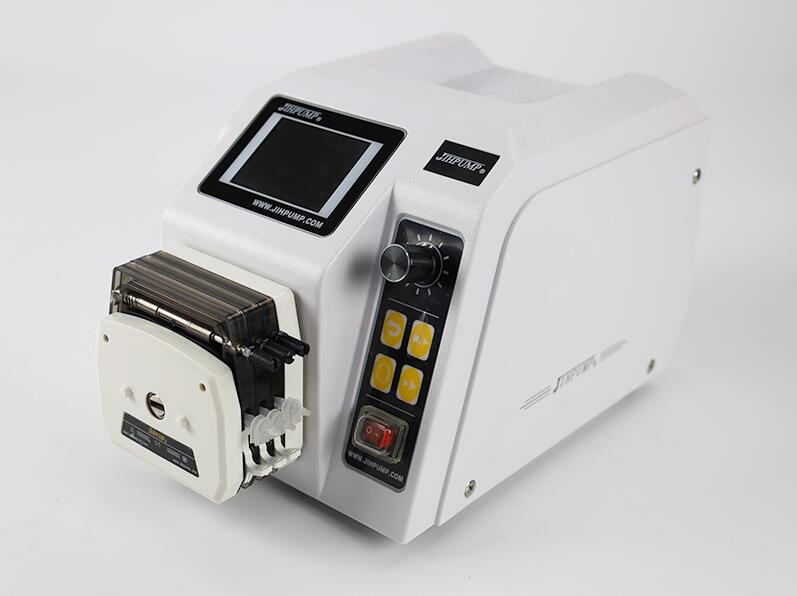
Digital / Microprocessor Controllers: These have a screen, maybe an LCD or some LEDs. You can punch in an exact number for the flow rate. If your application needs calibration and you want the same result every single time you hit start, this is your entry point.
Best Fit: Research labs and clinical environments where repeatability is non-negotiable.
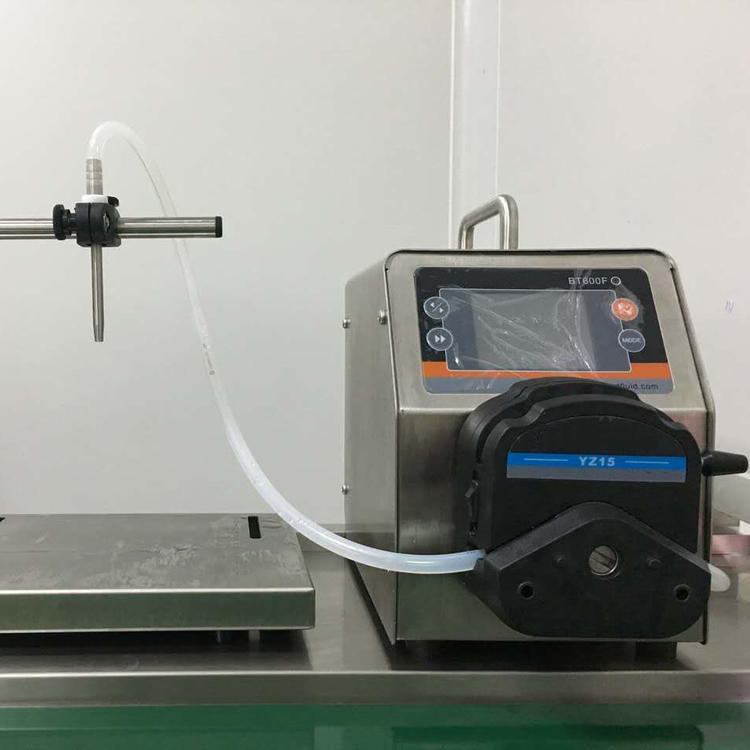
OEM Integrated Control Boards: These are naked circuit boards. They are meant to live inside another machine. If you are designing a medical analyzer or a piece of industrial gear and you need to hide the pump inside, this gives you maximum flexibility without wasting space.
Best Fit: Embedded applications in medical devices or custom automation.
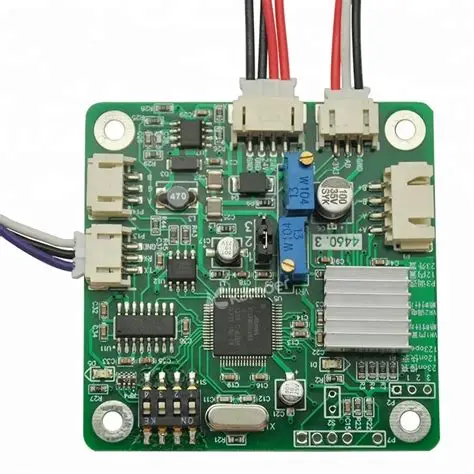
Industrial Enclosed Controllers: These come in a tough box. We are talking sealed housings, often with ratings like IP65 or better. They keep the nasty stuff out. Dust, splashing water, corrosive fumes. The controller inside stays clean and dry.
Best Fit: Factory floors, wastewater plants, or anywhere the environment is trying to kill your electronics.
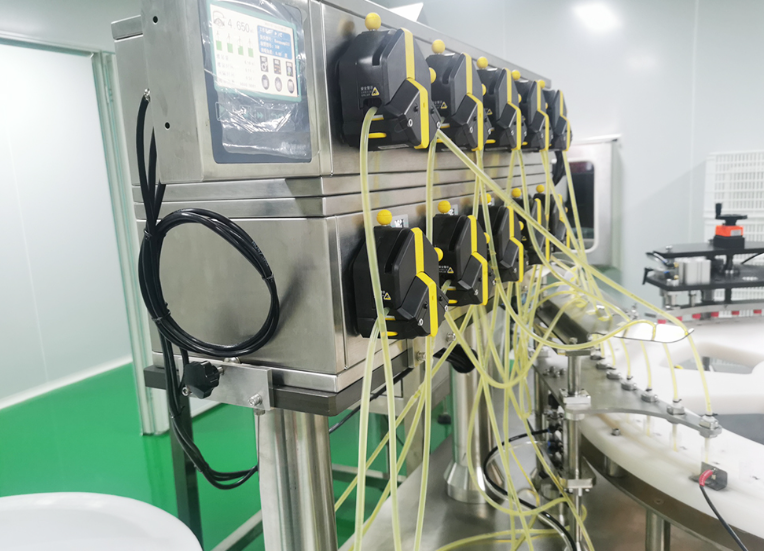
Peristaltic Pump Control Modes: Speed Control, Flow Calibration, or Programmable Logic?
How smart is your controller? That mostly comes down to the firmware and what modes it supports.
Speed Control Mode
This is the baseline. You tell it an RPM number and it spins at that speed. It works. But here is the catch. It does not know or care if your tubing is thick walled or thin walled. It just spins. The actual volume moved might vary a bit depending on the tubing condition.
Flow Calibration Mode: A Core Requirement for Experts
Here is a reality check. Peristaltic tubing wears out. After a few hundred hours, it gets tired. It loses some of that springy rebound. When that happens, the flow rate starts to slip even if the motor RPM is perfect. A controller with the peristaltic pump flow calibration lets you fix this. You run a quick test, measure the real output, and punch that number in. The controller then does the math and adjusts the motor pulses to compensate. It is like telling the brain, “Hey, the tubing is a bit lazy now, push a little harder.” This keeps your accuracy tight right up until the tubing finally gives out.
Programmable Dispensing Control Mode
This is for when you need the pump to do more than just spin. You need it to follow a script. Fill for 5 seconds, stop, reverse a bit, wait, repeat. Features like Anti-drip (Suck back) live here. When the pump stops, the controller tells the motor to reverse just a tiny bit. Maybe a quarter turn. This sucks the liquid back from the nozzle tip so it does not drip all over your workbench or throw off your next dose.
Key Benefits of Using an Advanced Pump Controller
Spending a bit more on a quality controller is not just about getting a fancier on and off switch. It is about solving real physical problems that happen when you try to push liquids through tubes.
Optocoupler Isolation: Factories are noisy places, electrically speaking. Big motors and relays kick out electromagnetic interference, or EMI. That noise can sneak into your signal wires and make the controller think you told it to speed up or slow down. It is called false triggering. Good controllers use optocouplers to create a physical wall between the noisy outside world and the sensitive logic inside. This keeps things stable.
Thermal Management: Stepper motors get hot. It is just what they do when they are holding a position. A smart controller uses Current Scaling. When the motor is just sitting there, not moving but holding the tubing shut, the controller dials back the current. Sometimes by half. Less current means less heat. That is good for the motor and great for any temperature sensitive stuff nearby.
Extended Tubing Life: When a pump starts up instantly, those rollers smash into the tubing. That initial hit is hard on the material. Soft start ramps ease the motor up to speed. It is a gentle acceleration rather than a sudden jolt. That mechanical sympathy adds hours to the life of your tubing.
Preventing Fluid Pulsation and Splashing: We mentioned the S-curve acceleration earlier. It is not just about the tubing fibers. It also stops the liquid inside from sloshing around. If you slow down smoothly, the fluid does not surge forward and spill out of the end of the tube. Clean fills, no mess.
How to Choose a Peristaltic Pump Controller (Key Features to Consider)
Grab the wrong controller, and you are in for a headache. Flow rates start drifting. The system flat out refuses to talk to the rest of your gear. It happens more than you would think. Here is a quick way to keep your selection on the rails.
Step 1: Figure Out What Motor You Are Dealing With (DC or Stepper)
First thing first. You cannot run a stepper motor off a basic DC speed board. It just does not work that way. They speak totally different languages.
Stepper motors are what you reach for when every drop counts. Tiny volumes, exact dispensing, high precision. That is their sweet spot.
DC motors, on the other hand, give you more flow for less money. If you are moving a bunch of fluid and a milliliter here or there is not going to ruin your day, a DC setup makes a lot of sense.
Step 2: Check the Communication Side (Analog or Digital)
How does the controller listen to the outside world? This matters more than people give it credit for.
Analog Signals (0-5V or 4-20mA): These are fine over short distances. If you have a PLC nearby and you just want to tell the pump “hey, speed up a bit” or “slow down a bit,” analog gets the job done.
Digital Protocols (RS485 Modbus RTU): This is the way most modern systems are headed. Long cable runs? Not a problem. Voltage drop? Not an issue. You can even string several pumps together on the same wire, and they all play nicely.
But here is the real perk. Digital lets the pump actually answer back. It can tell you, “Yep, I am running at the speed you asked for.” Or it can pipe up and say, “Heads up, I have got a fault here.” Analog is a one way street. Digital is an actual conversation. That feedback loop saves a ton of troubleshooting time later on.
Step 3: Assess System Integration Needs
Is this pump going to sit on a lab bench with its own case? Or is it getting buried inside a machine? If it is the latter, an OEM control board saves you a ton of room and usually costs less than a fully boxed unit.
| Feature Metric | DC Controller | Stepper Controller |
| Accuracy Level | Basic (±3-5%) | High Precision (<1% calibrated) |
| Dispensing Capability | Based on time (okay) | Based on steps (exact) |
| Vibration / Noise | Moderate | Very Low (thanks to micro stepping) |
| Ideal Application | High volume transfer, recirculation | Lab titration, medical dosing, small fills |
JIHPUMP Drive Solutions: Controllers Designed for Peristaltic Pump Systems
When you are out there looking for a controller, try to find a partner who actually understands what a motor goes through. You want someone who gets the whole “torque versus speed” curve thing.
JIHPUMP is not a catalog house that just slaps a sticker on a generic drive. We have been building peristaltic pumps for nearly twenty years. Our controllers are not afterthoughts. We design them specifically to match the way our own pump heads behave. The torque requirements, the speed profiles, we tune for that.
We have two main paths you can take, depending on what you are building.
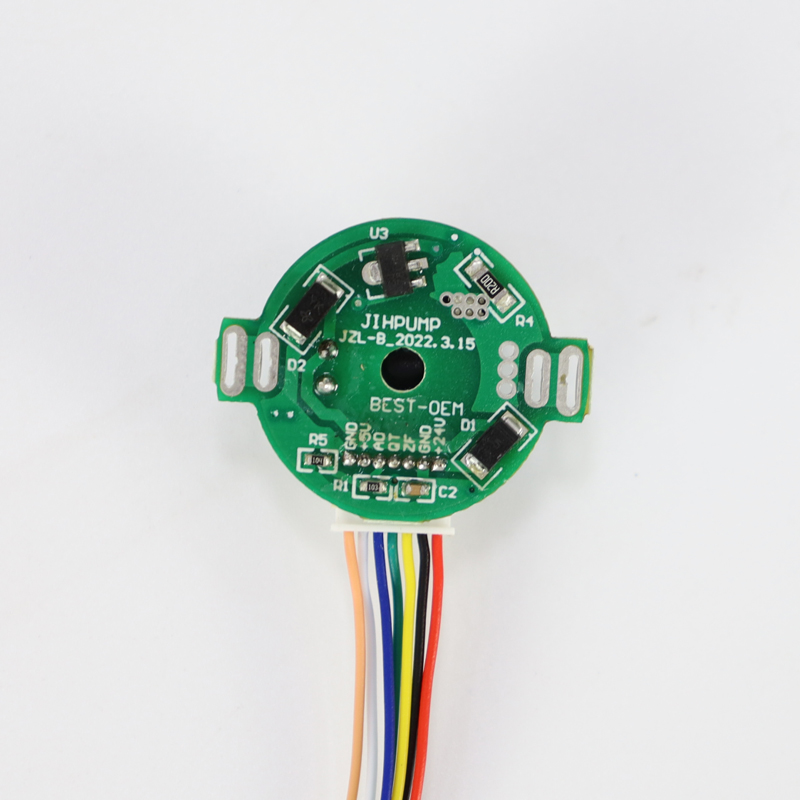
JZL-B DC Speed Controller:
This is a tidy little unit for brushed DC motors. It handles forward and reverse, and has over-temperature protection baked in. It is small, and the wiring is straightforward. If you are cramming components into a portable medical gadget or a water sampling device, this one fits the tight spots.
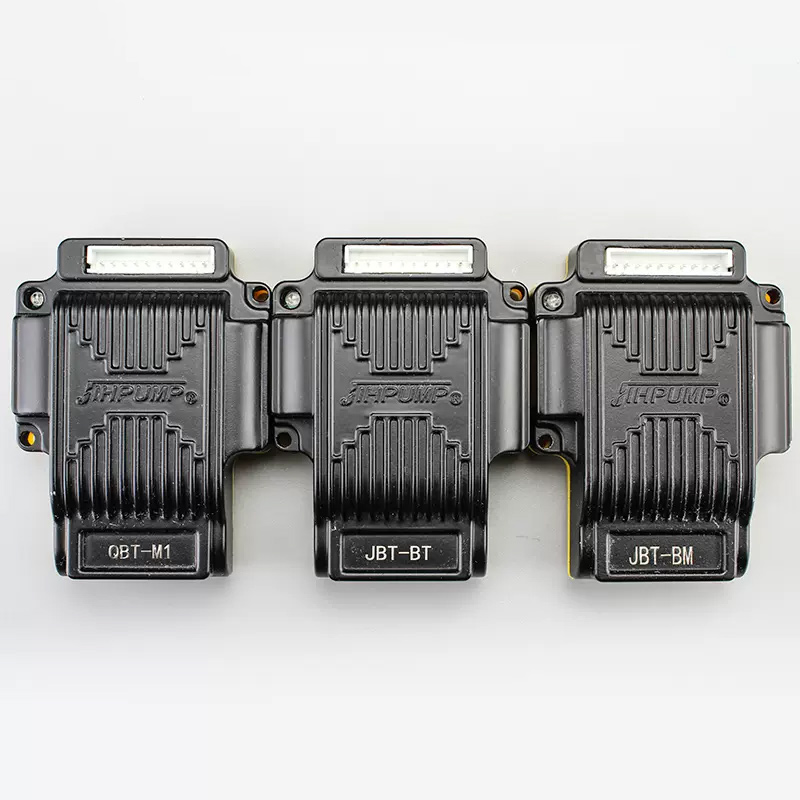
42 & 57 Series Stepper Motor Controllers:
If you live in the world of precision metering and automation, these are for you. The communication-ready models speak Modbus RTU. That means you can program them for complex sequences like dispensing a specific amount, pausing, and repeating. They support micro-stepping, so the motion is fluid and accurate. Pair one of these with a JIHPUMP stepper pump head, and you have got a precise fluid control setup that works right from the moment you power it on.

Peristaltic Pump Controller FAQ: Your Top Questions Answered
Q: Can I run more than one pump head off a single controller?
A: You sure can. Just make sure the motor has enough grunt (torque) and that the controller’s current rating can handle the combined load. If you try to pull too much juice, things get hot and unhappy.
Q: What is the deal with the External Control port?
A: It is super handy. You usually use it to hook up a foot switch so you can keep your hands free while dispensing. Or you connect it to a PLC output. That way, the pump becomes a slave to whatever else is happening on your production line.
Q: Wait, the controller really messes with accuracy?
A: One hundred percent. If the controller has lousy resolution or the speed wanders around, your flow will wander too. The mechanical bits might be perfect, but if the brain is sending sloppy signals, you get sloppy fluid delivery.
Q: Why would I use RS485 instead of just a simple analog voltage signal?
A: RS485 is digital. It cuts through electrical noise like a hot knife through butter. Plus, and this is a big plus, it lets the pump actually send information back to you. It can confirm its current speed or let you know something went wrong. Analog is a one-way street. Digital is a conversation.