
Small Water Transfer Pumps: Types, Applications and Benefits
Liquid transfer is an essential process in modern industry and everyday use. It includes sampling in laboratories to water treatment dosing, equipment cooling, and distribution of potable water. All these require efficient and precise transfer systems which are essential in their usage. Of all the options available, the small water transfer pump is an ideal solution for the majority of industries due to its compactness, flexibility, and high efficiency.
In this article, we take you through everything about small water transfer pumps, with a particular focus on an increasingly popular solution, the peristaltic pump.
Part 1. What is a Small Water Transfer Pump?
A small water transfer pump is a diminutive-sized transfer pump for liquid transfer under low-flow applications. The primary function is to move water or other liquids from one location to another, thus prevalent use in households, laboratories, medical devices, food and beverage processing machinery, water treatment machinery, and industrial machinery.
Unlike traditional big transfer pumps, a small water transfer pump is concerned with:
- Compact size – suitable to install in limited spaces;
- Low energy usage – green and energy-saving;
- Easy operation – simple maintenance and replacement;
- Accurate flow control – ideal for applications requiring regular and precise liquid transfer.

Part 2. Types of Small Water Transfer Pumps and Their Work Principle
There are several types of small water transfer pumps on the market, each for different usage and operational purposes. Understanding what they differ in is the basis of proper pump selection. The following lists most typical categories, with an overview followed by working principle:
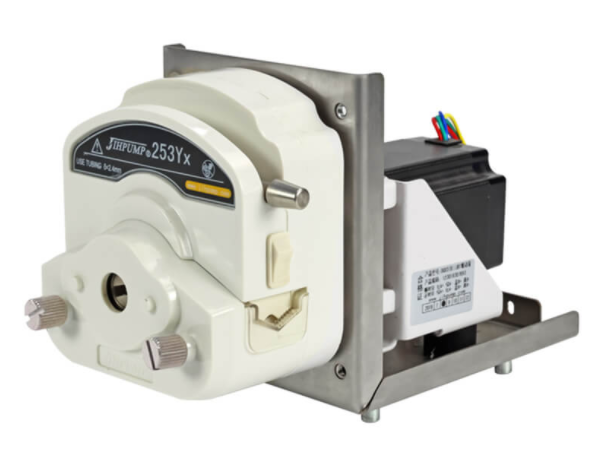
1. Peristaltic Water Pump
Peristaltic pumps are typically recognized by low-flow, precise, and clean operations and are appropriate for laboratory, pharmaceutical manufacturing, food processing, and water treatment. They facilitate accurate dosing, gentle handling, and simplicity of maintenance.
Working Principle:
- A moving roller or shoe compresses and releases a flexible tube.
- The force of compression pushes liquid down the tube.
- As the tube releases, additional liquid is drawn in.
- Fluid is fully contained in the tubing and never comes into contact with pump parts.
- Positive displacement action allows for precise, adjustable, and soft flow.
2. Centrifugal Pump
Centrifugal pump is widely used for continuous water transfer in irrigation, cooling systems, and water circulation operations. It is simple in design, has a big flow rate, and operates smoothly but is less suitable for high-precision control or viscous or particulate fluids.
Working Principle:
- Rotating impeller inside the pump casing transfers kinetic energy to the fluid.
- Liquid is driven outwards towards the pump outlet.
- Velocity gain is converted to pressure, driving constant flow.
- System pressure and head height regulate flow rate.
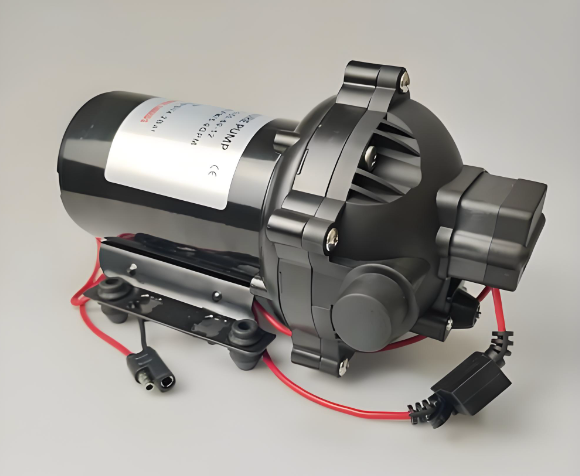
3. Diaphragm Pump
Diaphragm pumps are best used for corrosive, viscous, or particulate fluids and are used in applications for water treatment, chemical dosing, and medical equipment. They are self-primed, dry-run protected, and chemically compatible, but their flow can contain a pulsating characteristic.
Working Principle:
- Flexible diaphragm oscillates in the pump chamber.
- On retraction, vacuum pulls liquid into the chamber.
- On forward stroke, a one-way valve pushes out the liquid.
- Fluid is isolated from moving mechanical parts to prevent contamination.
4. Gear Pump
Gear pumps are best suited for industrial and mechanical applications where constant flow with high pressure is required, i.e., the pumping of lubricants, oils, or viscous liquids. They are heavy and durable but noisy and require maintenance due to the wear on gears.
Working Principle:
- Two meshing gears rotate within the housing of the pump.
- On the intake side, gears move apart from one another, creating a vacuum which draws in liquid.
- Liquid is propelled around the housing between the tooth of the gears.
- On the discharge side, gears mesh again, ejecting liquid under pressure.
- Provides a smooth, non-pulsating flow ideal for viscous liquids.
Part 3. Key Features and Advantages of Small Water Transfer Pumps
Small water transfer pumps are valued not only for their compactness but also for versatility, economy, and reliability for a wide range of applications. Their key features and advantages are:
Compact Design:
Miniature water transfer pumps are constructed to fit minimal space, thus being versatile for mounting even where space is limited, such as laboratory benches, water treatment cabinets, or small industry installations. They are also light in weight, allowing them to be taken around whenever temporary or mobile liquid transfer is required.
Silent Running:
The majority of small pumps, especially peristaltic and diaphragm pumps, are low-vibration and quiet running, and they are ideal for laboratory, medical, or office applications where quiet running is required.
Low Energy Consumption:
Pumped specifically for low-pressure and low-flow applications, these pumps consume much less power than large transfer systems, thus reducing operational expenses and promoting energy-efficient tendencies.
Easy Maintenance:
Since design is simple, the miniature water transfer pumps are often easy to take apart, and the generic parts such as tubing, diaphragms, or impellers can simply be replaced. This reduces downtime and facilitates maintenance very easily.
Strong Compatibility:
These pumps are highly compatible for various types of fluids from clean water to chemical solutions, food-grade fluids, or even slurries depending on the type of pump. Peristaltic pumps are particularly ideal for corrosive or particle-containing liquids.
High Precision Control:
Some pump types, like peristaltic pumps, are capable of generating precisely controlled flow rates, which ensure liquid delivery at a stable rate for chemical dosing, laboratory testing, or medical treatment. This is useful where fluid management has to be precise.
Contamination-Free Transfer:
In pumps like peristaltic pumps, the liquid is completely isolated in flexible tube, with no contact with pump components and chances of contamination. It offers safe, hygienic, and long-lasting liquid transfer, especially for sterile or sensitive liquids.
Part 4. Common Applications of Small Water Transfer Pumps
Owing to their high flexibility, precision in flow control, and freedom from contamination, low-capacity water transfer pumps have wide usage in different industries and fields:
1. Laboratory and Research
Low-capacity pumps are used in transferring reagents, samples, or culture media in laboratories. Accurate flow control is ensured for precise dosing applications, and cross-contamination is prevented by designs like peristaltic pumps, essential for sensitive experiments and research work.
2. Water Treatment and Chemical Dosing Systems
Small water transfer pumps are widely applied in water treatment plants to accurately inject chlorine, acids, alkalis, or neutralizing chemicals. This accuracy gives better control of water quality, offers consistent chemical dosing, and helps comply with regulations.
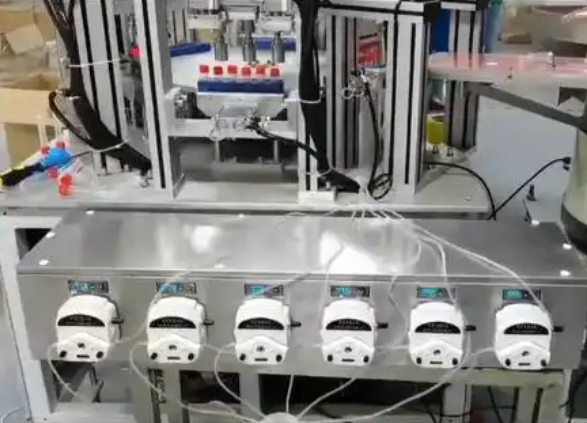
3. Food and Beverage Industry
In the food and beverage industry, pumps are applied to distribute water, flavor, and fill liquids. Their ability to move food-grade liquids safely ensures that they meet hygienic standards, making them suitable for use with beverages, dietary supplements, milk products, and sauces.
4. Medical and Pharmaceutical Equipment
Small water transfer pumps enable sterile, safe, and precise fluid transfer in pharmacies and hospitals. They are widely used in IV fluid transfer, drug compounding, or lab dosing systems, where accuracy and contamination prevention are particularly critical.
5. Agriculture and Micro-Irrigation Systems
For precision agriculture, these pumps can be used to handle the injection of fertilizers or nutrient solutions in micro-irrigation systems. This ensures even distribution, efficient utilization of resources, and enhanced development of crops, reducing waste and operational costs.
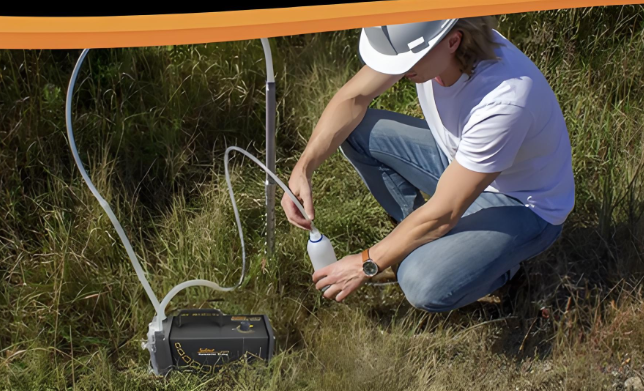
6. Environmental Monitoring and Sampling
Small water transfer pumps are utilized to retrieve water samples consistently for environmental evaluation, water quality analysis, and research applications. Their flow stability feature ensures that sampling results are always consistent, even in field or remote areas.
Overall, the power of small water transfer pumps is in their flexibility to deal with different circumstances, from high-precision laboratory applications to industrial, agricultural, and environmental applications, making them an indispensable tool for modern fluid management.
Part 5. Why a Peristaltic Pump for Small Water Transfer?
In small water transfer alternatives, the peristaltic pump stands out due to its particular advantages and flexibility. Its design and operation make it uniquely best suited for uses requiring precision, sanitation, and reliability.
1. No Cross-Contamination
In a peristaltic pump, fluid moves only inside the tubing and never inside the pump mechanism whatsoever. Fluid never touches rollers, gears, or any other mechanical components and thus cannot be contaminated. This feature is of critical significance for laboratory, pharmaceutical, food-grade, or medical application where cleanliness is central.
2. High-Precision Flow Control
Smooth, constant, and adjustable flow is accomplished by peristaltic pumps. By varying the rollers’ speed of rotation or through selection of tubing size, customers are able to achieve accurate, reproducible dosing appropriate for chemical metering, nutrient injection, or laboratory analysis where control over exact volumes is required.
3. Excellent Chemical Compatibility
The pump tubing can be made from any variety of materials such as silicone, PVC, or chemically resistant elastomers specifically designed. This will allow the pump to handle corrosive, abrasive, or viscous liquids without destroying the pump and making the pump more versatile in chemical processing, water treatment, and industrial applications.
4. Easy Maintenance
Maintenance is simple: the tubing is replaced and the pump is back in full operation. No intricate valves, seals, or internal moving components are in contact with the fluid, which minimizes downtime and reduces maintenance expenses.
5. Long Service Life and Reliable Operation
The roller-driven mechanism makes for smooth and dependable pumping action, with long-term reliability. With the use of suitable tubing and maintenance checks, peristaltic pumps can be kept to run smoothly over many hours or even around the clock.
6. Adaptable Design
Peristaltic pumps are made to be set up to suit specific applications, including varying flow rates, pressures, types of tubing, and sizes of pump. This enables users to customize the pump to particular fluid characteristics or operating conditions.
In Summary
Small water transfer pumps play a significant role in different industries. From simple water movement to precise liquid handling, they help users achieve effective and safe fluid management. Among different types of pumps, peristaltic pumps are the most suitable solution for small water transfer due to their contamination-free operation, high precision, and dependability.
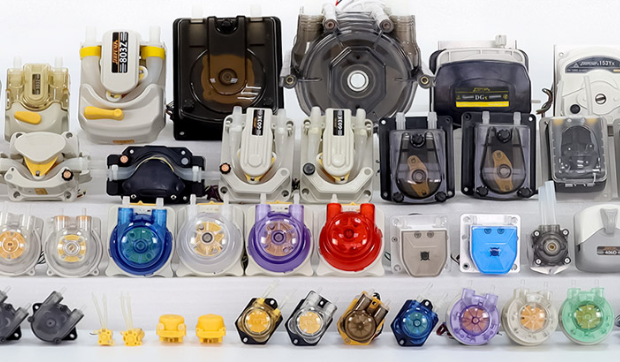
As a professional peristaltic pump manufacturer, JIHPump offers a full range of products from laboratory-scale pumps to industrial chemical dosing systems. Our pumps are interchangeable for any type of small water transfer use and can be customized to meet specific client requirements.
Order your high-performance small water transfer pump solution to elevate your liquid handling to be more efficient, precise, and safe via JIHPump’s contacts.g production security and optimizing process performance.